
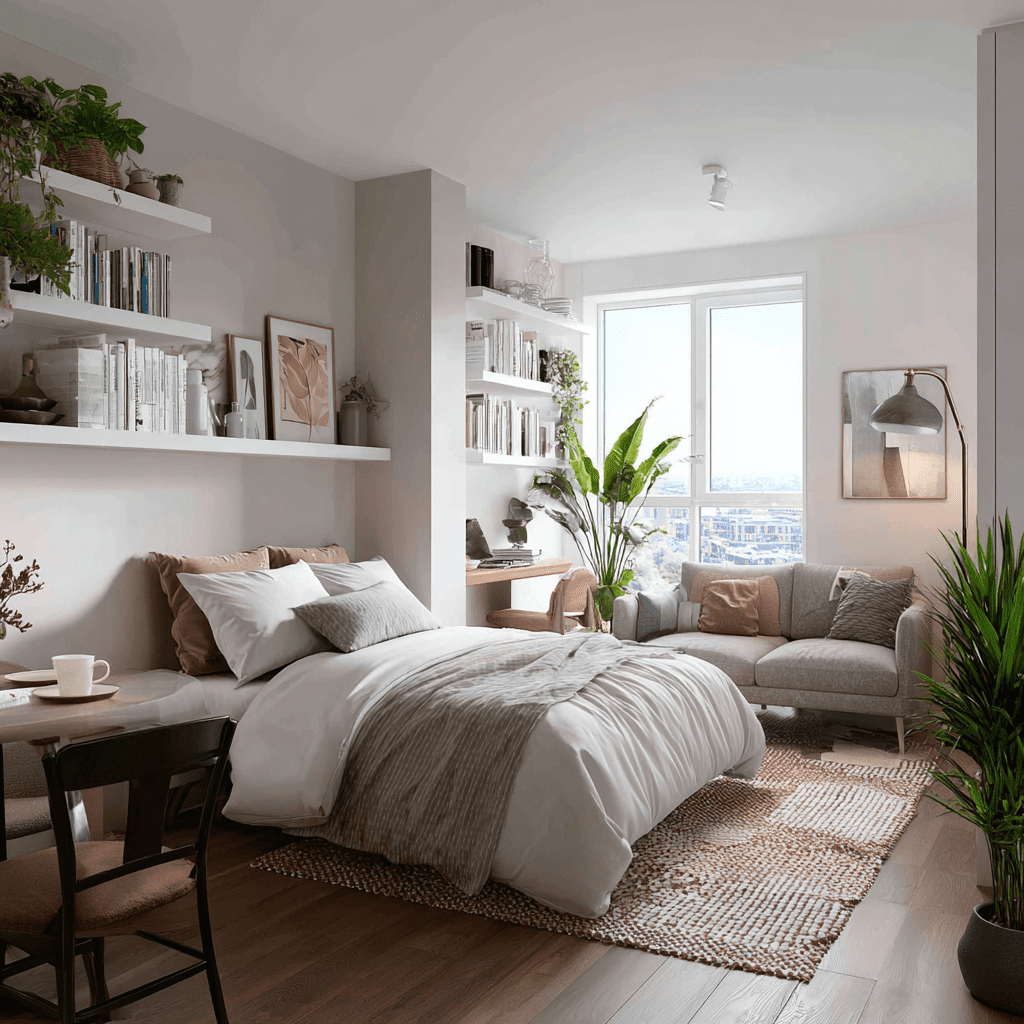
Studio layout ideas can turn one open room into a home with calm places in it — somewhere to sleep, somewhere to live, somewhere to eat — all without renovation. Below you’ll find 33 soft, practical studio layout ideas, from room dividers and rug zones to bed placement, lighting, and furniture that earns its space. Everything works in rentals and on small budgets.
A well-planned studio gives you freedom. It lets you breathe, gives your mind space, and proves that even a tiny home can feel warm and generous with a few thoughtful choices.
How to Lay Out a Studio: Start With the Floor Plan
Before moving furniture, decide three things in order. First, pick the bed corner — the quietest spot, away from the door and kitchen. Second, protect one walkway from the entry to the window; everything else arranges around it. Third, zone what remains into living and eating areas using the ideas below. A typical studio apartment puts all of this in one room, so order matters. If you want complete, copy-ready floor plans for a specific size, our 400 sq ft studio apartment layout ideas walks through 25 of them.
33 Soft Studio Layout Ideas, Zone by Zone
The studio layout ideas below are grouped the way you’ll actually use them — zoning first, then the sleeping, living, and eating areas, then light, color, and flow.
Zone the Room With Soft Room Dividers
Room dividers are the fastest way to give a studio real places without building walls — a shelf, a curtain, even the back of your sofa can do the job. These seven zoning ideas keep light moving while the room gains structure; for the complete collection, see our guide to room dividers for small apartments.
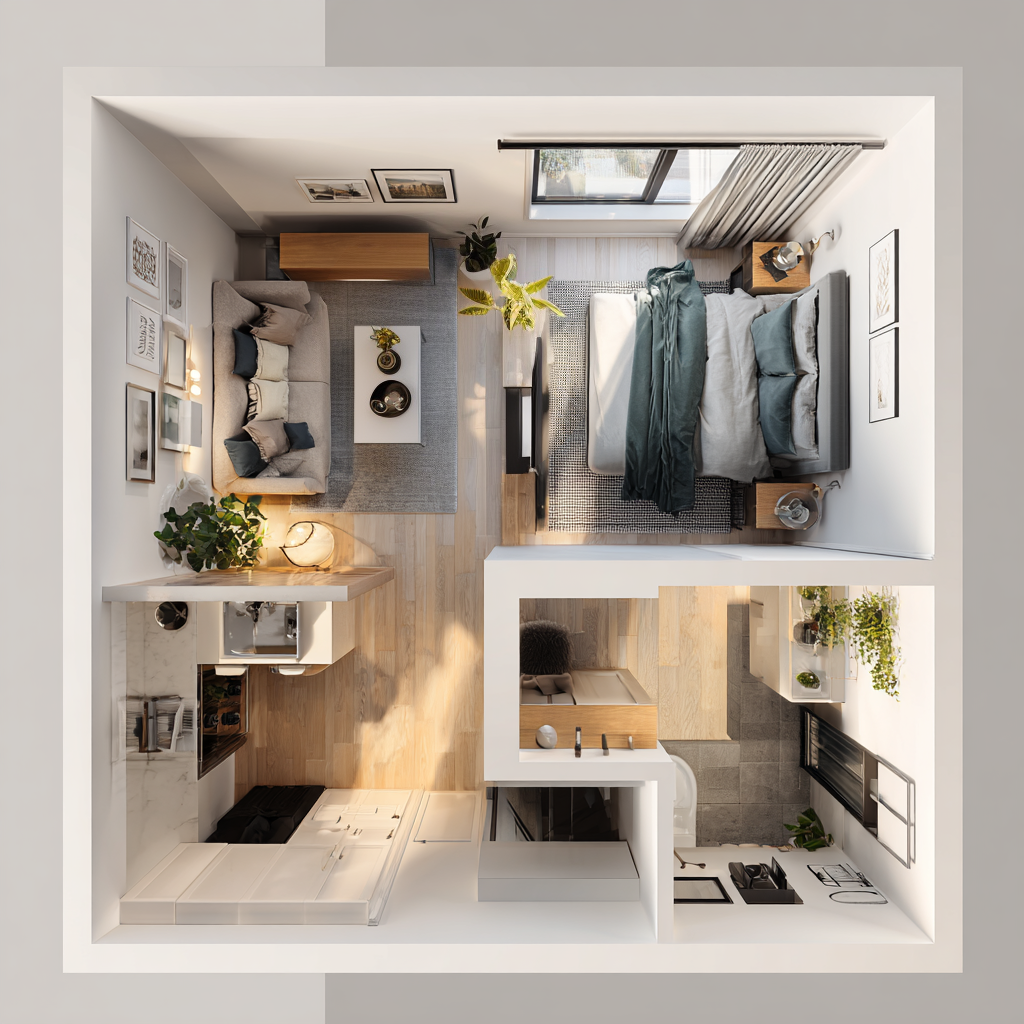
1. Create Soft Zones With Furniture Placement
You don’t need any divider at all to start zoning — placement alone guides the eye. A seating group here, a dining spot there, a quiet sleeping corner in the back: when each activity has its own cluster, the room reads as organized even though nothing separates it.
2. Use a Low Shelf to Divide the Room
A waist-high shelf forms structure without blocking sunlight, and it stores books and baskets while it stands there. It’s the room divider that pays rent.
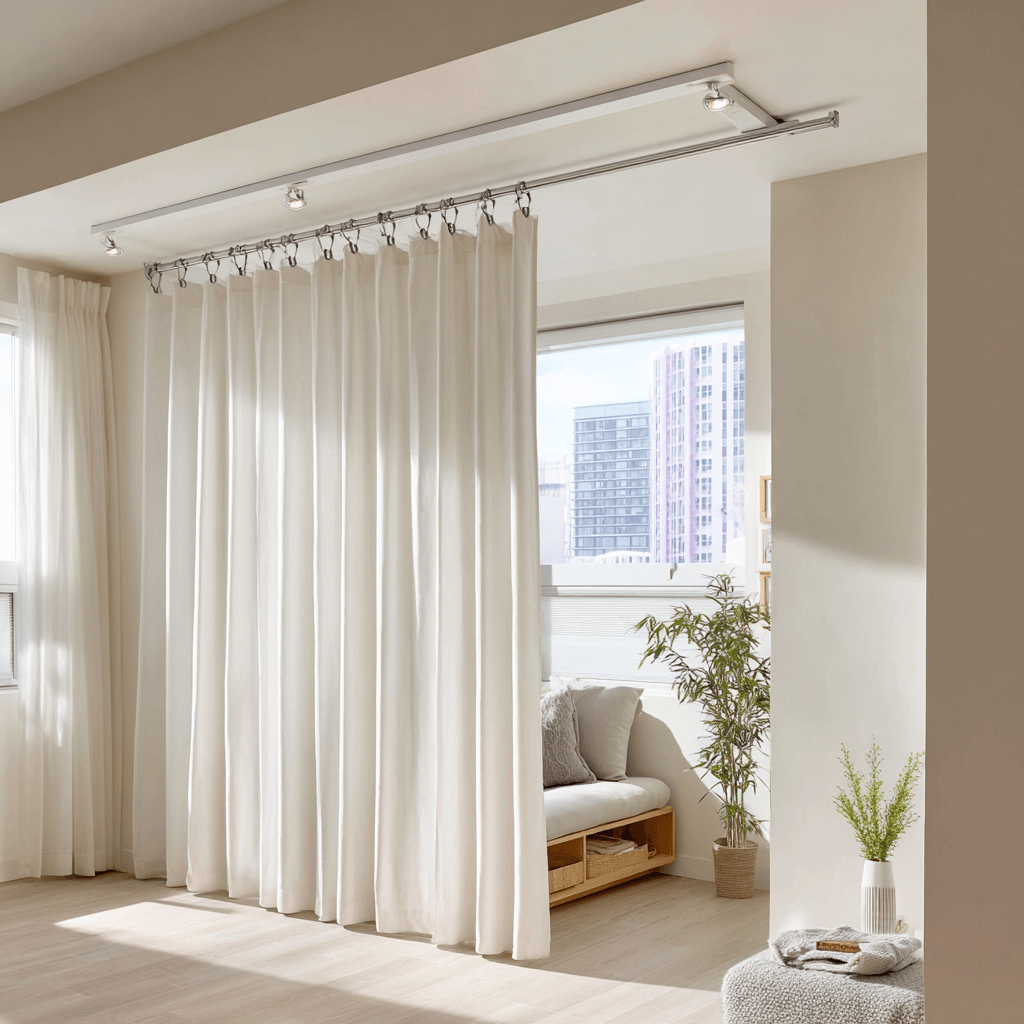
3. Try Soft Curtains as Room Dividers
A curtain on a ceiling track or tension rod is the gentlest room divider there is — it closes fully around the bed at night and disappears against the wall by day. Light fabric keeps the room airy even when drawn.
4. Try a Partial Wall Divider
A short freestanding divider or half-height panel adds privacy to one zone without closing the room. Keep it below eye level and the studio stays visually whole.
5. Use the Back of the Sofa as a Divider
Float the sofa in the middle of the room with its back to the bed, and the living area gets a boundary for free. A slim console behind it adds a shelf for lamps and makes the border feel intentional.
6. Use Two Rugs to Create Two Gentle Zones
One rug under the bed, another under the sofa — the floor itself now says where each room-within-the-room begins. It’s the zero-effort, renter-proof room divider.
7. Add Soft Lighting to Separate Spaces
Lamps zone a studio quietly: a floor lamp by the sofa switches the living area on, a warm bedside lamp turns the sleeping corner into its own small world after dark. Two or three pools of warm light beat one bright overhead every time.
The Sleeping Area
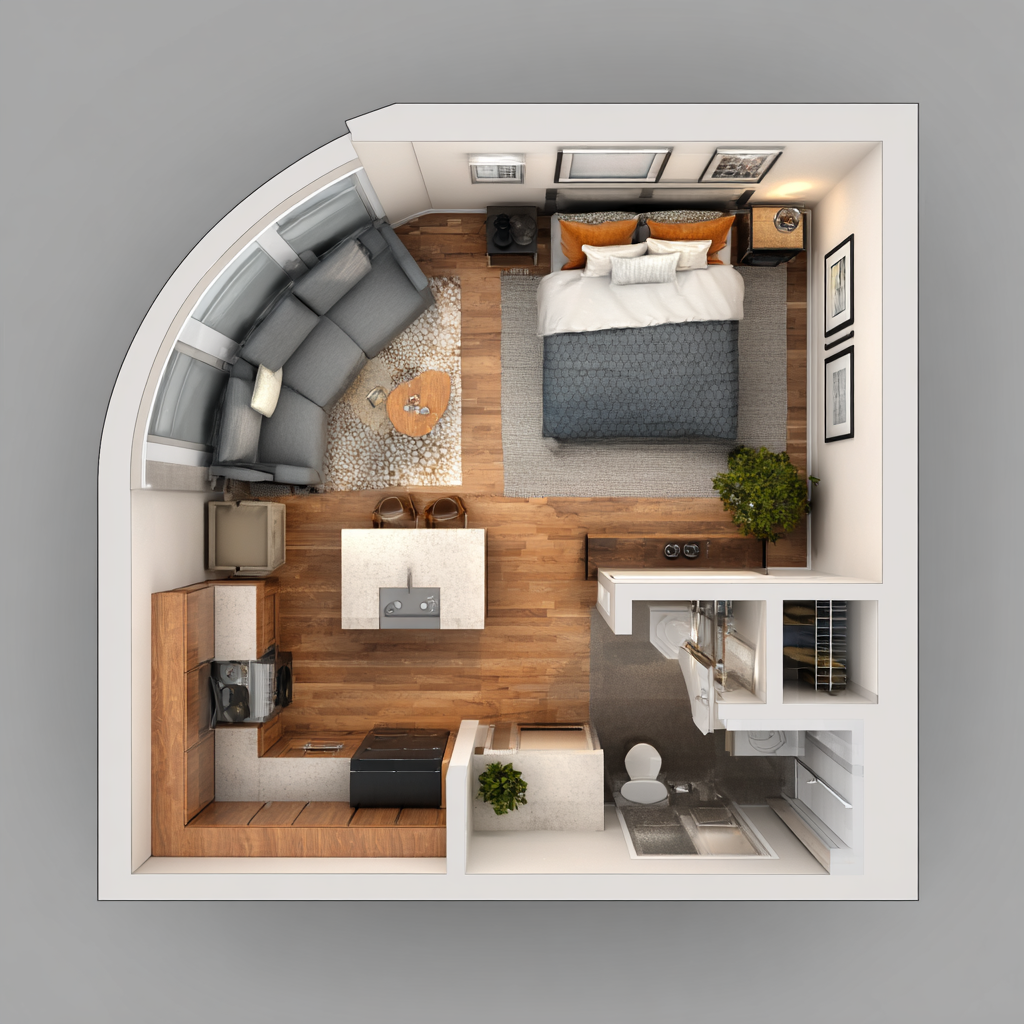
8. Choose a Bed That Fits the Room
A king bed can swallow a studio; a full or queen with a low, light frame leaves the room breathing. In one-room living, the bed sets the scale for everything else — choose it first and choose it modest.
9. Let the Bed Catch Soft Light
A sleeping corner with gentle natural light feels peaceful in the morning and keeps the bed zone from becoming the dark end of the room. If there are two windows, give the bed the softer one.
10. Try a Floating Nightstand
A small wall-mounted shelf holds the water glass, book, and phone while keeping the floor visible — and visible floor is what makes small rooms read as larger.
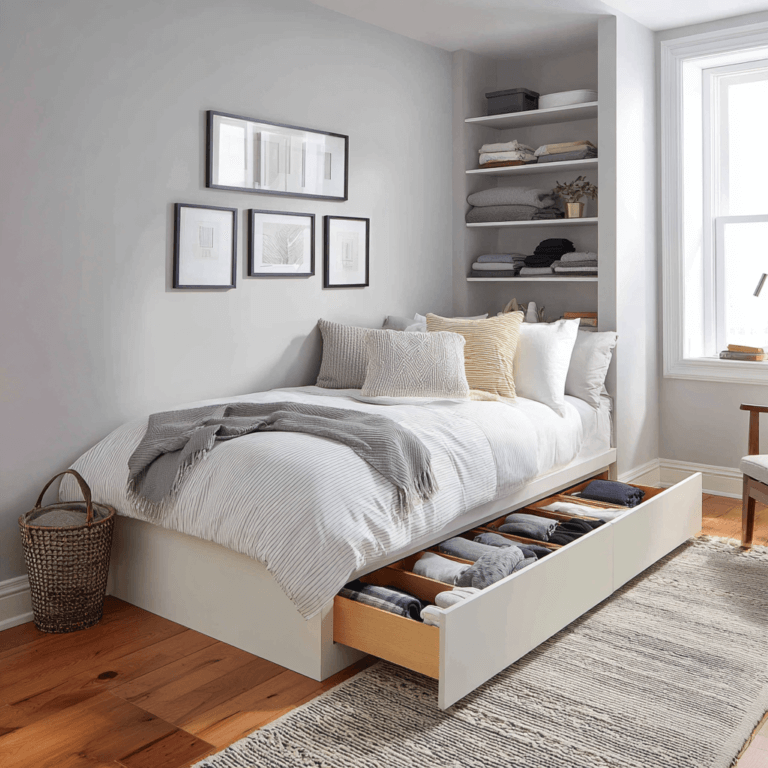
11. Use Underbed Storage to Reduce Clutter
The space under the bed is the biggest closet a studio has: slide-in baskets and shallow bins swallow off-season clothes and spare bedding. Our small bedroom storage ideas go deeper on making the bed zone store itself.
The Living Area
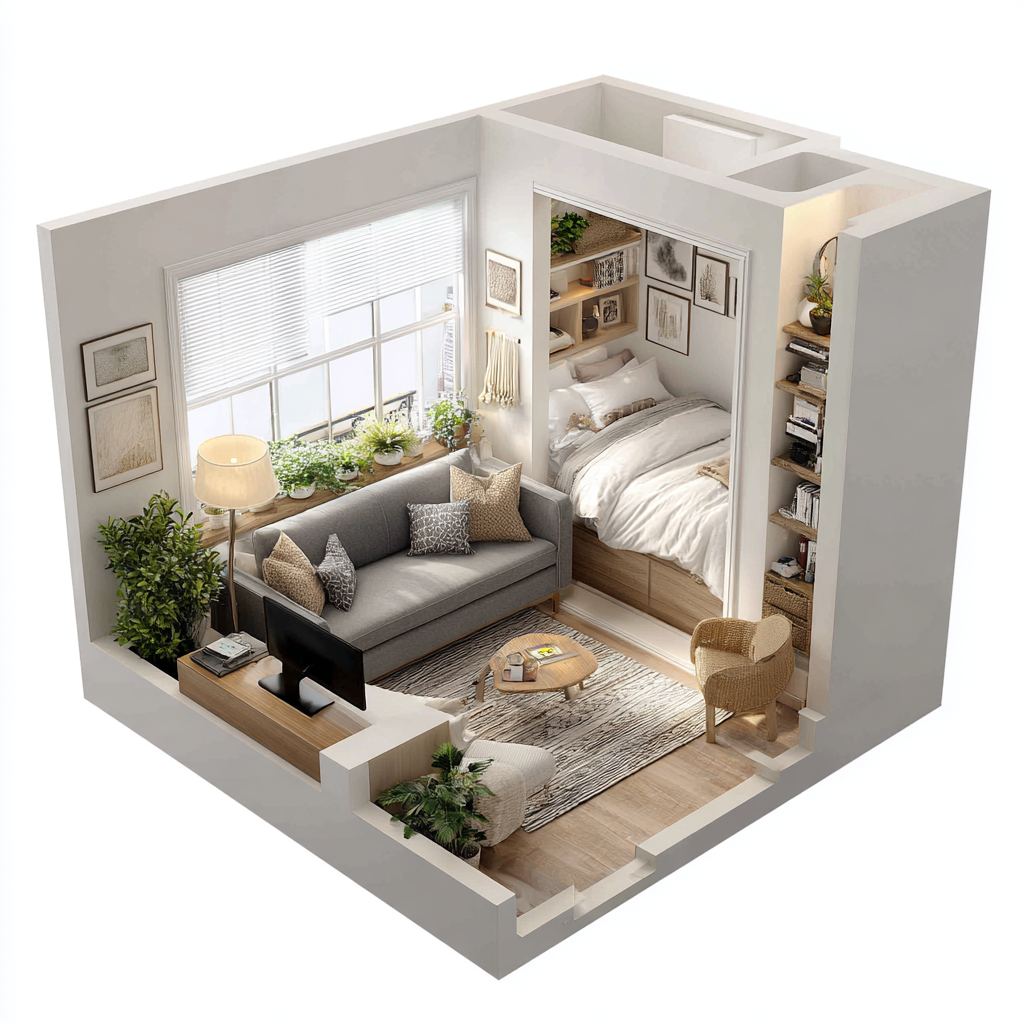
12. Use a Slim Sofa to Shape the Living Zone
The sofa sets the tone for the whole room, so choose slim arms, soft fabric, and legs that show the floor beneath. A loveseat often serves a studio better than a full three-seater.
13. Use a Rug to Anchor the Living Zone
A rug under the seating says “the living room starts here” without a single wall. Size it so the sofa’s front legs sit on it — a too-small rug floats and weakens the zone.
14. Use Furniture to Guide the Eye
Point the main pieces toward the light and keep sight lines to the window clear. When the eye can travel through the room uninterrupted, the studio feels bigger than its measurements.
Dining and Kitchen Corners
15. Use a Small Table That Doubles as a Desk
One good table can hold breakfast at eight and the laptop at nine. A 30-inch round is the studio classic — no corners to bump, room for two, and it tucks against a wall when you need floor.
16. Try a High Table to Open the Floor
Counter-height tables show more floor beneath them, and their stools tuck completely under — the whole dining zone folds to almost nothing between meals.
17. Keep the Kitchen Simple and Bright
In a studio the kitchen is always on view, so clear counters and light tones matter double. Our small kitchen storage ideas cover where everything goes when there are only three cabinets.
18. Use a Rolling Cart for Extra Kitchen Space
A slim cart on wheels is a movable counter: prep station by the stove, coffee bar by the sofa, tucked beside the fridge when the day is done.
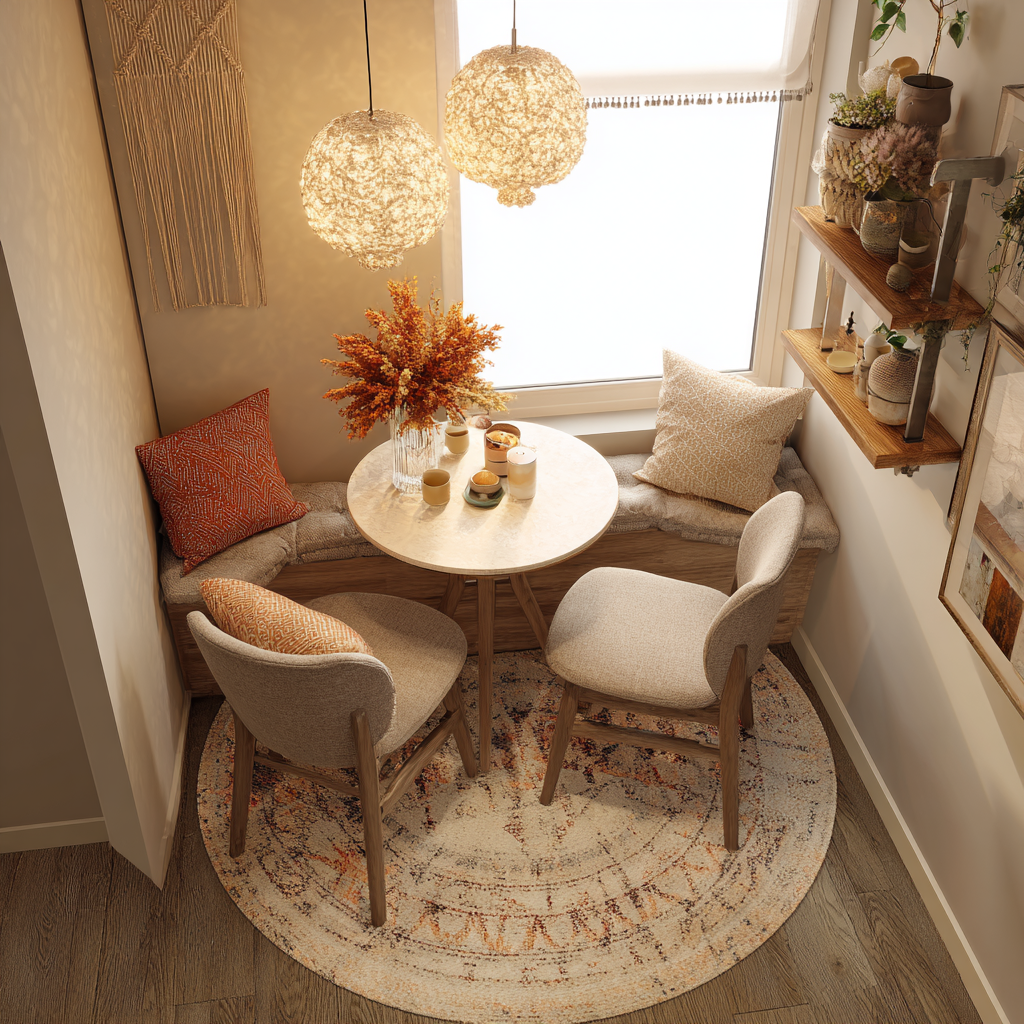
19. Add a Tiny Bistro Table for a Sweet Dining Corner
A café-size table and two light chairs turn an unused corner into the coziest spot in the apartment — proof that even the smallest studio can offer a real place to sit down and eat.
20. Use a Foldable Table for Full Flexibility
A wall-mounted drop-leaf table appears for dinner and vanishes afterward. For more pieces that earn their space twice, see our space-saving furniture ideas.
Light, Color, and Softness

21. Choose Gentle Neutral Colors
Warm whites, creams, and soft wood tones let the walls step back and the room feel larger — the most affordable layout upgrade there is, since it changes how every other piece reads.
22. Use Mirrors to Reflect Light
One generous mirror opposite the window effectively doubles the daylight and visually deepens the room. Simple frame, big glass — the mirror should bounce light, not demand attention.
23. Hang Light Curtains High and Wide
Sheer fabric mounted near the ceiling and wider than the window frame makes both the window and the room look bigger, while softening every edge in the studio.
24. Add Plants for Softness and Height
One tall plant gives a studio vertical life and a touch of calm; a couple of small ones warm the desk and shelves. Greenery reads as space, never as clutter.
25. Add Soft Textures for Comfort
Blankets, cushions, and a good rug add warmth without taking floor space — texture is how a minimal room avoids feeling cold.
26. Use Light Wood for a Calm Look
Pale oak, birch, and ash reflect light instead of absorbing it, keeping the furniture visually quiet and the room bright.
27. Keep Decor Simple and Gentle
One artwork you love beats five you like. In a small room every object speaks, so let a few meaningful pieces carry the space — our wall decor ideas show how to choose them.
28. Shape One Gentle Corner Just for You
A reading chair, a tea shelf, a plant corner — one small spot that serves no practical purpose makes the whole studio feel like a home rather than a floor plan.
Flow and Furniture Choices
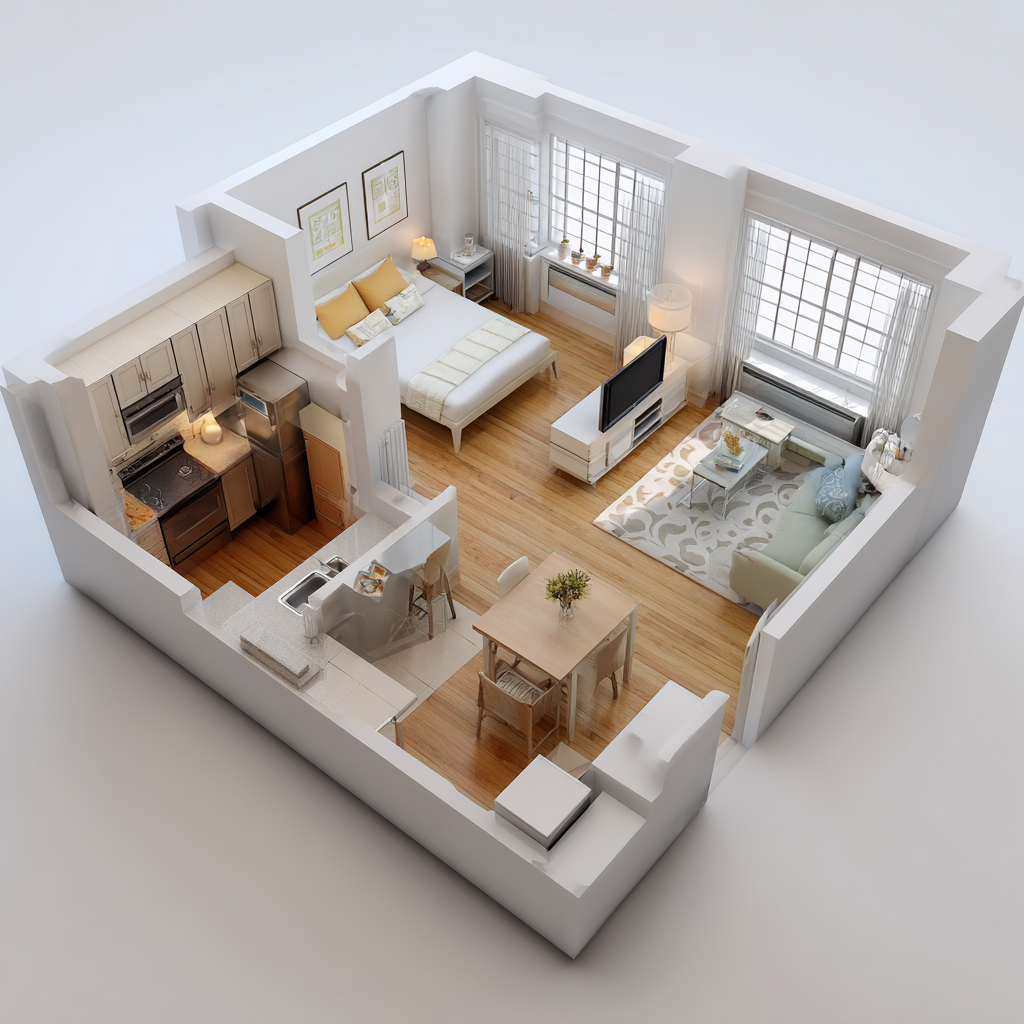
29. Use Lightweight Furniture You Can Move Easily
If one person can lift it, the layout stays alive — the room opens for guests and closes for quiet weeks in minutes. Flexibility is a studio’s superpower; heavy furniture takes it away.
30. Choose the Right Furniture Scale
Slim sofas, compact tables, narrow shelving: pieces scaled to the room keep it balanced, while one oversized item can crowd everything. Our roundup of furniture for small spaces lists the shapes that work.
31. Try a One-Wall Layout
Line the big pieces along one wall and the rest of the studio stays open and bright. It’s the simplest layout to live with, especially in narrow rooms.
32. Keep the Entryway Clear
A slim bench and a few hooks by the door give shoes and bags a landing spot, so the day’s clutter stops at the threshold instead of drifting into your one room.
33. Use Vertical Storage to Keep the Floor Clear
Tall shelves and slim cabinets store upward instead of outward — the floor stays open and the room stays calm. Our vertical storage ideas show how much one wall can really hold.
A Gentle Reminder
These studio layout ideas work best when the home stays light, soft, and uncluttered. A low shelf here, a rug there, a curtain around the bed — your space doesn’t need more things, only thoughtful placement and gentle room dividers where privacy matters.
Frequently Asked Questions About Studio Layout Ideas
How do I arrange furniture in a studio apartment?
Pick the bed corner first (the quietest spot), protect one clear walkway from door to window, then zone the rest into living and dining areas with rugs, lighting, or a low room divider. Everything else is refinement.
How can I make a studio feel bigger?
Light colors on walls and large pieces, furniture with visible legs, one big mirror opposite the window, curtains hung high and wide, and an open center. The eye needs somewhere to travel.
How do I separate my bed in a studio?
The gentlest room dividers are a curtain on a ceiling track, a low or open shelf, or the back of the sofa. Even a dedicated rug under the bed changes how separate the zone feels.
What furniture works best in a studio?
Slim sofas or loveseats, a small round table that doubles as a desk, narrow tall shelving, and a low bed frame with storage underneath — pieces that do two jobs or show the floor beneath them.
How do I lay out a studio on a budget?
Start with the free moves: rearrange into zones, define them with rugs and lamps you own, hang a curtain divider, and add one mirror. Placement costs nothing and does most of the work.
Ready to go from studio layout ideas to a concrete plan? Our 400 sq ft studio apartment layout guide turns these principles into 25 copy-ready floor plans, and our room dividers for small apartments guide covers every soft way to split the space.