

When your closet rail is full, shoes are creeping across the floor and every clear surface seems to collect something, it is tempting to squeeze in another cabinet. But in a small room, wide furniture can solve one storage problem while creating another. It takes away floor space, interrupts the walking path and can make the room feel even more crowded.
Before you buy anything new, look up. The space above a wardrobe, behind a door, inside a tall cabinet or along an unused wall may be able to hold far more than you expect. The best vertical storage ideas do not cover every wall. They give one category of belongings a proper home, keep frequently used things within reach and leave more of the floor visible.
The ideas below include freestanding, over-the-door, tension-mounted and wall-mounted options for bedrooms, closets, kitchens, bathrooms, living rooms and entryways. If you rent, check your lease before drilling. Wherever a tall unit could tip, secure it correctly to the wall—especially in a home with children or pets.
Find the Right Vertical Storage Idea for Your Problem
Start with what you need to store rather than the piece of furniture you like most. A ladder shelf may be lovely for plants, but it will not solve an overflowing wardrobe. A tall closed cabinet may look heavier, yet it can make a room feel calmer because it hides dozens of unrelated items behind one simple door.
| If you need to store… | A good place to start |
|---|---|
| Folded clothes | Tall chest of drawers or closet tower |
| Hanging clothes | Second closet rod |
| Shoes | Over-door organizer or shallow shoe cabinet |
| Kitchen overflow | Shelf risers, wall rail or slim rolling pantry |
| Bathroom products | Over-toilet unit or tension-pole organizer |
| Books and decor | Tall, shallow bookcase |
| Children’s belongings | Anchored storage with daily items placed low |
| Small accessories | Pegboard or vertical accessory station |
| Items you want hidden | Tall closed cabinet |
| Storage without drilling | Over-door, tension-mounted or freestanding systems |
Vertical Storage Ideas for Small Bedrooms
Bedrooms have to hold clothes, bedding, books and personal items while still feeling restful. Begin with the largest category that has nowhere to go, then choose one vertical solution that can contain it.
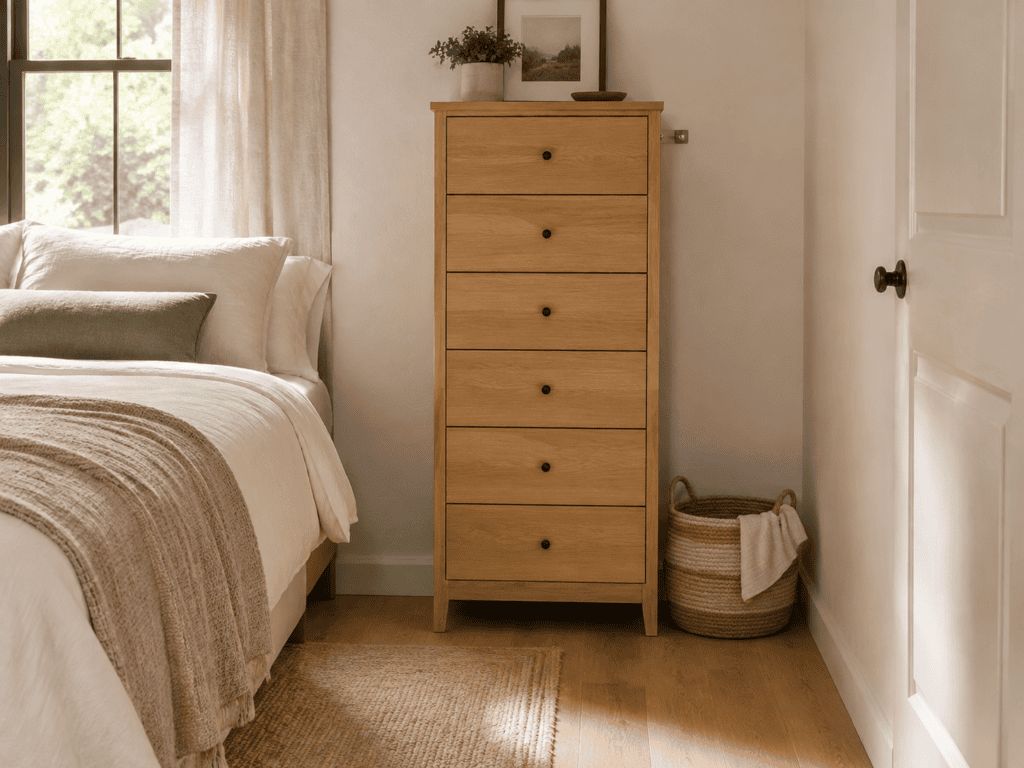
1. Replace a Wide Dresser With a Tall Chest of Drawers
A low, wide dresser can consume most of a small bedroom wall. A tall chest uses the same type of storage in a narrower footprint, leaving room beside it for a laundry basket, reading chair or simply a clearer path around the bed.
This works best for folded clothes, underwear and sleepwear. Measure the available wall width, the height beneath any shelf or sloping ceiling and the clearance needed to open every drawer fully. Check the internal drawer dimensions too; two pieces with the same exterior size can offer very different storage capacity.
Choose a simple front and one consistent finish so the taller shape does not feel busy. Keep frequently worn clothes in the middle drawers, heavy items lower down and occasional pieces at the top. A tall chest is freestanding, but that does not mean it is tip-proof. Anchor it using hardware suitable for both the furniture and your wall type.
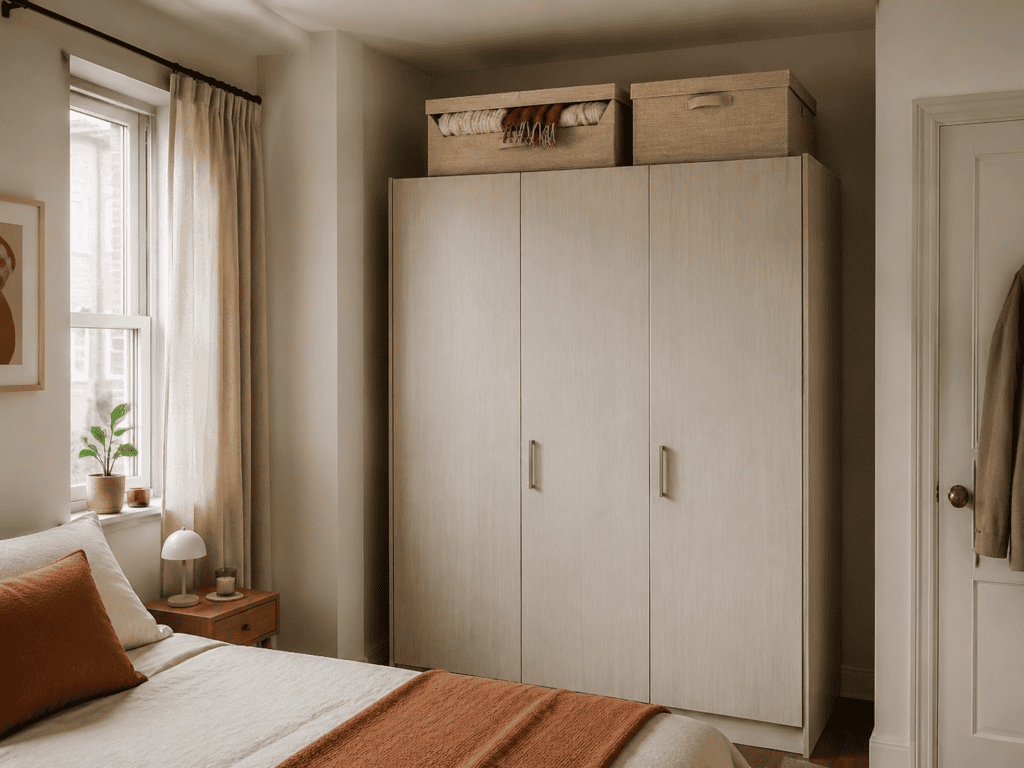
2. Use the Space Above Your Wardrobe
The gap between a wardrobe and the ceiling is often large enough for spare bedding, travel bags or out-of-season clothes. Matching lidded boxes turn that awkward space into useful storage while keeping dust and visual clutter under control.
Measure the complete gap, including any crown moulding, ceiling slope or wardrobe overhang. Choose containers that are slightly shallower than the wardrobe so they do not look as though they are falling forward. Labels on the front will save you from opening every box to find one scarf.
Reserve this area for lightweight belongings you use occasionally. Heavy boxes, glass objects and daily essentials should stay lower. If you need a chair every morning to reach something, it is stored at the wrong height.
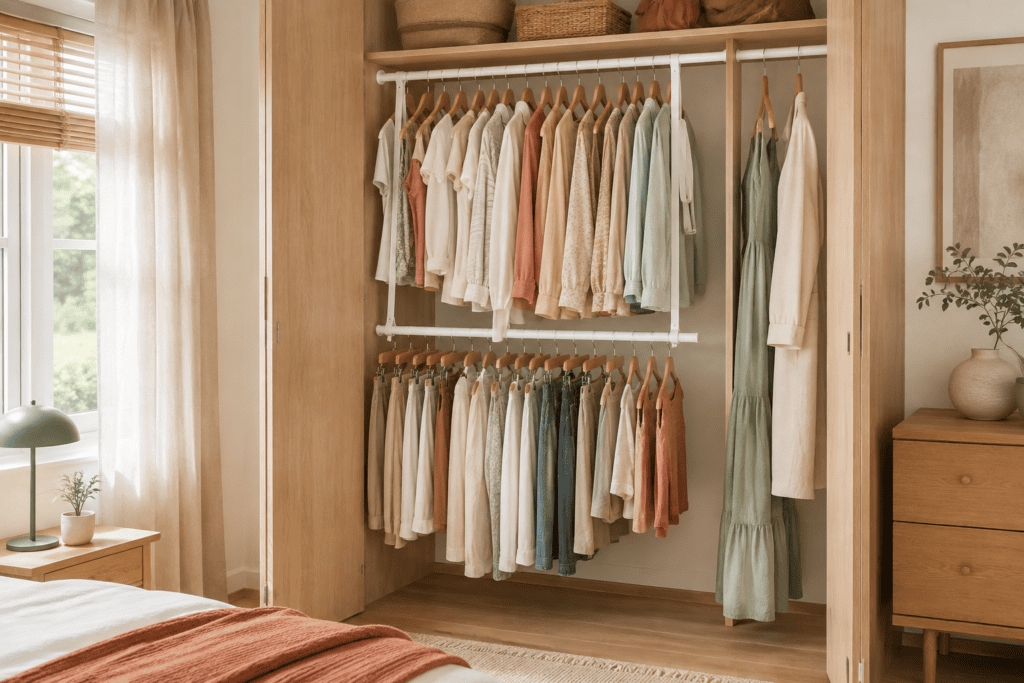
3. Add a Second Hanging Rod Inside the Closet
Many wardrobes have one rail with a large column of unused air beneath shirts and jackets. A second rod can create another complete row for short garments without requiring a larger closet.
Divide your clothes by length first. Keep dresses and long coats in one uninterrupted section, then double the hanging space where shirts, skirts and folded-over trousers will fit. Rods that hang from the existing rail and tension-mounted versions can work without drilling, which makes this one of the easiest renter-friendly upgrades.
Measure from the top rail to the closet floor and allow enough drop for hangers and garments on both levels. Do not overload a lightweight tension rod, and confirm that the original rail can carry the extra weight.
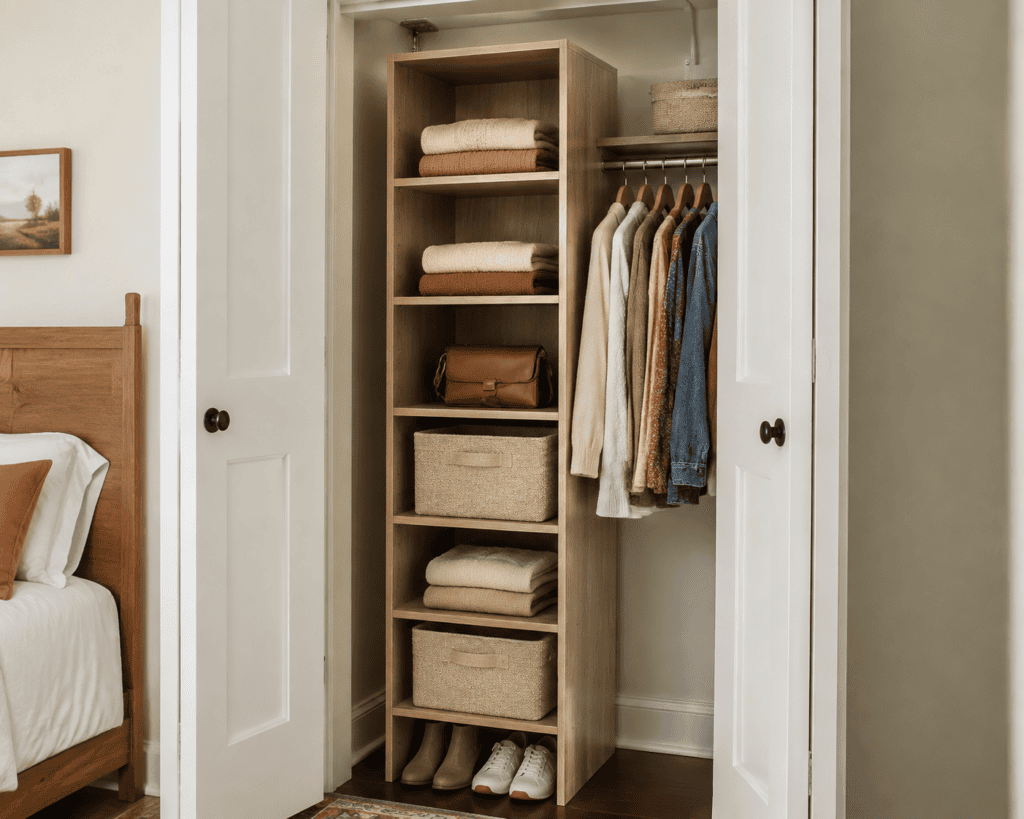
4. Install a Closet Tower With Adjustable Shelves
A narrow closet tower divides one tall empty cavity into separate homes for folded knitwear, handbags, baskets and shoes. It is particularly helpful when piles keep collapsing because the existing shelves are too far apart.
Before buying, measure the internal width, depth and height of the closet rather than its outer frame. Check whether hinged doors, sliding doors or door tracks reduce the usable opening. Adjustable shelves are worth choosing because you can change the spacing as your wardrobe changes.
Open cubbies make everything easy to see, but they can become untidy quickly. Give each shelf one purpose, use baskets for small items and leave enough clearance to remove a basket without disturbing the shelf above it. Secure a freestanding tower if its instructions require anchoring.
5. Create a Vertical Accessory Station
Necklaces on a dresser, belts in a drawer and handbags on the floor create several small pockets of clutter. Bring them together on one narrow section of wall, the side of a wardrobe or the back of a door.
A pegboard, wall grid or column of hooks can hold jewellery, scarves, belts, hats and hair accessories. An over-door organizer is the best no-drill option, while removable hooks can work for light pieces if the wall finish and stated weight limit allow them.
Place the things you use most between waist and eye level. Avoid hanging heavy bags from adhesive hooks, and do not place long necklaces where young children or pets could pull or become caught in them.
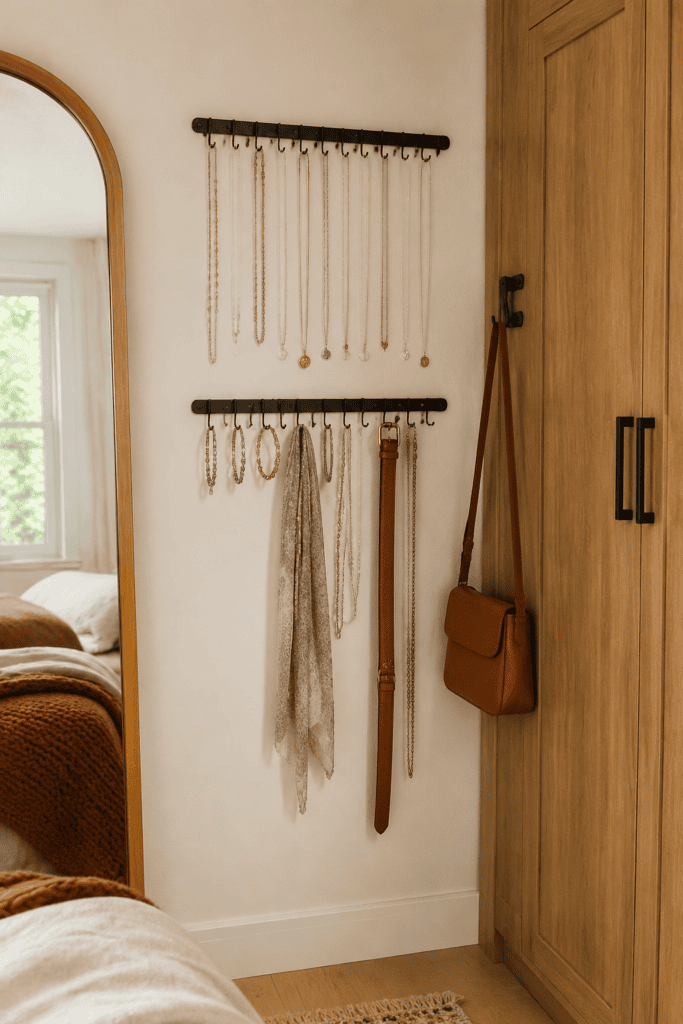
6. Choose a Headboard With Built-In Storage
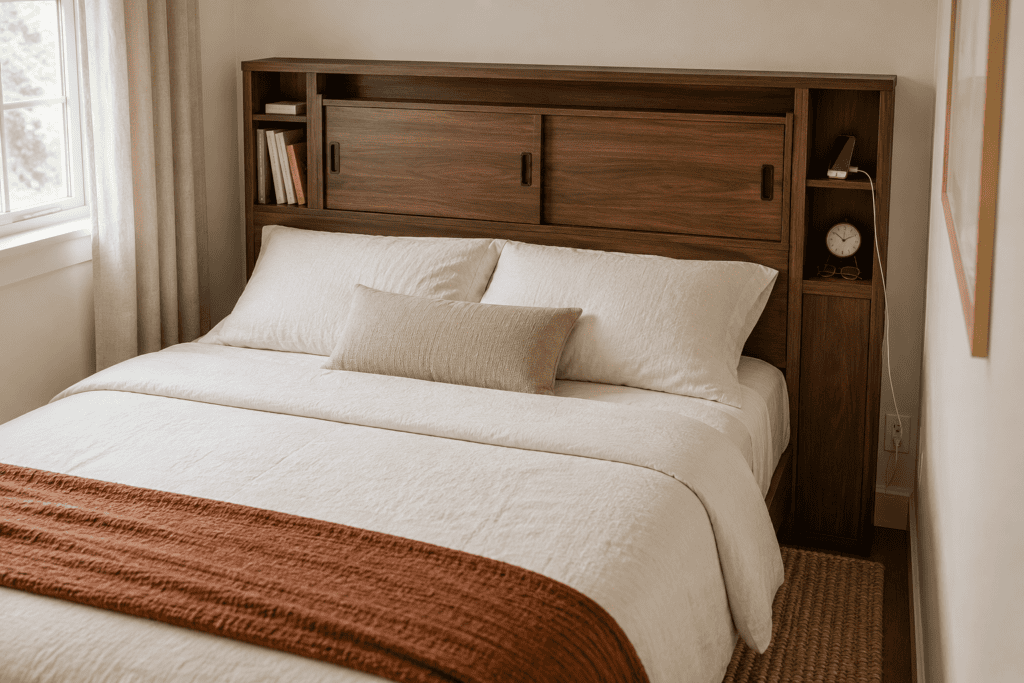
A storage headboard uses the wall behind the bed for books, glasses, chargers and other bedtime essentials. In a very narrow bedroom, it may allow you to replace two bedside tables with one integrated piece.
Look for shallow shelves, small side cubbies and a stable base rather than deep compartments projecting over your pillow. Measure the total depth carefully: a thick headboard moves the mattress farther into the room and may reduce the passage at the foot of the bed.
Keep heavy books, glass frames and plants away from the area directly above your head. Chargers should have a tidy route to the outlet with no cables crossing the bed or floor. If the unit attaches to the wall, use fixings suitable for that wall—not just the screws supplied in the box.
Vertical Shoe and Entryway Storage Ideas
An entryway feels crowded quickly because it has to manage shoes, bags, coats, keys and post in very little space. Instead of adding several small organizers, build one clear vertical landing zone.
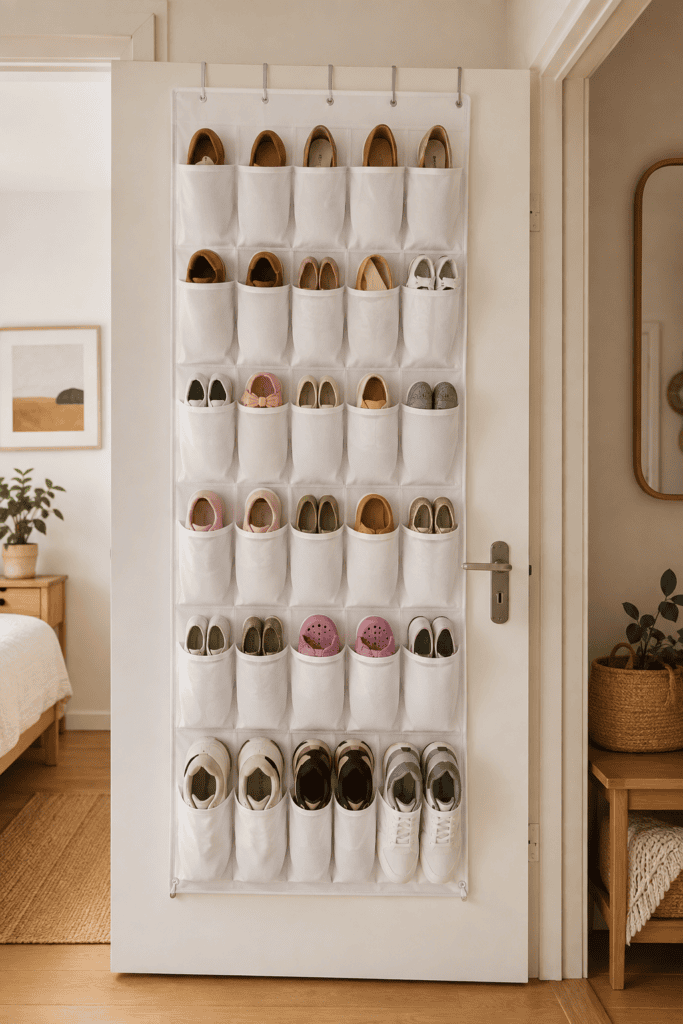
7. Add an Over-the-Door Shoe Organizer
An over-door organizer can move a collection of flat shoes, trainers or children’s shoes off the floor without using any wall space. Pocket styles can also store scarves, hats, cleaning cloths or small accessories when shoes are too large to fit comfortably.
Check the thickness of the door, the depth of the organizer and the clearance between the top of the door and its frame. Make sure the hooks do not stop the door from closing or rub away the finish. On an entry door, confirm that the added depth will not interfere with locks or handles.
Spread heavier shoes across the lower pockets instead of loading the top. If the organizer swings and bangs whenever the door moves, secure its lower corners with a removable method recommended for the door surface.
8. Use a Tall, Shallow Shoe Cabinet
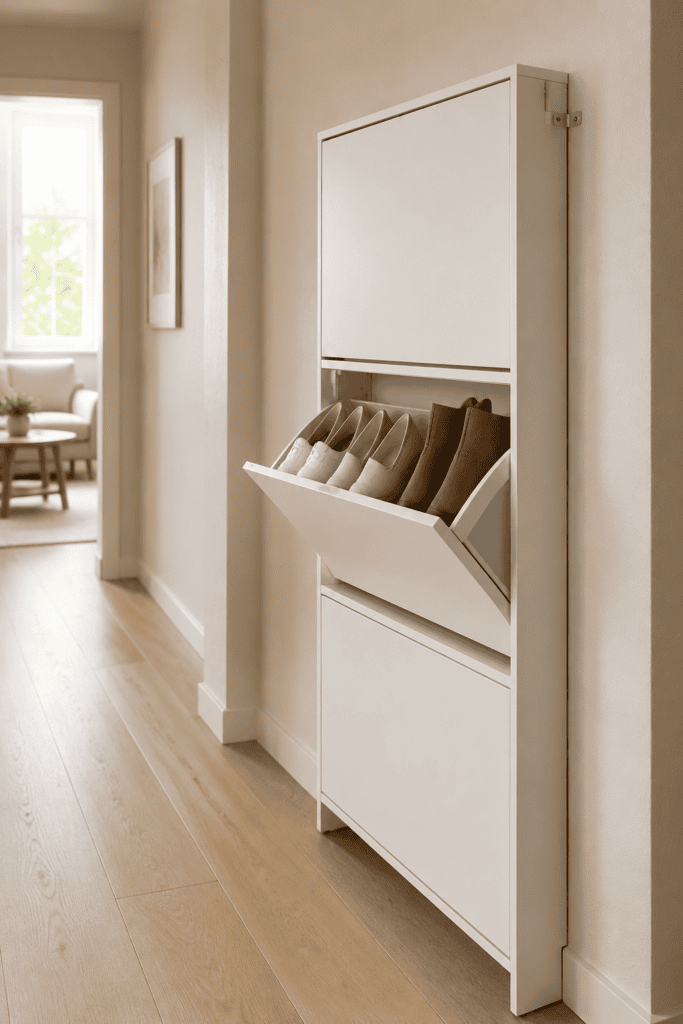
A tilt-out shoe cabinet stores pairs upright and can be much shallower than a normal bookcase. That makes it useful in a narrow hallway where every centimetre of passage matters.
Measure your largest and tallest pair, not only the small shoes you wear most often. Check the cabinet depth both closed and with the compartments open. You also need room to stand in front of it while taking shoes out.
A cabinet with a closed front reduces visual clutter and gives the eye one calm surface. However, shallow cabinets can be front-heavy when several compartments are open. Attach the cabinet to the wall as directed, and never rely on its slim footprint alone for stability.
9. Build a Vertical Drop Zone Near the Door
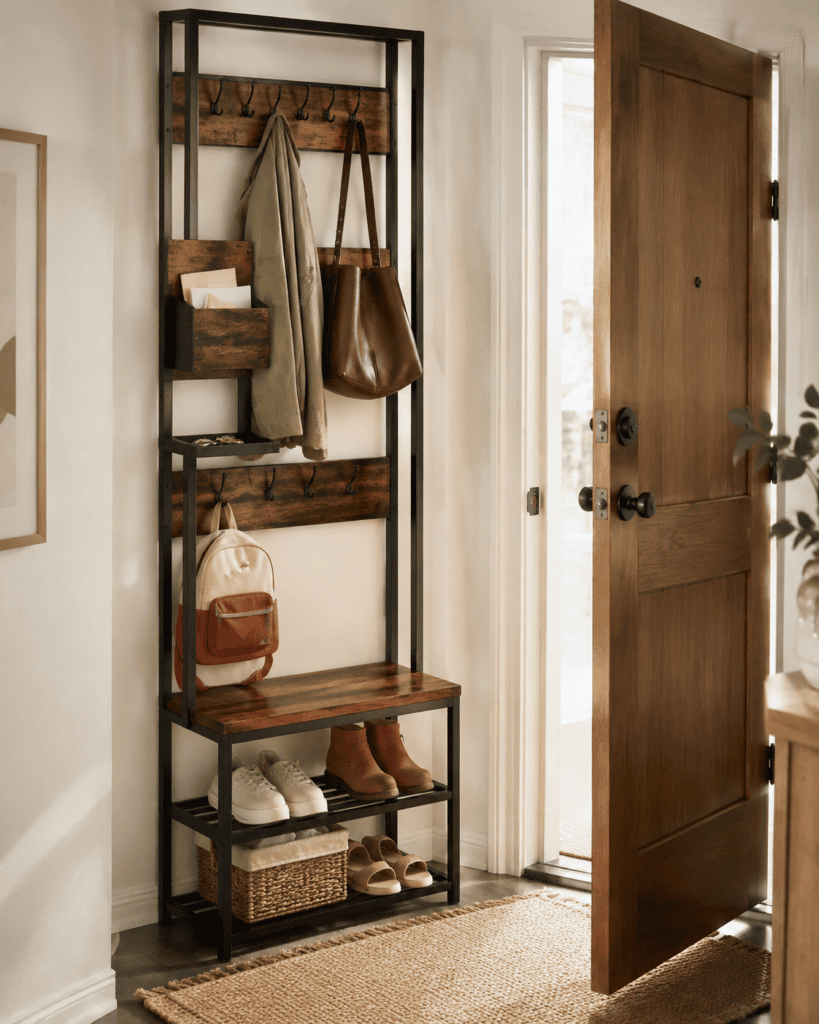
Instead of letting entryway storage spread across a bench, a coat stand and several baskets, organize it in one column. Place shoes or a narrow bin at the bottom, a tray for keys at hand height, a mail holder around eye level and hooks above for coats and bags.
The exact arrangement should follow your routine. If you carry a handbag every day, give it the easiest hook. If a child needs to put away a backpack independently, add a low hook rather than expecting them to reach the adult row.
Keep the system shallower than the narrowest part of the walkway and outside the door swing. A wall-mounted shelf and hooks need proper fixings; a slim hall tree offers a freestanding alternative but may still need anchoring.
10. Stack Wall Hooks at Different Heights
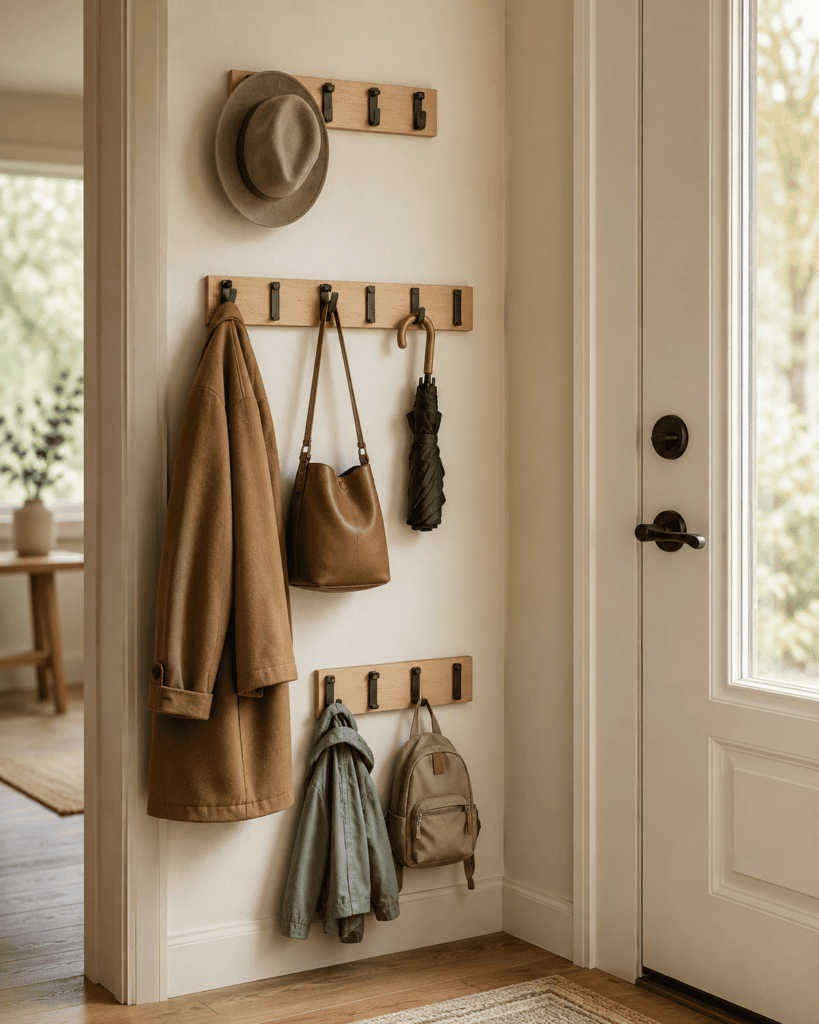
A vertical row of hooks can hold coats, hats, umbrellas and bags in the width of a single hanger. It is a simple way to use a narrow strip beside a door or wardrobe that is too small for furniture.
Stagger the hooks slightly so bulky items do not sit directly on top of one another. Put children’s hooks lower, everyday items in the middle and occasional items higher. Leave enough distance from the door frame for coats to hang without being trapped.
Screwed hooks are normally better for coats and loaded bags. Adhesive hooks should be reserved for light objects and installed only on a compatible, clean surface. Follow the stated load limit rather than judging strength by the hook’s size.
Vertical Kitchen Storage Ideas
Small kitchens often waste height inside cabinets, beside appliances and above work surfaces. The goal is to use that height without crowding the counter or putting everyday items somewhere awkward to reach.
11. Install a Kitchen Rail With Movable Hooks
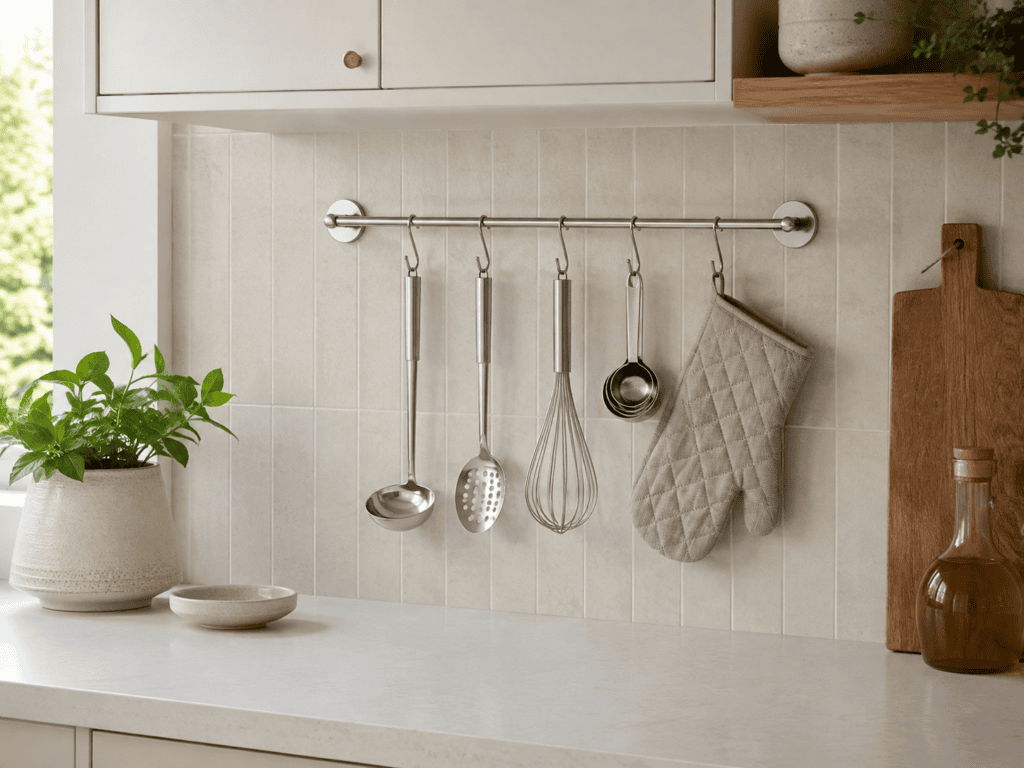
A kitchen rail gathers utensils, measuring cups, oven gloves and small tools along one slim line. Because the hooks can move, you can adjust the system when your cooking habits change instead of drilling new holes for every object.
Install it where tools are easy to reach but cannot fall into the sink or hob. Keep fabric, wood and plastic well away from heat and flames. Measure the rail, the longest hanging utensil and the clear backsplash height before choosing a position.
Limit the rail to things you use regularly. When every utensil is displayed, the backsplash begins to look like overflow storage rather than an efficient work zone. Most rails require secure wall fixing; renters can consider a magnetic version on a suitable refrigerator side or a freestanding utensil rack.
12. Add Shelf Risers Inside Tall Cabinets
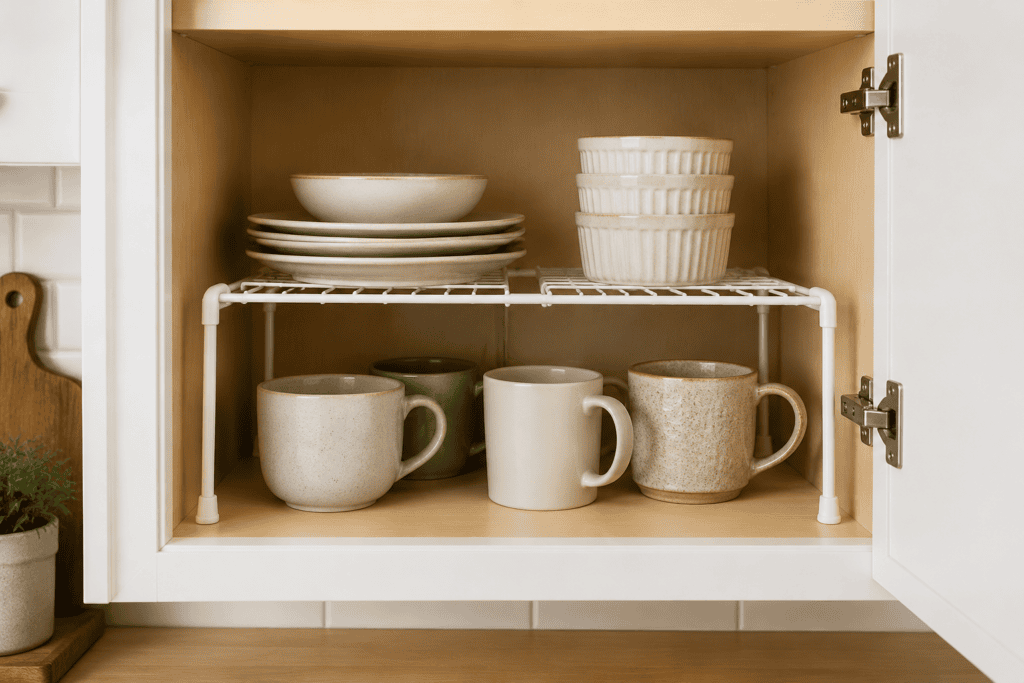
If mugs are stacked precariously beneath a high cabinet shelf, a simple riser can divide that empty height into two useful levels. It requires no drilling and can be moved from one cabinet to another.
Use risers for plates, cups, tins or pantry goods, but measure the cabinet’s internal width and depth first. Allow enough vertical space to lift items from the lower level without knocking the shelf above. Non-slip feet help prevent a lightweight riser from shifting.
Avoid building unstable towers of risers. One well-sized level is usually more useful than several narrow layers that make the back of the cabinet impossible to reach.
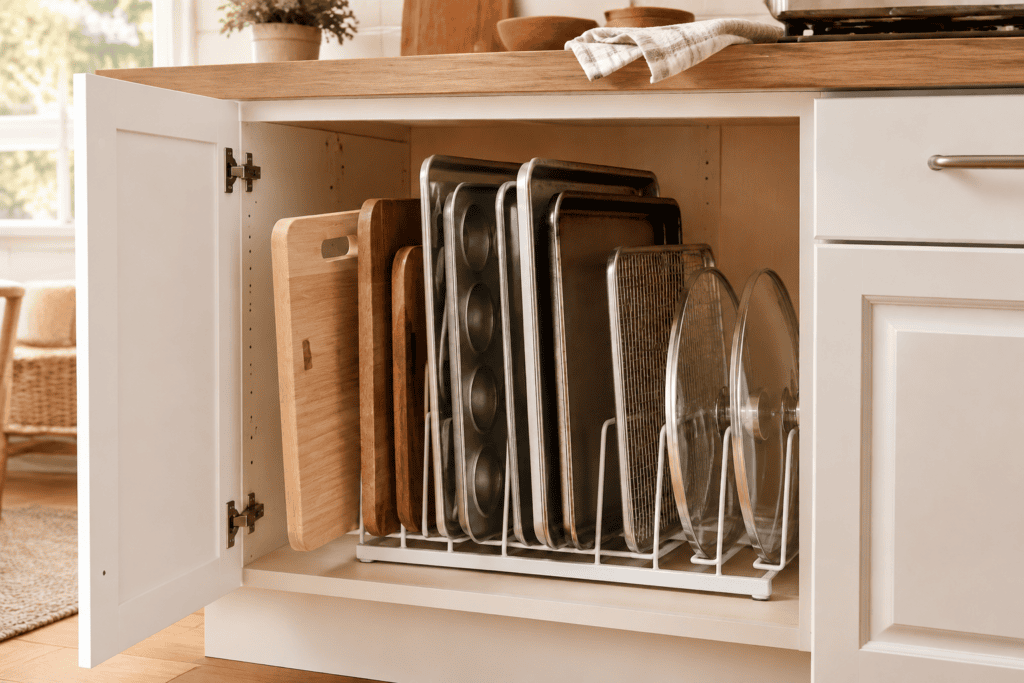
13. Store Trays and Chopping Boards Vertically
Baking sheets, pan lids and chopping boards are frustrating when they form one heavy pile. A vertical divider lets you slide out the item you need without lifting everything above it.
Place a removable rack inside a cabinet or add dividers to a deep shelf. Measure the tallest tray and make sure it will clear hinges and shelf supports. Spaces that are too wide allow thin boards to fall sideways; closer dividers keep each category upright.
Store heavier baking dishes in a lower cabinet where lifting is safer. A rack should sit flat and remain stable when one item is removed, rather than relying on the weight of the whole stack to hold it in place.
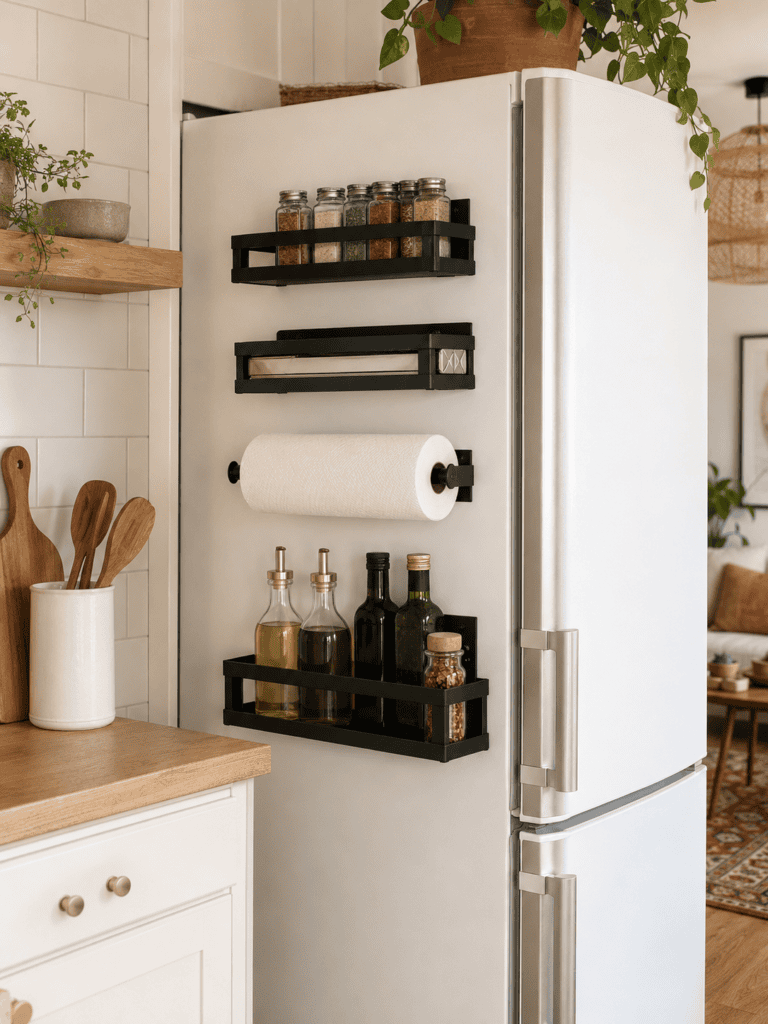
14. Use the Side of the Refrigerator
The refrigerator side can hold a magnetic shelf for spices, foil, paper towels or light kitchen essentials. It is a useful option when the side faces into the room and would otherwise remain blank.
First confirm that a magnet sticks securely to that part of the appliance; some finishes and side panels are not magnetic. Check the manufacturer’s ventilation guidance and leave required air gaps clear. The organizer must not cover controls, vents or a door hinge.
Keep bottles and heavy containers on lower shelves, and choose a unit with a weight rating comfortably above what you plan to store. If it shifts when the refrigerator door closes, reduce the load or use a more secure solution.
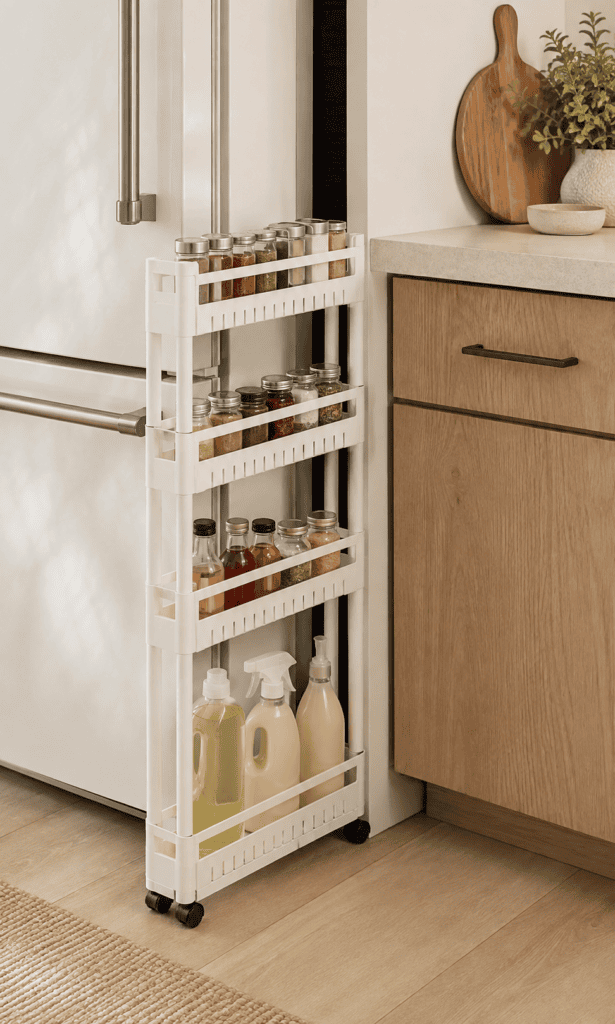
15. Slide a Narrow Rolling Pantry Into an Empty Gap
The slim gap beside a refrigerator or cabinet can become storage for bottles, tins, spices or cleaning refills. A rolling pantry keeps the contents accessible because the whole unit pulls out instead of forcing you to reach into a dark space.
Measure the gap at the floor, middle and top; walls and cabinets are not always perfectly straight. Include handles, wheels and baseboards, and leave a little breathing room so the cart does not scrape either side. Check whether the floor is level and whether the cart can pull out without meeting another door.
Put the heaviest items on the bottom and do not stack bottles above the cart’s guard rails. Very narrow carts can tip when pulled sharply, so choose a stable, purpose-built design rather than improvising a tall tower on small wheels.
Vertical Bathroom Storage Ideas
Bathrooms need accessible storage but have extra challenges: moisture, plumbing, doors and limited wall width. Choose rust-resistant materials and keep anything that must stay dry in closed containers.
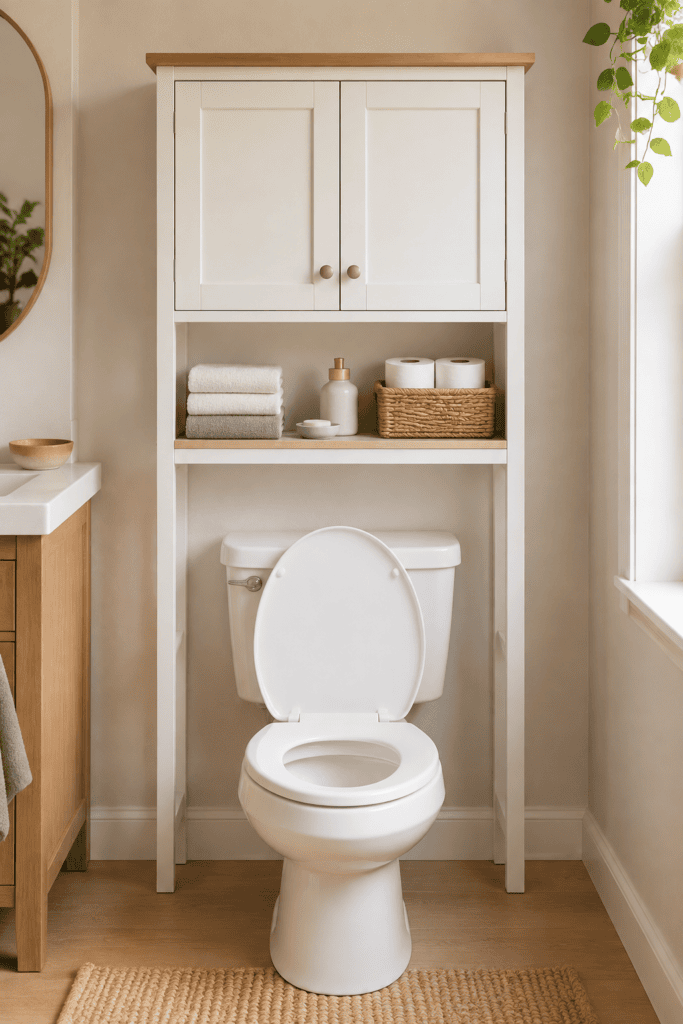
16. Place a Storage Unit Above the Toilet
An over-toilet unit turns the empty wall above the cistern into shelving or closed storage without claiming another patch of floor. It can hold spare toilet paper, towels and toiletries in a bathroom that has no linen cupboard.
Measure the toilet’s full width and height, including the open lid, flush control and any pipes. The unit must leave enough access for maintenance. Shallow shelves are safer in a tight room because they reduce the chance of bumping your head when standing up.
Use baskets or doors to calm the view, and avoid storing glass or heavy objects directly over the toilet. Freestanding frames should be fixed as instructed so they cannot rock or tip.
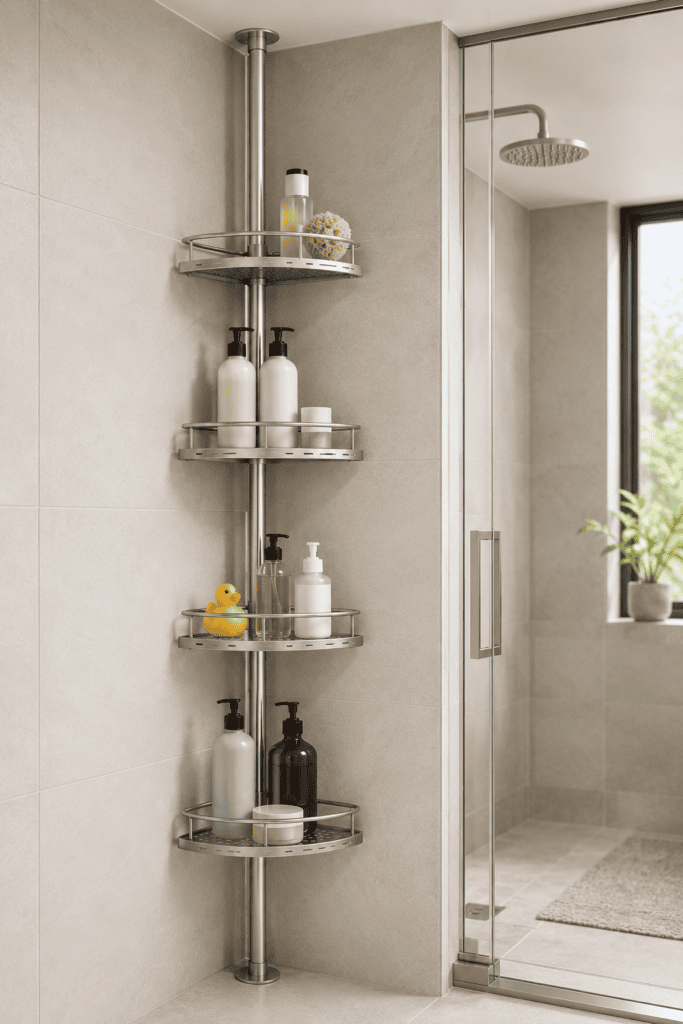
17. Use a Tension-Pole Shower Organizer
A tension-pole organizer fits vertically into a shower corner and provides several adjustable shelves without drilling through tile. It is ideal for shampoo, soap, bath toys and products shared by several people.
Measure the exact floor-to-ceiling height inside the shower and check that both contact points are flat and strong. Choose rust-resistant materials and shelves with drainage holes. Position the pole where it does not narrow your standing space or interfere with the shower door.
Spread bottles between the shelves instead of making the top shelf heavy. Test the tension regularly, particularly after cleaning or moving the shelves, and replace the unit if corrosion weakens it.
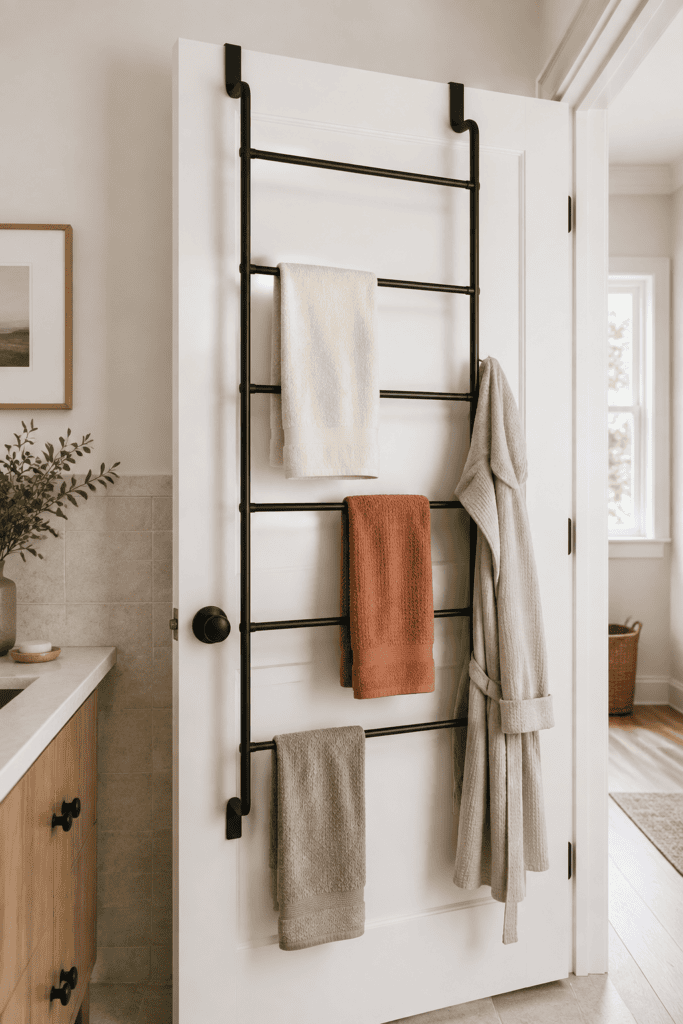
18. Add an Over-the-Door Towel Rack
Several vertical bars or hooks behind the bathroom door can hold towels and robes without taking up a clear wall. This is especially useful when a radiator or tiled surface limits where you can mount a conventional rail.
Check the door thickness and the gap above it before buying. Make sure the rack does not hit the wall, prevent the door from closing or trap damp towels so tightly that they cannot dry. Soft pads beneath the hooks can protect the top of the door.
Leave space between wet towels and avoid overloading a lightweight door. If the room has poor ventilation, a wall rail with better airflow may be more suitable than storage hidden behind the door.
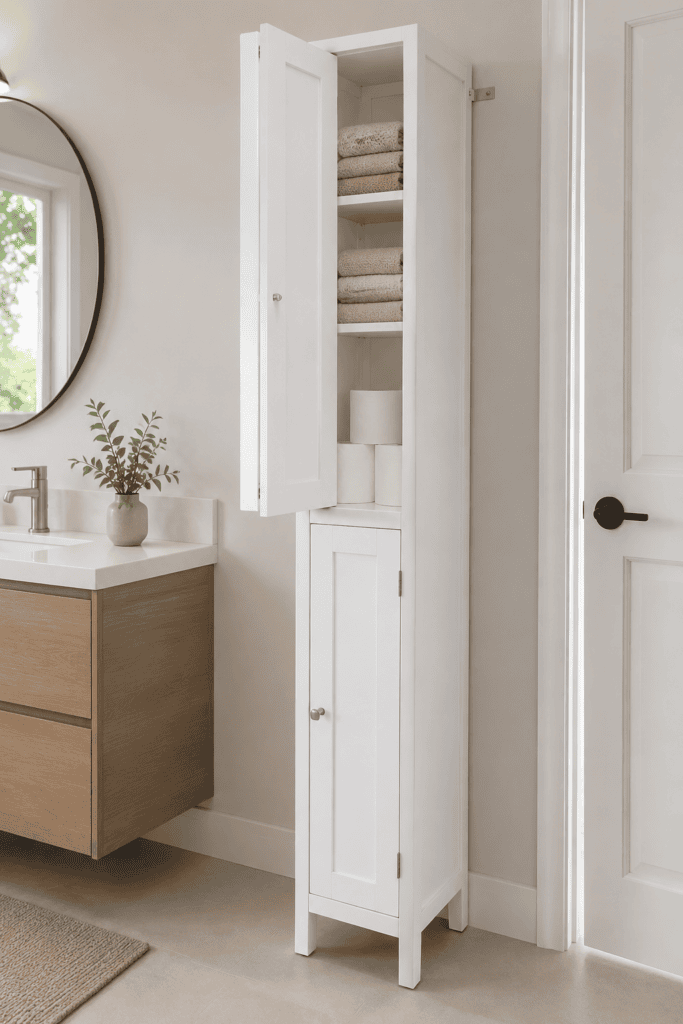
19. Choose a Tall, Narrow Bathroom Cabinet
A slim closed tower can hold towels, toilet paper, toiletries and cleaning products while hiding the mix of labels and packaging that makes a small bathroom feel busy.
Measure around skirting boards, pipes, outlets and the arc of the bathroom door. Moisture-resistant materials and raised feet are useful where the floor may become wet. Check whether shelves can be adjusted to avoid wasting height above short products.
Keep heavier supplies low and medicines or cleaning chemicals secured away from children. Because bathroom towers are narrow, anchoring is especially important. If drilling through tile is required, confirm the fixing method and what may be behind the wall before you begin.
Vertical Storage Ideas for Living Rooms and Studios
In a small living room, tall storage works best when it is concentrated rather than scattered. One organized storage wall usually feels calmer than a short cabinet, separate bookcase and several small shelves competing around the room.
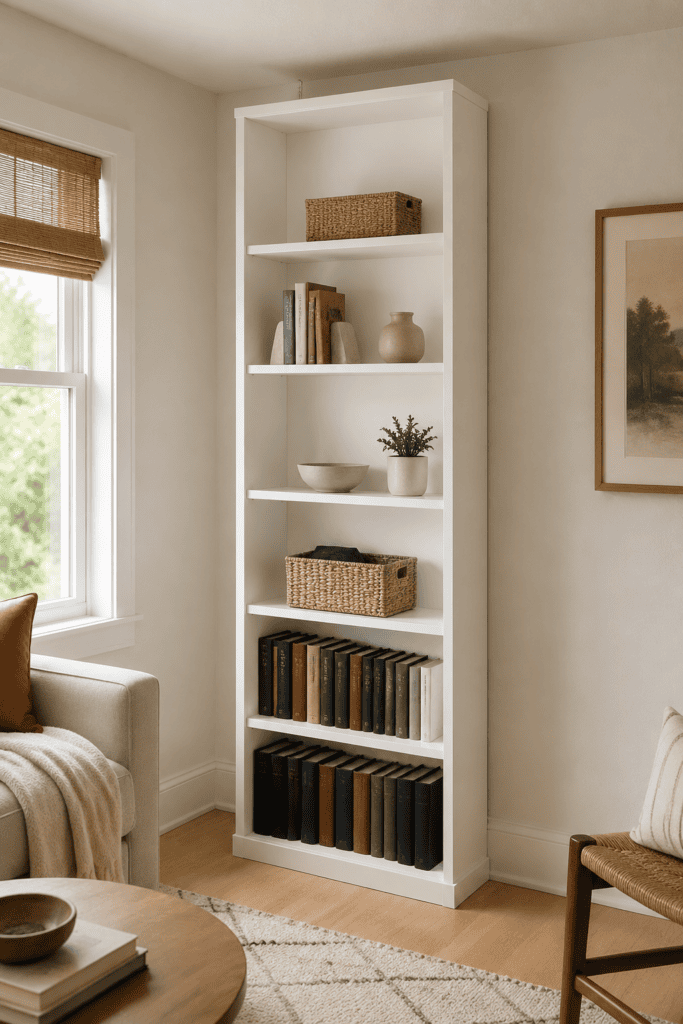
20. Take a Bookcase Close to the Ceiling
A tall, shallow bookcase uses less floor depth than many low storage units while offering room for books, baskets and a limited display. Its vertical lines can also draw the eye upward and make a low room feel taller.
Choose the depth according to what you genuinely need to store. Paperbacks need less depth than large art books or fabric baskets. Measure ceiling height, baseboards, outlets and window trim, and make sure the top can be anchored without hitting a picture rail or sloped ceiling.
Place heavy books on lower shelves, use matching baskets for small unrelated items and leave a little empty space. Reaching the ceiling is not the same as filling every centimetre; breathing room is what keeps a practical bookcase from becoming a wall of clutter.
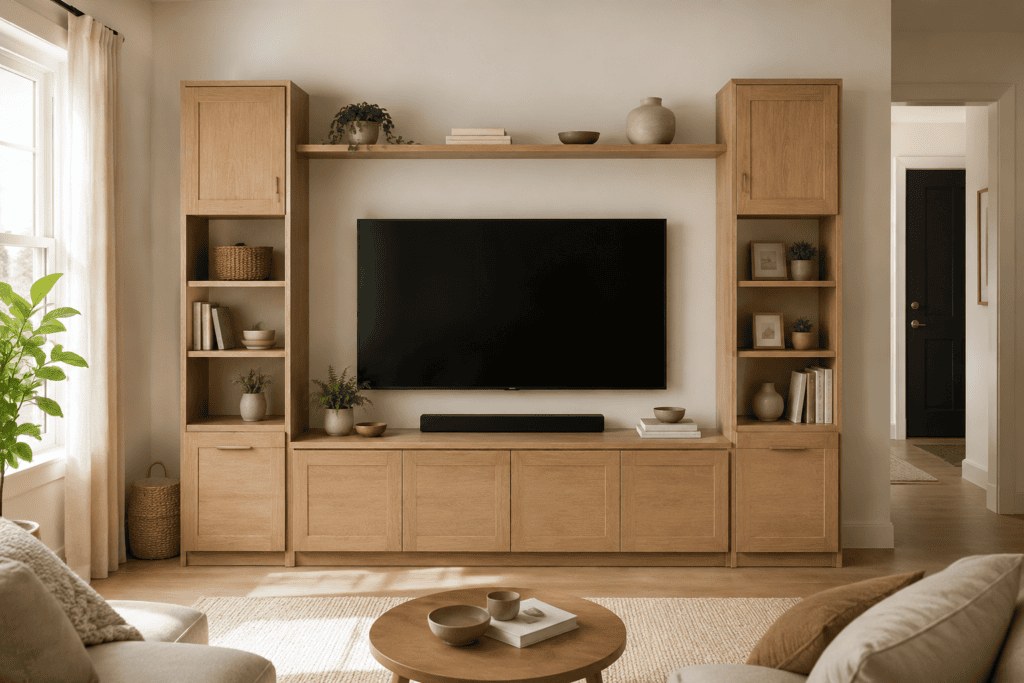
21. Build Storage Around the Television
Narrow cabinets beside the television and a carefully positioned shelf above it can turn one wall into a complete media and storage zone. This is more efficient than spreading a TV stand, bookcase and extra cabinet across three walls.
Begin with the television manufacturer’s ventilation clearances. Plan access to power, cables and any equipment that needs a remote signal. Closed lower cabinets can hide electronics, toys or paperwork, while a small amount of open shelving keeps the wall from appearing too solid.
Avoid squeezing the screen into a niche with no room for a future replacement. Wall-mounted units need fixings appropriate for their combined loaded weight, not only the empty cabinet weight.
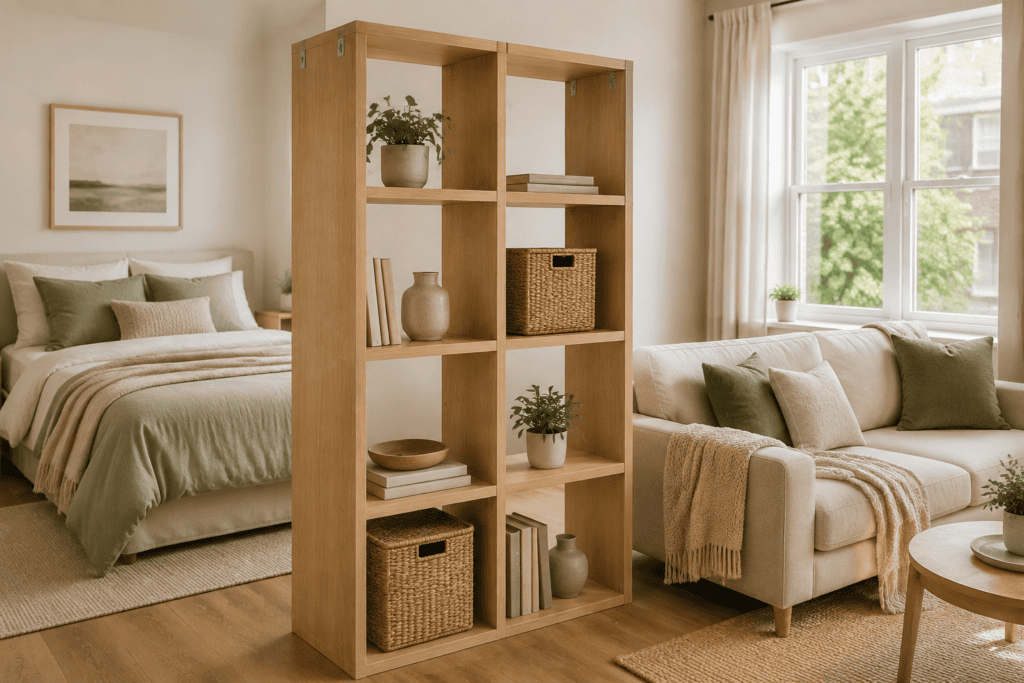
22. Use a Storage Bookcase as a Room Divider
In a studio apartment, an open-backed bookcase can store belongings and create a visual boundary between sleeping and living zones. It allows more light to pass through than a solid wardrobe and gives both sides of the room a useful surface.
Choose a unit deep enough to be stable but not so deep that it blocks the route through the studio. Keep some cubbies open to preserve the sightline, and use coordinated baskets where privacy or hidden storage is more important.
The divider must be secured so it cannot topple from either side. Do not place heavy objects high up, and make sure the unit does not cut off the room’s only window or main escape route. For more ways to create zones without building a wall, see our room divider ideas for small apartments.
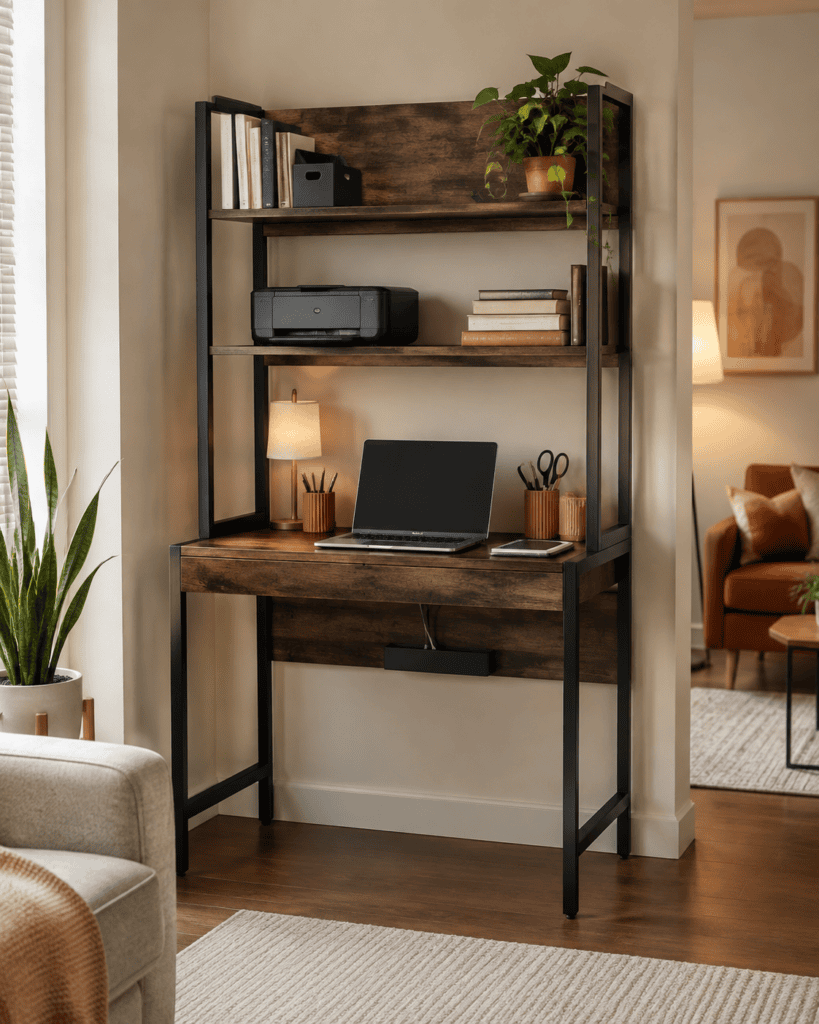
23. Add Shelves Above a Desk
A desk with shelves rising above it creates a complete office in one narrow section of wall. Books, stationery and small equipment live above the work surface, leaving the rest of the room available for daily life.
For a renter-friendly option, choose a freestanding desk with an attached hutch or a ladder desk. If you mount shelves, position the lowest one high enough that you will not hit it when standing, yet low enough to reach without climbing.
Use containers for cables and small stationery, and avoid filling the shelves with objects unrelated to work. A visually noisy desk can make it harder to switch off when the office sits in a bedroom or living room. This idea also pairs well with our guide to space-saving furniture ideas
Vertical Storage for Overlooked Spaces
Once the main storage problems are under control, look at the narrow and high spaces that standard furniture cannot use. These areas are best for specific, lightweight categories—not general overflow.
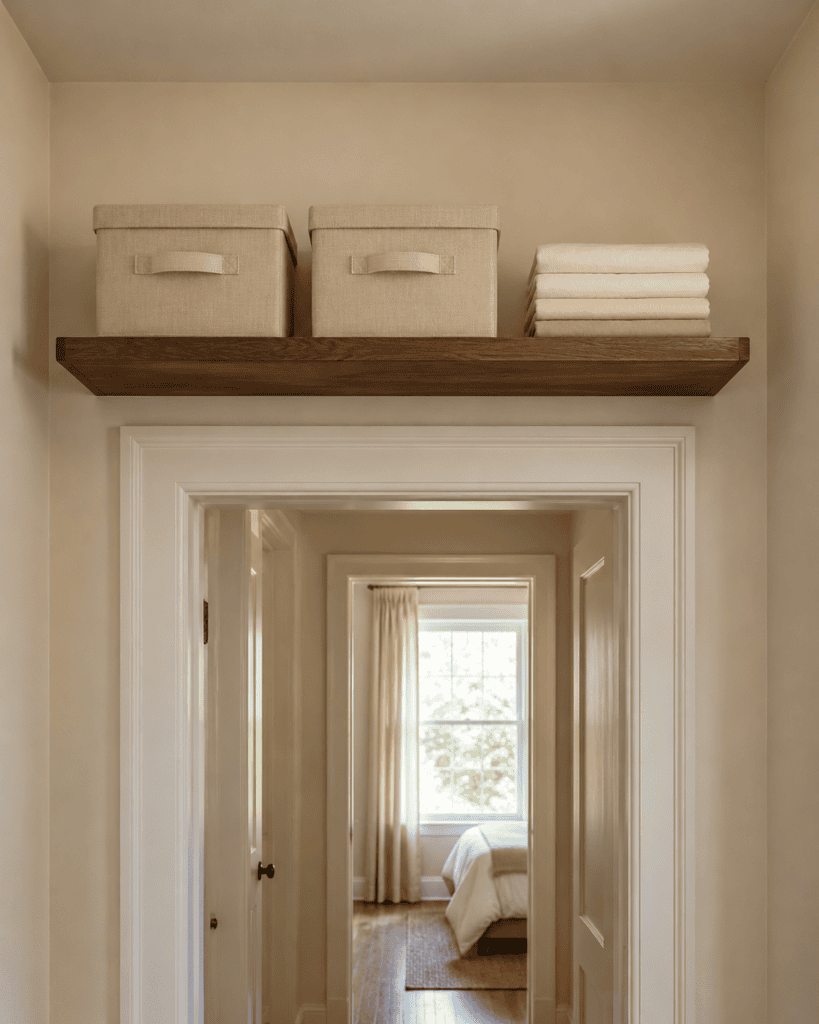
24. Install a Shelf Above a Doorway
The wall above a doorway can hold spare linens, seasonal accessories or a row of light storage boxes. Because the shelf sits outside the main furniture zone, it adds capacity without narrowing the floor below.
Measure the wall width, the door trim and the distance to the ceiling. Check for vents, alarms, switches and possible electrical routes before drilling. The shelf should be deep enough for its containers but not project awkwardly over the doorway.
This is storage for occasional items only. Do not place heavy, fragile or loose objects overhead, and never improvise the fixings. If you cannot identify the wall construction or what may run inside it, get appropriate advice before drilling.
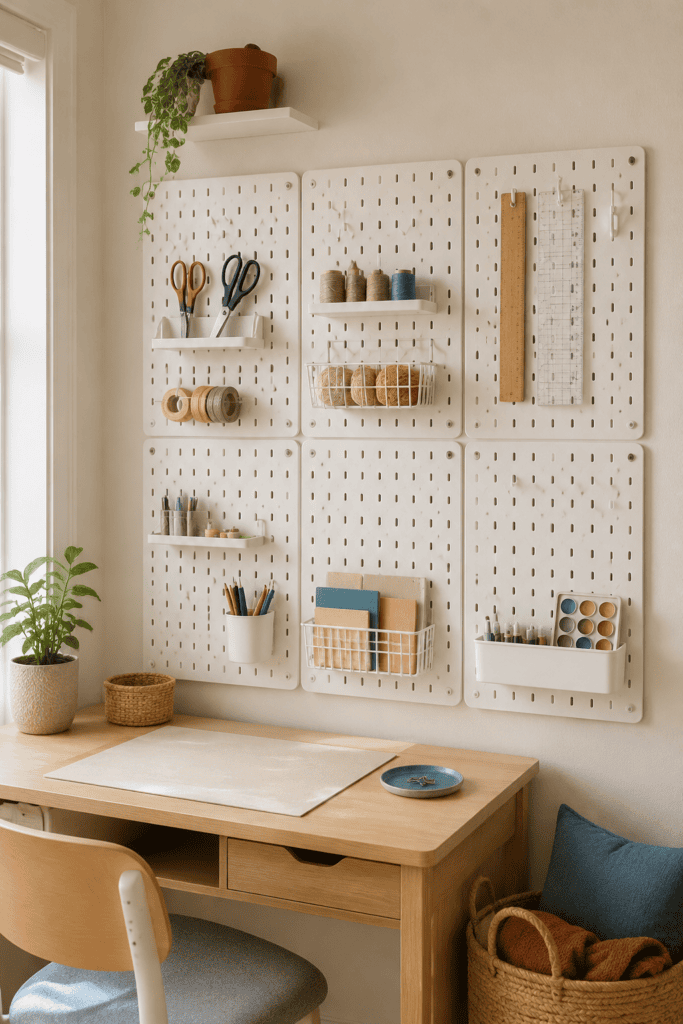
25. Use a Pegboard That Can Change With Your Needs
A pegboard is one of the most flexible vertical storage systems because hooks, baskets and small shelves can move as your needs change. The same panel can organize craft tools today, office supplies next year or children’s art materials as they grow.
Give the board one clear purpose and arrange the most frequently used pieces around eye and hand level. Trace or label tool positions if several people use the station. Leave some holes empty so new items can be added without rebuilding the whole arrangement.
Wall-mounted boards need secure fixing and spacers behind them so the hooks can engage correctly. A freestanding or desktop pegboard offers a renter-friendly alternative. Respect the load limit of the board, hooks and baskets, and keep sharp tools out of children’s reach.
How to Keep Vertical Storage From Looking Cluttered
Vertical storage opens up a small space only when the room also becomes easier on the eye. If every wall is covered with shelves and every shelf is full, you may gain capacity but lose the sense of openness you wanted.
Concentrate tall storage on one main wall where possible. Mix closed doors with a smaller amount of open display, and use matching baskets or boxes for categories made up of many small objects. In a narrow passage, shallow storage is usually more valuable than maximum capacity.
Give shelves a little breathing room. A bookcase does not need decor in every gap, and a kitchen rail does not need to hold every tool you own. Repeat a limited palette of materials and colours so separate containers feel like one system rather than several last-minute additions.
Most importantly, do not use new storage as permission to keep everything. Vertical space is still limited. If an item is broken, duplicated or no longer useful to you, removing it will open the room more effectively than buying another organizer.
What to Measure Before You Buy
Measure twice: once for the storage unit and once for the way you will use it. A cabinet may fit the wall perfectly but still block a switch or leave no room to open its drawers.
- Floor-to-ceiling height and available wall width
- Unit depth, including handles and open doors or drawers
- Baseboard, picture rail and window-trim projection
- Door swing and the narrowest point of the walkway
- Curtain, radiator and ventilation clearance
- Outlet, switch, pipe and access-panel positions
- The dimensions of the largest item you want to store
- Shelf, hook and rail weight limits
- Space needed to remove baskets or reach the back
- Whether safe wall anchoring is possible
Use painter’s tape to mark the proposed width and height on the wall. Then walk through the room, open nearby doors and view the outline from the entrance. This simple test often reveals when a unit will feel larger than it looked on the product page.
Put Each Item at the Right Height
Vertical storage works better when height reflects weight and frequency of use.
| Storage height | What belongs there |
|---|---|
| Floor to waist | Heavy items, shoes and children’s everyday belongings |
| Waist to eye level | Frequently used daily items |
| Above eye level | Weekly or occasional items |
| Highest shelves | Lightweight seasonal belongings |
Fragile and heavy objects should not be stored overhead, particularly above beds, sofas or children’s play areas. Keep a stable step stool available for occasional high storage; do not climb on chairs, drawers or shelves.
When Vertical Storage Is Not the Right Answer
Not every empty wall needs to work harder. Reconsider a vertical storage idea if it blocks natural light, narrows an important passage, covers ventilation or makes daily belongings difficult to reach. Storage above a bed or seat should never depend on weak fixings or hold objects that could cause injury if they fell.
You should also pause if a tall unit cannot be anchored safely, if drilling may meet unidentified pipes or cables, or if the proposed system would cover every wall and make the room feel visually restless. Sometimes a lower-capacity closed cabinet, a better closet edit or fewer belongings will create a calmer result than another tall shelf.
Frequently Asked Questions
How can I create vertical storage without drilling?
Use over-the-door organizers, tension poles, freestanding tall cabinets, shelf risers, rolling pantries and furniture with built-in upper storage. Magnetic organizers can work on compatible appliance surfaces, while a freestanding pegboard or desk hutch can replace wall-mounted shelves. Remember that tall freestanding furniture may still need anchoring for safety, so no-drill and no-anchor do not always mean the same thing.
Does vertical storage make a small room look bigger?
It can. Tall storage frees visible floor area and draws the eye upward, but the effect depends on scale and styling. Shallow units, simple fronts and some empty space tend to feel lighter. A wall filled edge to edge with open storage may make the room look busier even when the floor is clearer.
Is open or closed vertical storage better in a small space?
Closed storage is usually better for clothing, paperwork, cleaning supplies and mixed household overflow. Open storage works well for frequently used items or a small, coordinated display. Many small rooms benefit from a combination: closed storage for most belongings and a few open sections for easy access and personality.
How deep should storage be in a narrow room?
There is no single ideal depth because books, shoes, clothes and pantry bottles require different dimensions. Measure the largest item first, then add enough clearance to remove it comfortably. Mark the depth on the floor and check that doors can open and people can pass without turning sideways.
Is it safe to install shelves above a bed?
The safest approach is to avoid heavy, glass or loosely secured objects above a sleeping area. Any shelf near a bed should be shallow, lightly loaded and fixed correctly to the wall type. If you are uncertain about the structure, hardware or hidden services, place the storage on another wall or ask a qualified professional.
How can renters use vertical storage?
Start with over-door, tension-mounted and freestanding systems that can move with you. Removable hooks may suit lightweight items on compatible surfaces, but they are not appropriate for loaded shelves or heavy bags. Check your lease before drilling and plan how any permitted holes will be repaired when you leave.
Start With One Crowded Category
You do not need to cover every wall to make vertical storage work. Begin with the room that feels most crowded and name the one category causing the problem: shoes, folded clothes, bath products, pantry goods or paperwork. Then choose a system that moves that category upward while keeping it stable and easy to reach.
The best vertical storage idea is not necessarily the tallest or most ingenious. It is the one that frees the floor, fits the belongings you actually own and makes everyday tidying simpler. For more ways to make a compact home work harder, explore our guides to furniture for small spaces
