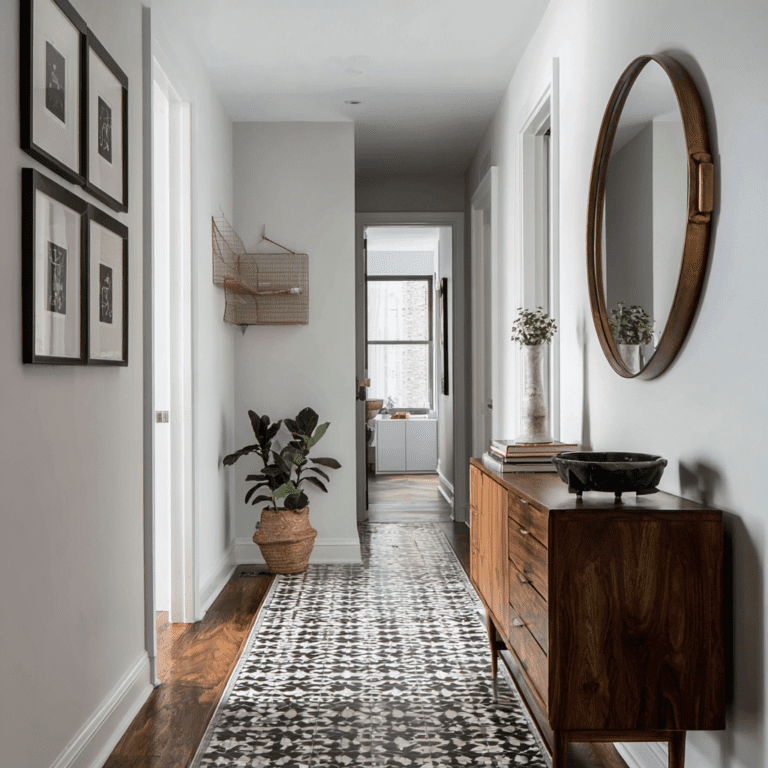

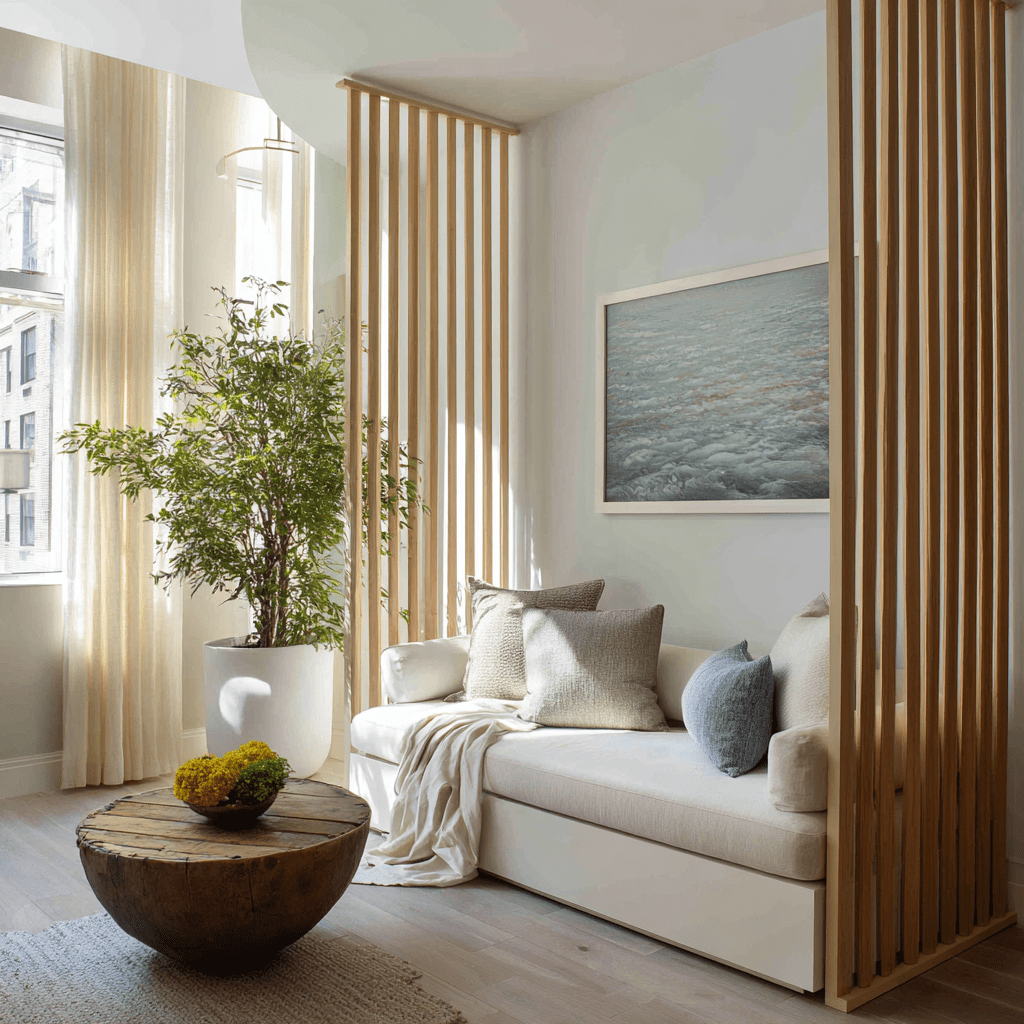
Room dividers for small apartments can turn one open room into a home with real places in it — a spot to sleep, a spot to work, a spot to rest — without building a single wall. Whether you’re looking for room divider ideas for small spaces, a temporary room divider for a rental, or the cheapest way to partition a studio, in this guide you’ll find 36 soft, renter-friendly divider ideas, plus practical answers on how to divide a room for privacy, what the cheapest options are, and how to choose the right size for your space. Everything here is light, moveable, and kind to security deposits.
A good divider is more than a barrier. It shapes the layout, guides the light, and lets each corner of a small home feel like its own peaceful area — so you can sleep, work, and relax without everything happening in one undefined space.
How to Divide a Room for Privacy (Without Building Anything)
You have three renter-safe levels of privacy to choose from. The softest is a curtain on a ceiling track or tension rod — it closes fully when you want it, disappears when you don’t. The middle option is a freestanding folding screen or open shelf, which blocks the direct view while letting light and air move. The strongest is a temporary partition wall, which stands on pressure mounts and comes down without a trace when you move. If you’re dividing a studio, our 400 sq ft studio apartment layout guide shows where a divider does the most good in a one-room floor plan.
What’s the Cheapest Way to Partition a Room?
Of all the cheap room divider ideas, a curtain wins on price almost every time: a tension rod (about $15–30) and a pair of light curtains ($20–40) come in under $70 total, need no tools, and wash in a machine. The next cheapest is a secondhand folding screen (often $30–60 used, $60–150 new) or a simple open bookshelf you already own, turned sideways to face the room — the classic budget shelf divider, IKEA’s Kallax, runs about $70–90 new. Save the bigger spend for a divider that also works as storage — that’s the one that pays for itself.
How to Choose the Right Size Room Divider
Match the height to the job: waist-high (around 30–40 inches) separates zones while keeping the room visually open; shoulder-to-eye height (50–60 inches) gives seated and sleeping privacy — the sweet spot for most small apartments; and near-ceiling height creates true room-like separation but visually shrinks the space, so save it for tall ceilings. For width, cover the sight line you actually want to block, not the whole room — in most studios that’s just 4 to 6 feet beside the bed. And whatever you place, keep the main walking path at least 28–32 inches wide so the room still moves freely.
Room Dividers for Small Apartments: 36 Soft Ideas to Copy
Here are 36 room dividers for small apartments, from sliding panels to storage walls, plant screens, and rug zones. Most need no drilling, all of them keep light moving, and every one works in a rental.
1. Sliding Dividers for Smooth, Gentle Separation
Sliding panels glide out of the way when you don’t need them and close softly when you do — no floor space lost to swinging or folding. They’re the most flexible choice for studios, shared bedrooms, and small living rooms that change roles through the day.
- space-saving movement
- soft separation
- quiet design
2. A Temporary Partition Wall With a Door
A freestanding partition creates a genuine private nook — a sleeping corner, a tiny office, a study spot — without damaging walls or ceilings. Pressure-mounted partition kits typically run $150–400 and come down cleanly when you move out; of all the room partition ideas here, it’s the closest a renter can get to an extra room.
- gentle door closure
- simple setup
- renter-friendly

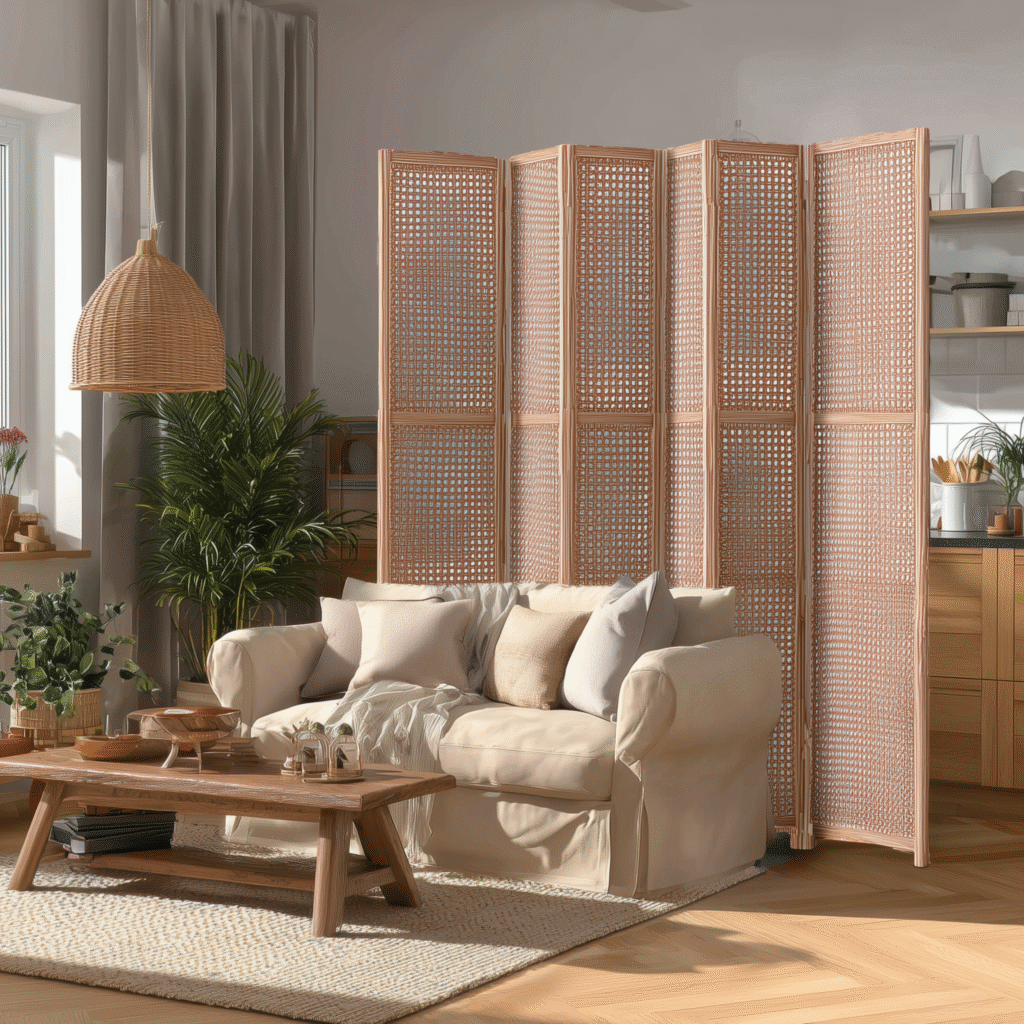
3. Foldable Screens for Flexible Privacy
A folding screen weighs little, moves anywhere, and folds flat behind a wardrobe when it’s not needed. New three- or four-panel screens run about $60–150 (secondhand often half that), making this the lightest way to add privacy on demand — open it for a video call, fold it for movie night.
- folds flat
- simple storage
- soft texture
4. Modern Dividers for Living Room Style
Clean lines, warm materials, and simple shapes let a divider refresh the whole living room instead of just splitting it. Choose one strong piece rather than several small ones — in a small space, calm comes from restraint.
- clean lines
- warm colors
- airy look
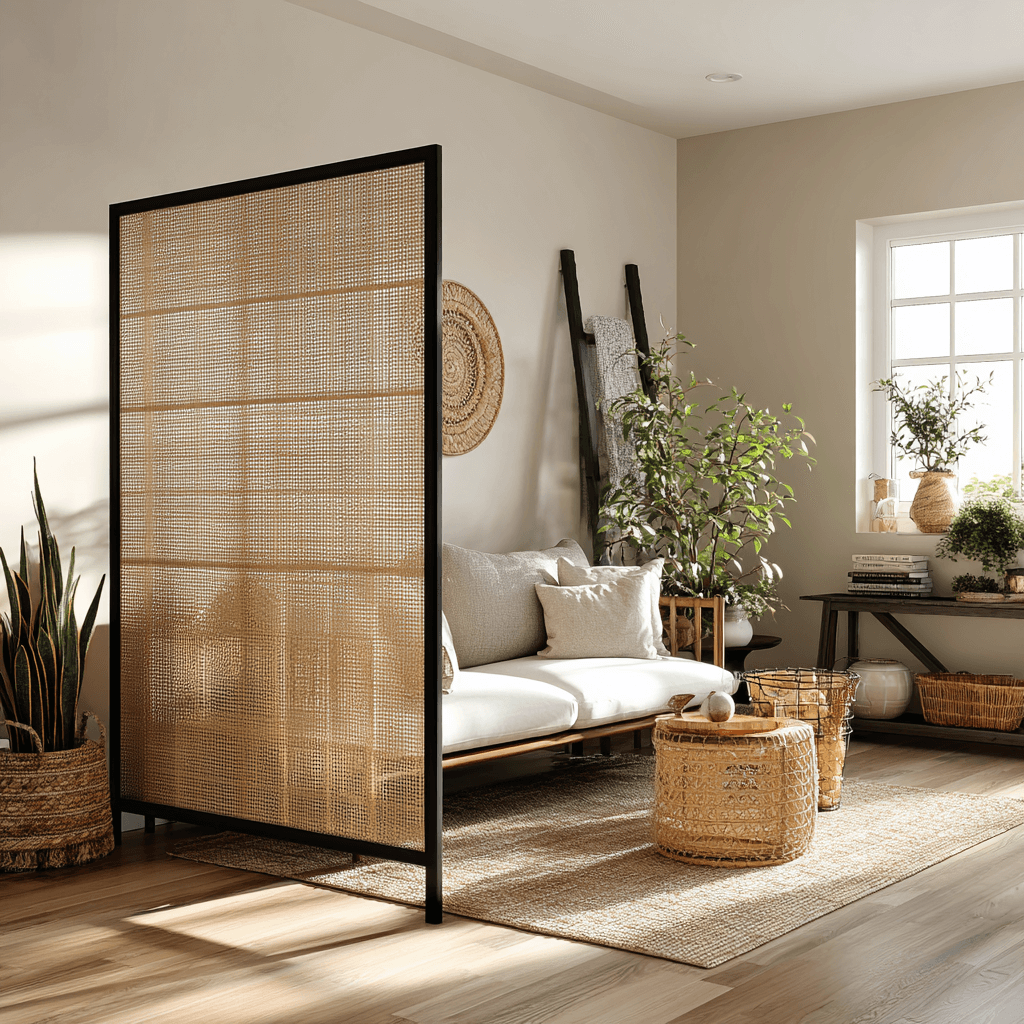
5. Shelving Dividers for Storage and Privacy
An open shelving unit is the hardest-working divider there is: it screens the view, holds books and baskets, and lets light pass through its openings. The IKEA Kallax (around $70–90) is the budget classic here, and any open-backed bookcase works the same way — pair it with our vertical storage ideas to squeeze even more out of it.
- open shelves
- clutter-free
- soft zone creation
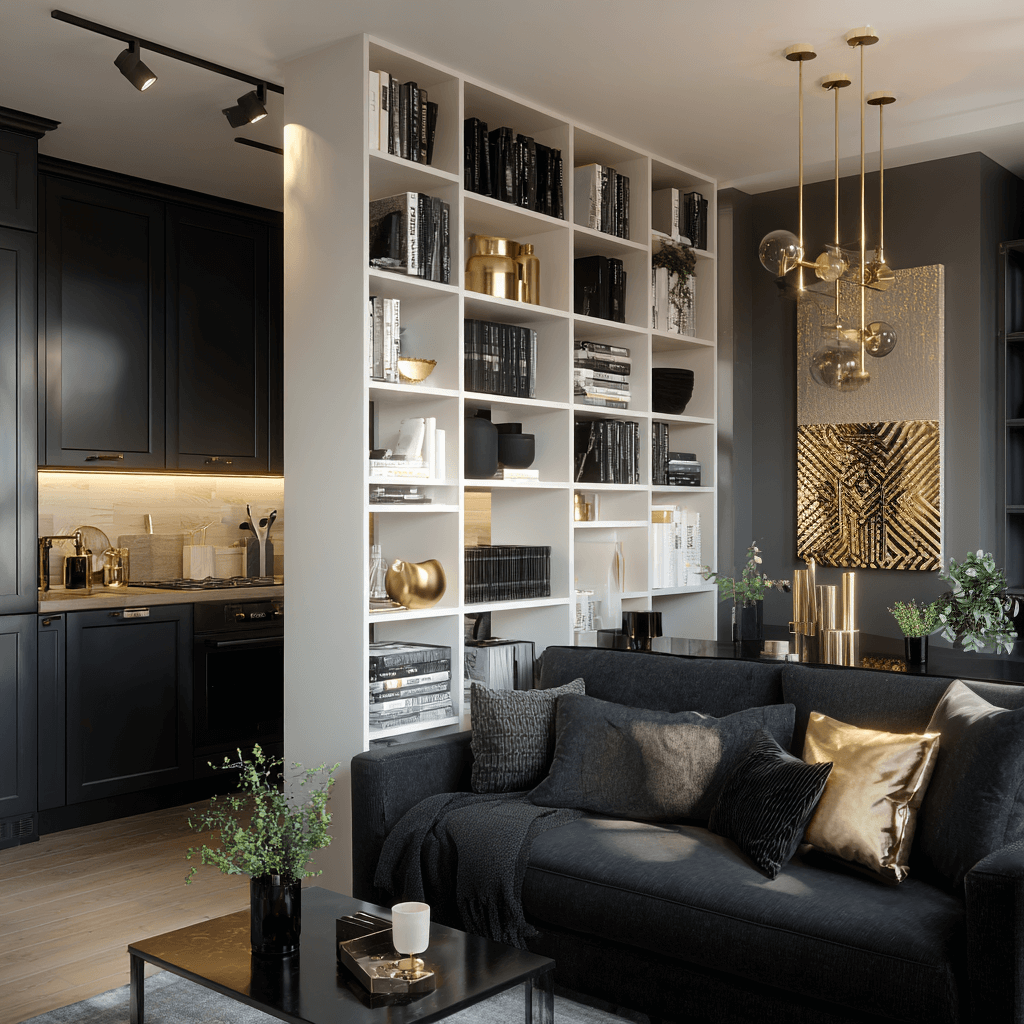
6. A Ceiling Track Divider for Easy Movement
Panels on a ceiling track slide with one finger and leave the floor completely clear — no feet, no frames, no tripping. Renters can use tension-mounted tracks (about $30–80) to get the same clean top line without drilling.
- smooth slide
- clean top line
- renter-safe
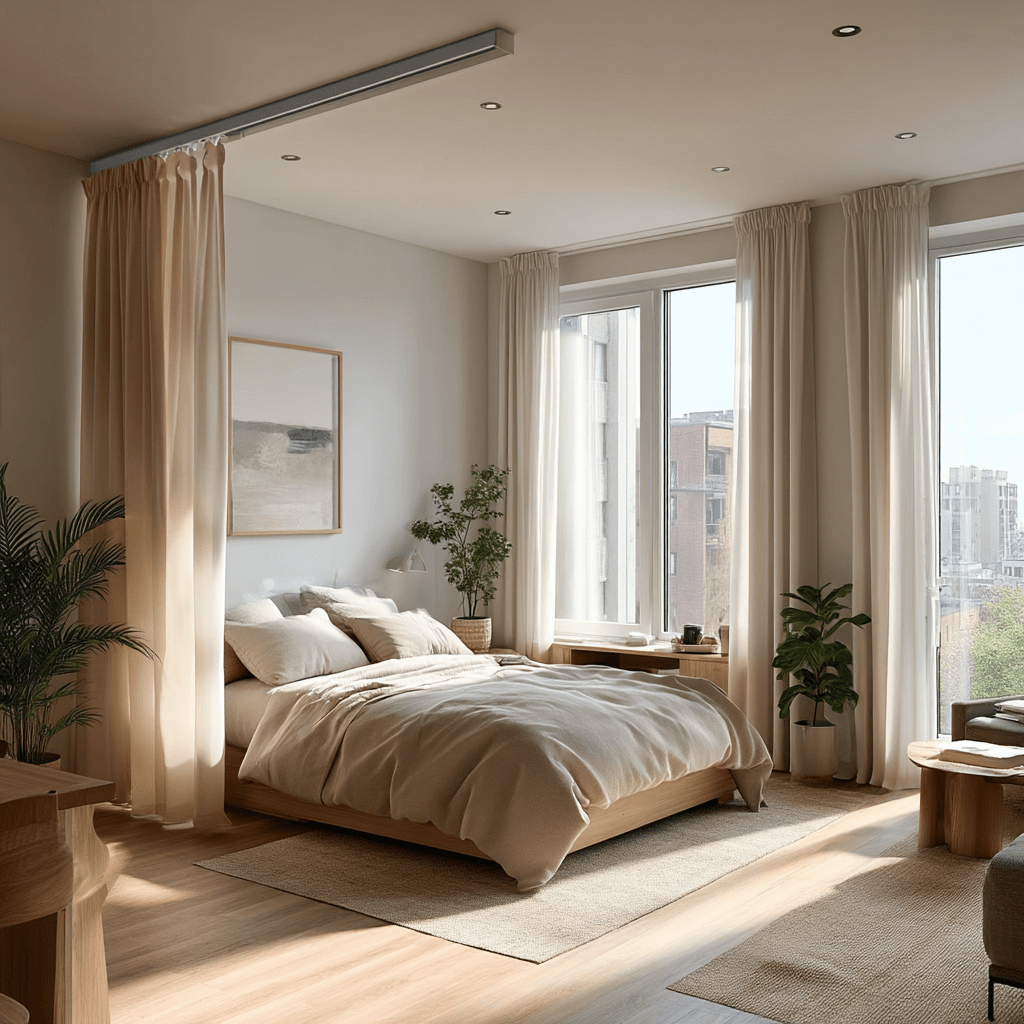
7. A Glass Partition for Natural Light
Glass separates space without stealing a single ray of daylight, which makes it the best choice for rooms with only one window. Freestanding framed-glass screens give the look without installation.
- clear light
- soft reflections
- bright corners
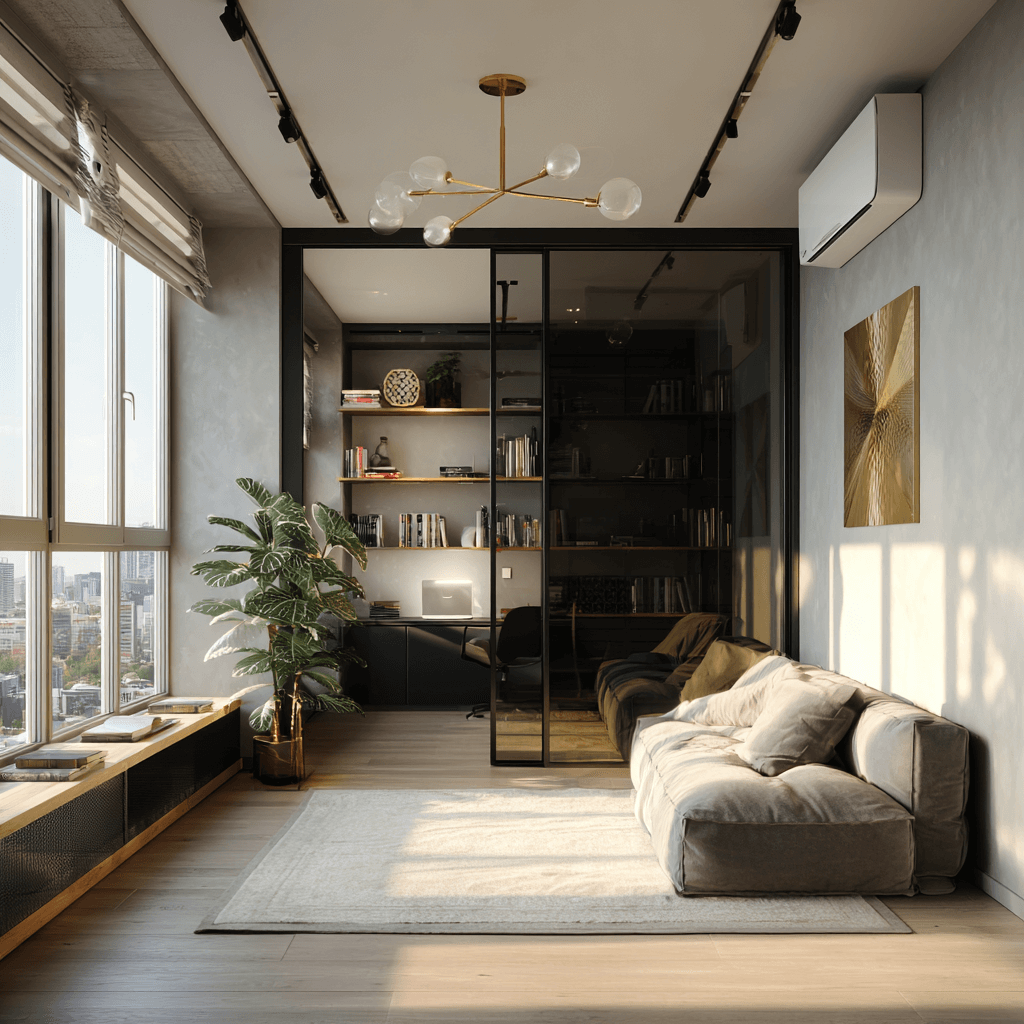
8. Portable Dividers on Wheels
A divider on casters rolls wherever the day needs it — beside the bed at night, next to the desk for calls, flat against the wall when guests come. For a one-room apartment that changes roles constantly, wheels beat everything.
- easy to move
- light frame
- useful for guests
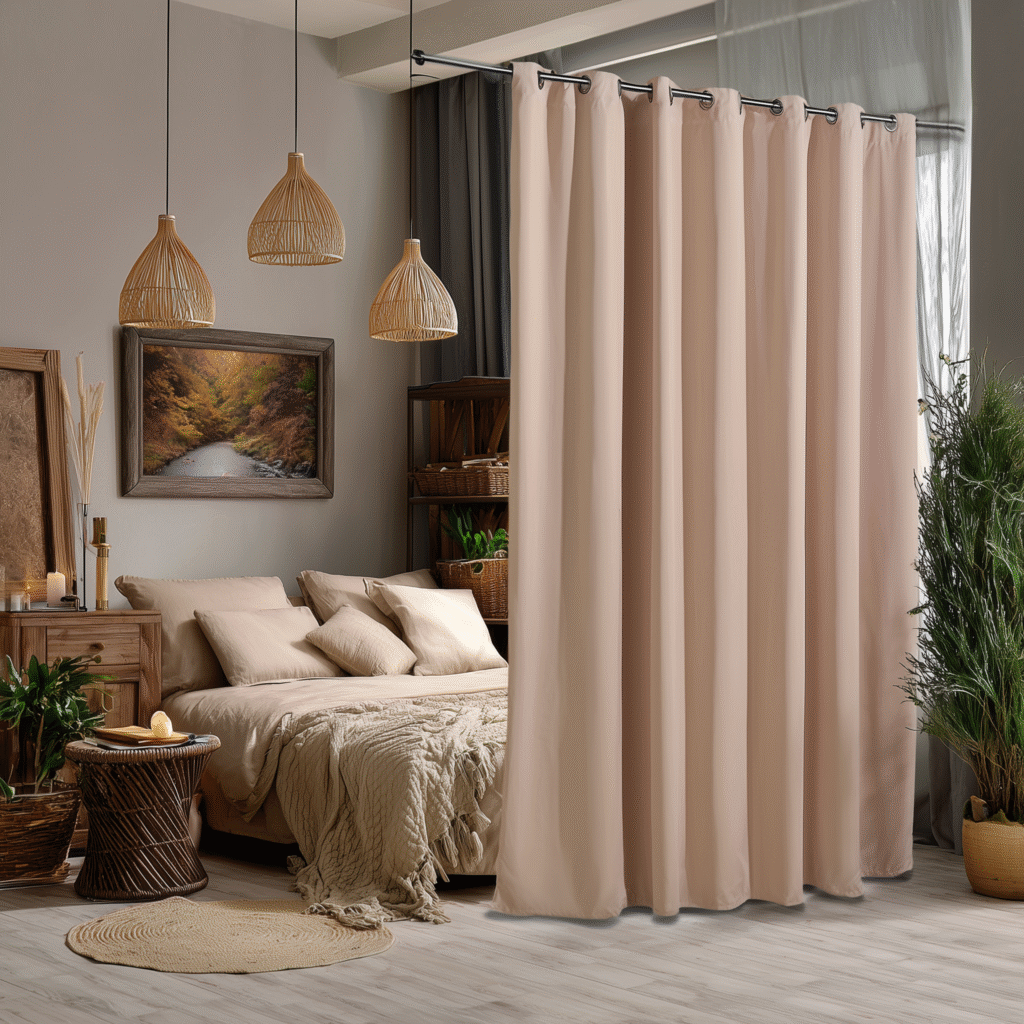
9. Wooden Dividers for Warm Bedroom Privacy
Wood slats bring warmth and a sense of grounding to the sleeping corner, making an open bed feel sheltered and intentional. In studios where the bed sits in plain view, a wooden screen changes the mood of the whole room.
- warm tones
- soft texture
- natural look
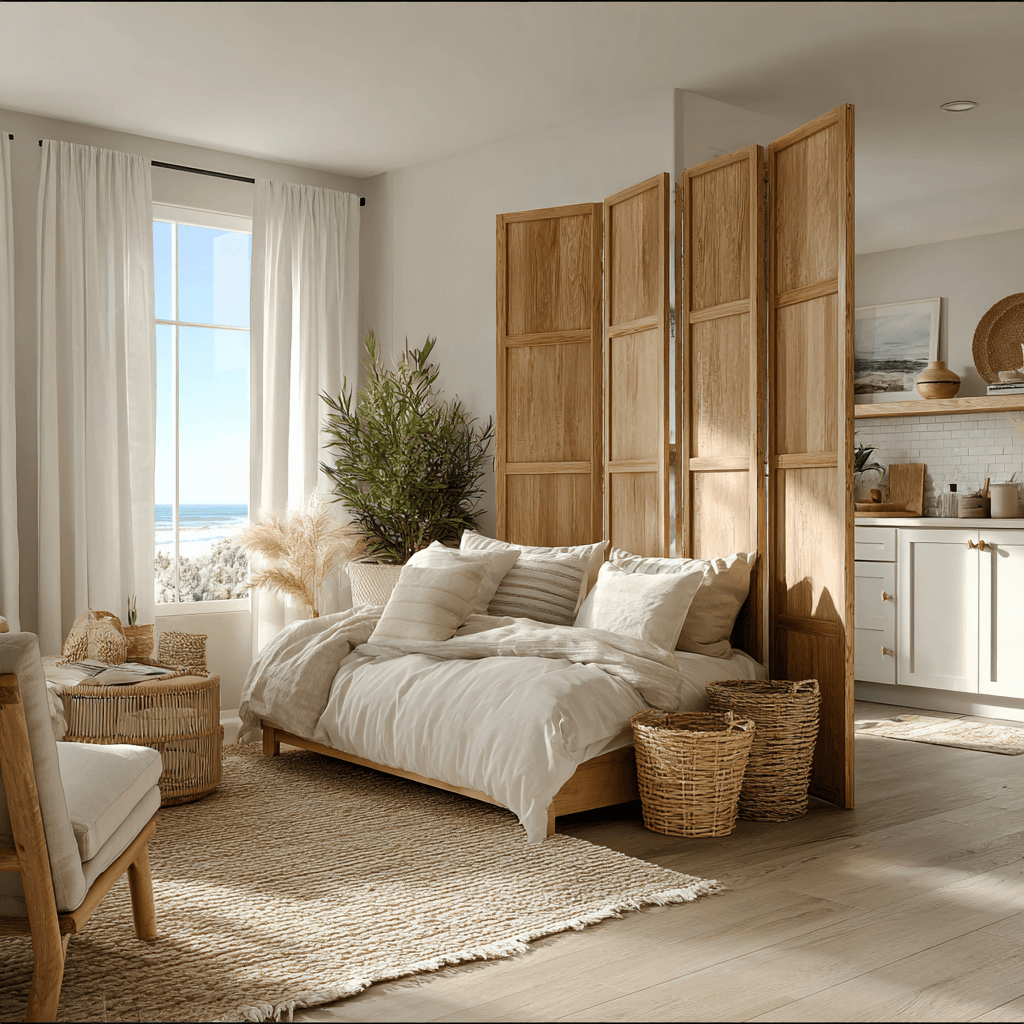
10. Hanging Panels for Open Structure
Panels hung from above divide space at eye level while leaving the floor untouched — airy, light, and barely there. They work beautifully over entry areas and between sleeping and living zones.
- hangs from above
- light flow
- calm balance

11. A Divider-Made Reading Nook
One screen, one soft chair, one warm lamp — and suddenly the apartment has a corner that exists only for rest. Small rooms feel richer when even one part of them is protected from daily busyness.
- soft chair
- warm light
- small mat
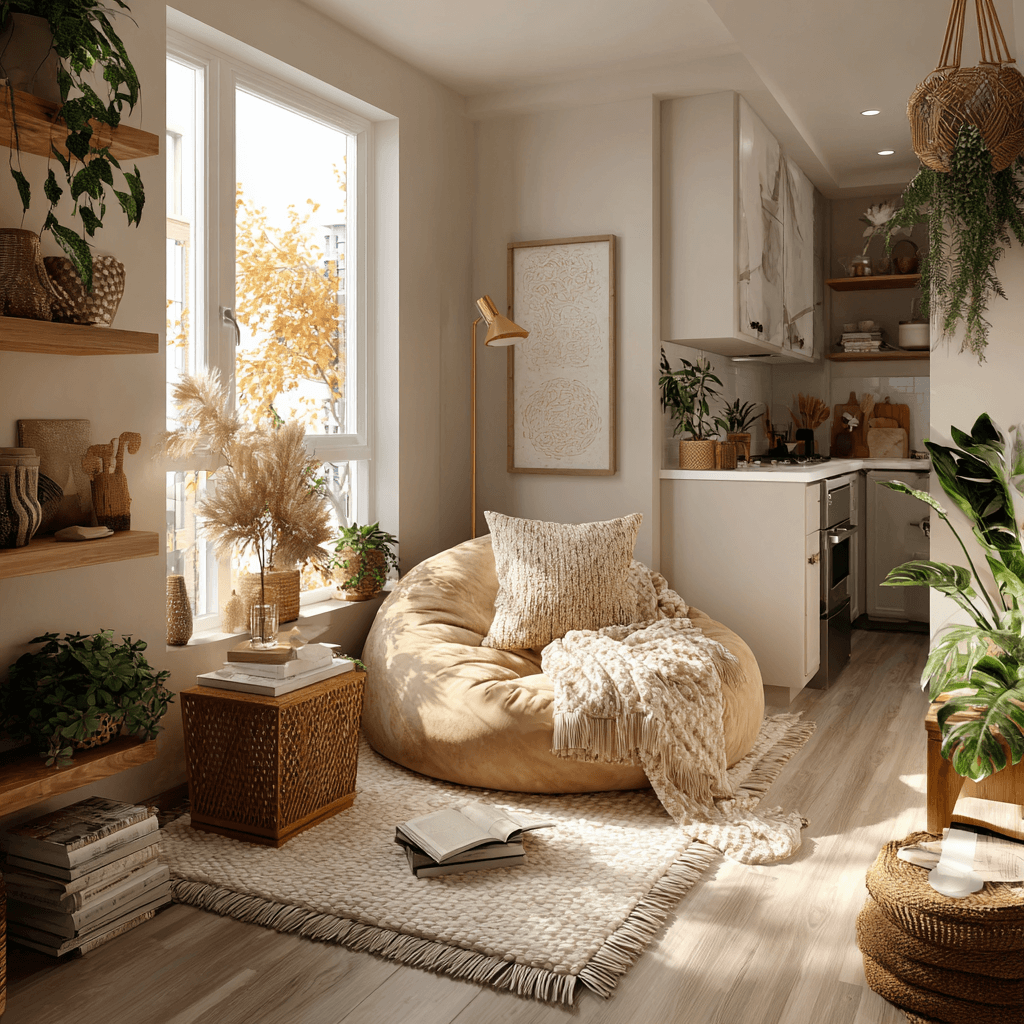
12. A Mini Bedroom Zone in a Studio
A studio apartment room divider — a screen, shelf, or sliding panel around the bed — turns the most exposed part of a studio into a real sleeping room in miniature. Add a soft rug and low lighting inside the zone, and evenings start to feel genuinely separate from the day. For where to place that zone, see our studio layout ideas.
- quiet zone
- soft rug
- simple lighting
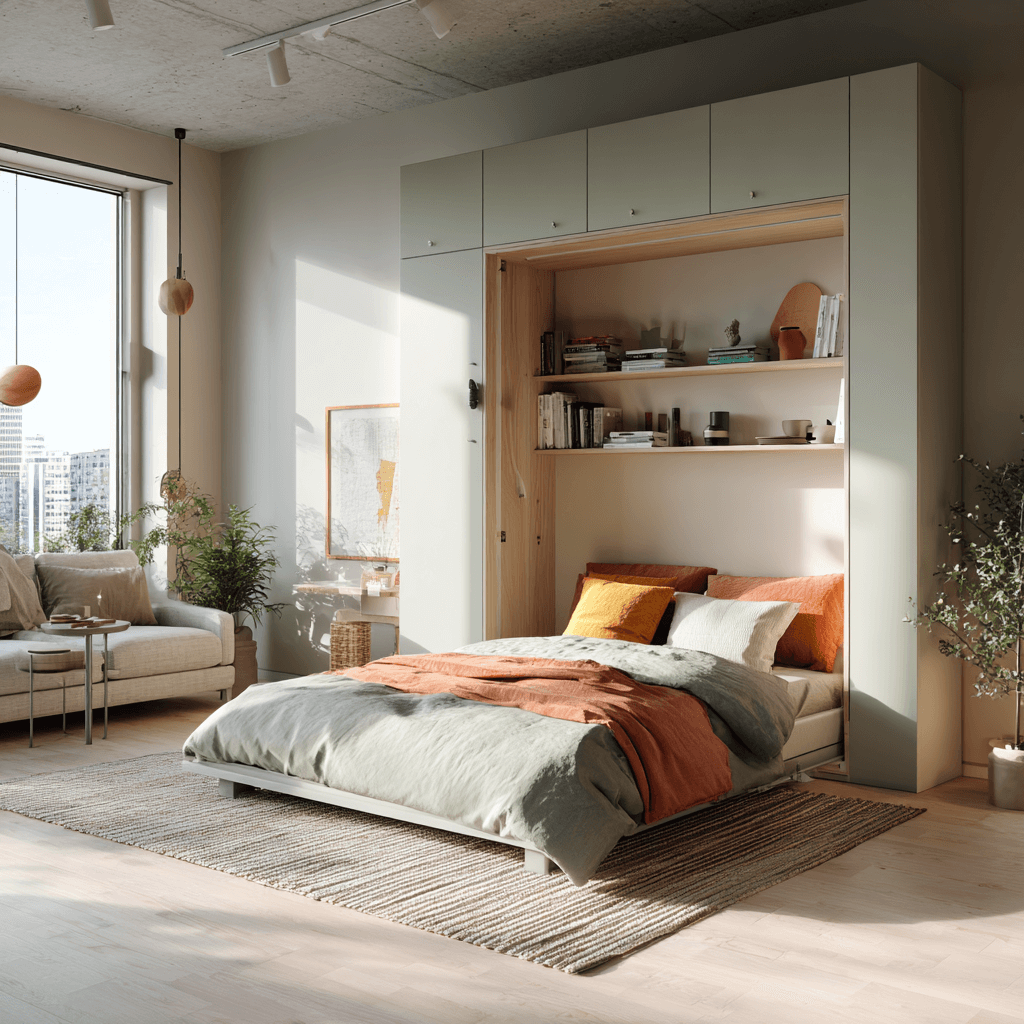
13. A Divider-Shaped Office Corner
A divider behind or beside the desk cuts visual noise and gives working hours a physical edge — when you step past it, work stays behind. It’s the cheapest home-office upgrade there is.
- gentle edge
- clean desk
- soft chair
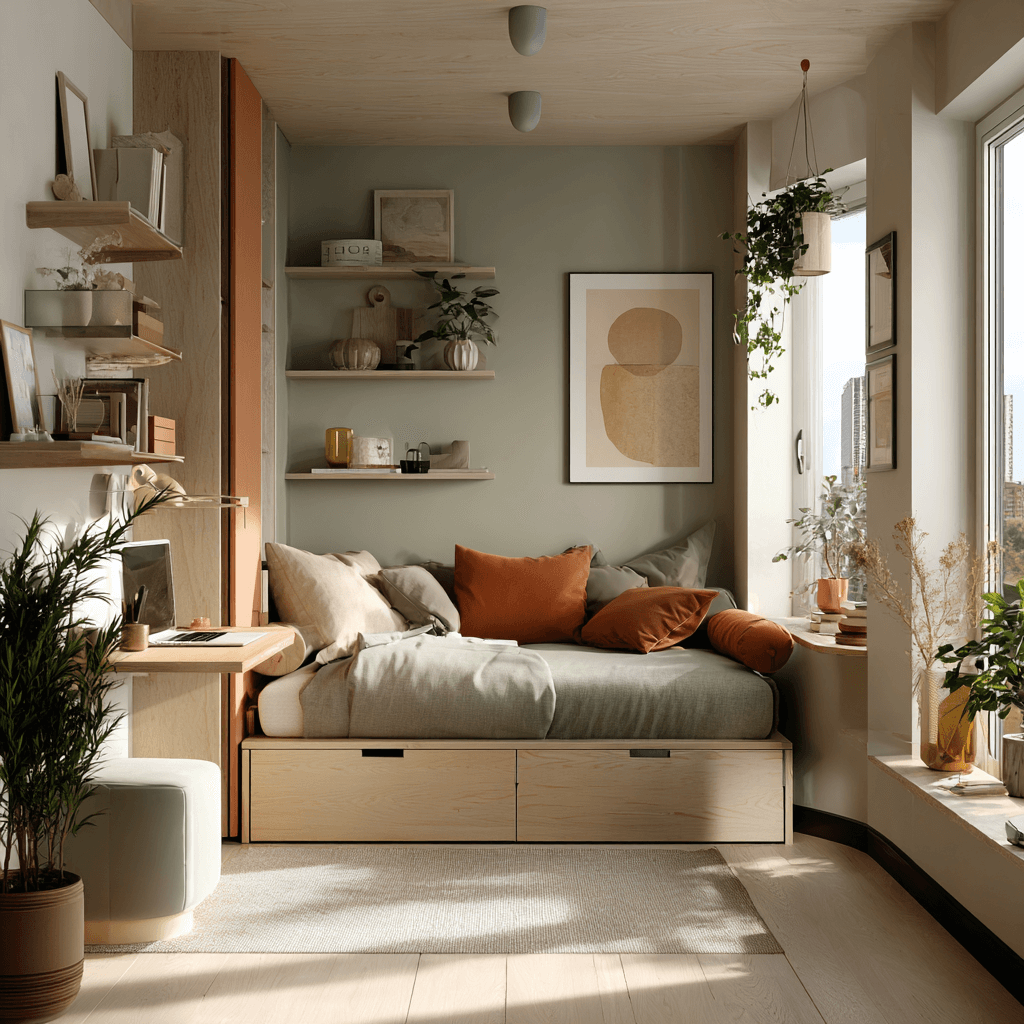
14. A Low Divider for Open Flow
Waist-high dividers mark zones while keeping every sight line open — the room reads as one bright space that simply has places in it. Perfect for living rooms that want subtle order, not walls.
- waist-high height
- open feel
- easy movement
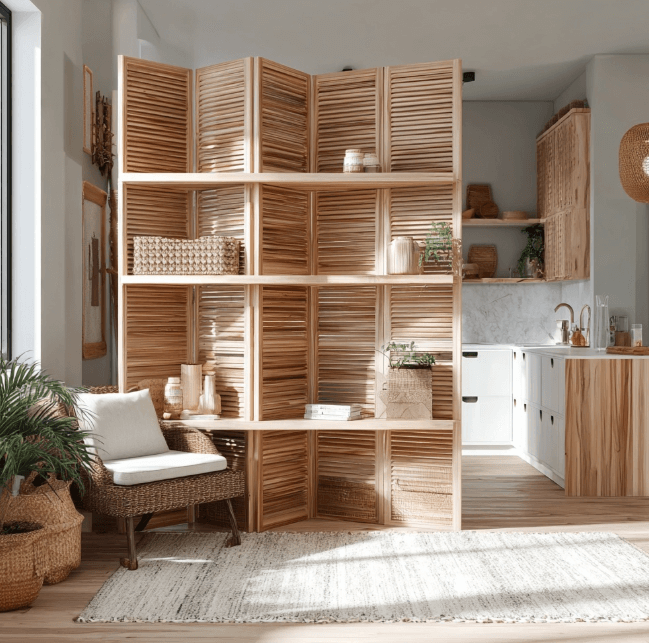
15. A Curtain Divider for Soft Movement
Fabric drapes, flows, and forgives — a curtain divider adds warmth, closes silently, and goes straight into the washing machine. At roughly $40–70 all-in (rod plus fabric), it’s the softest and most budget-friendly divider on this list.
- soft fabric
- light color
- easy wash
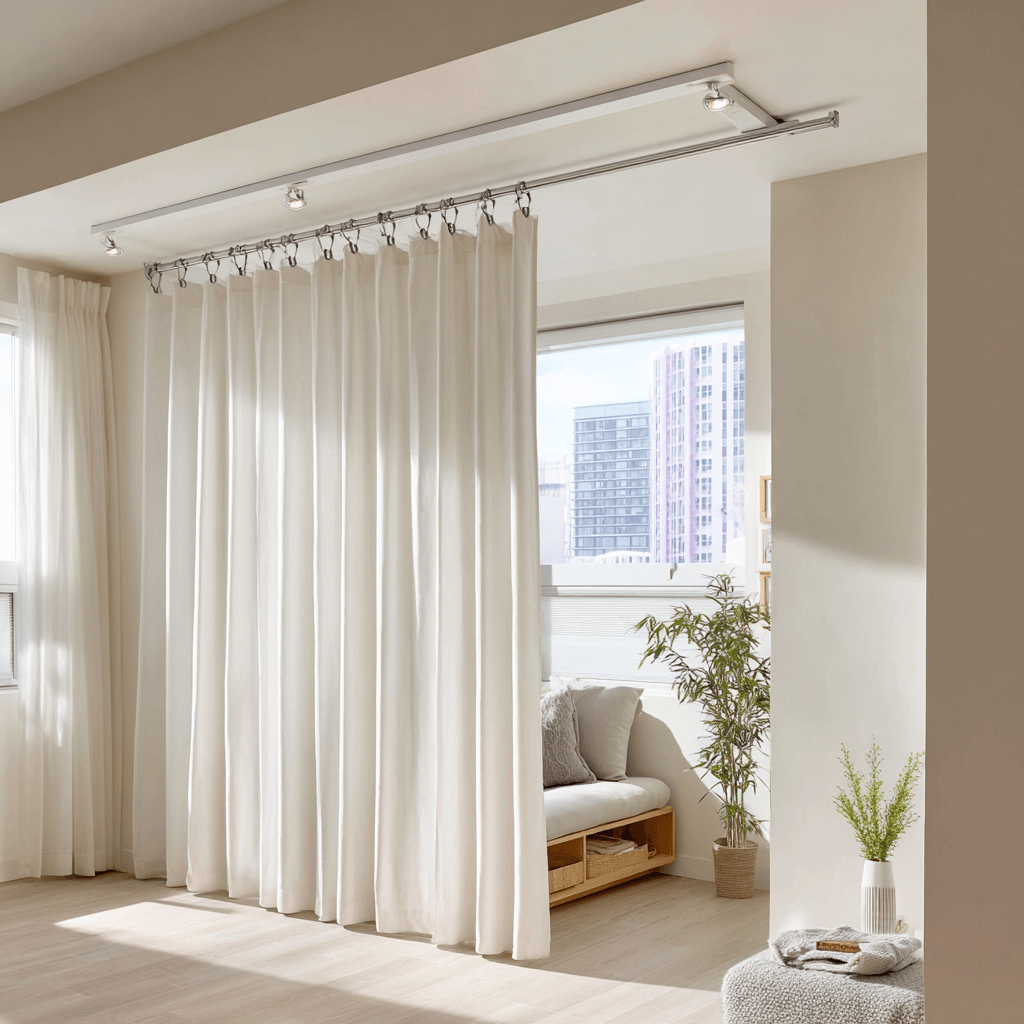
16. A Divider for Storage and Display
Baskets below, books at hand height, a few loved objects on top — a storage divider shapes the room while quietly carrying it. Style it loosely; a divider packed solid stops letting light through.
- open shelves
- soft baskets
- simple styling
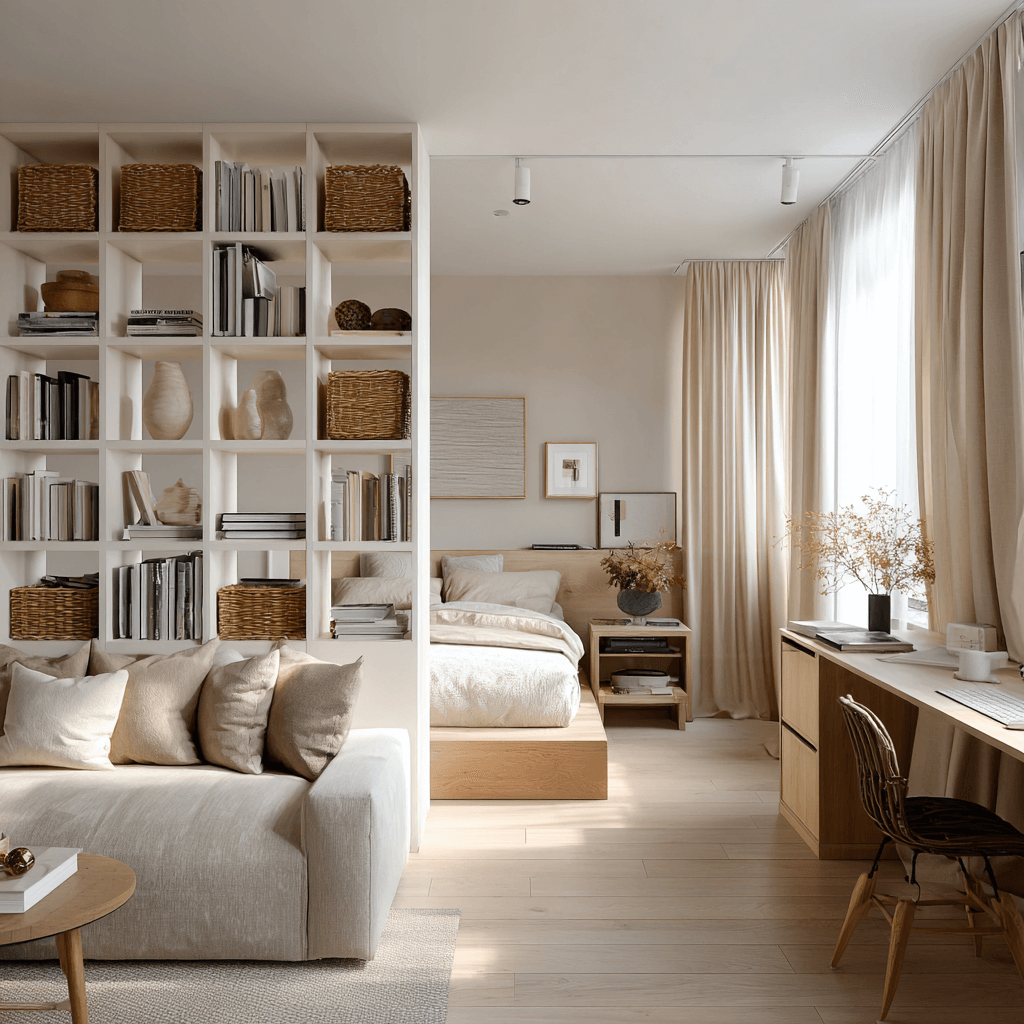
17. A Dining Corner Shaped by a Divider
A small screen beside a table for two turns “eating in the living room” into “having a dining nook.” The divider does the psychological work — the meal feels like it has its own place.
- small table
- two chairs
- soft light
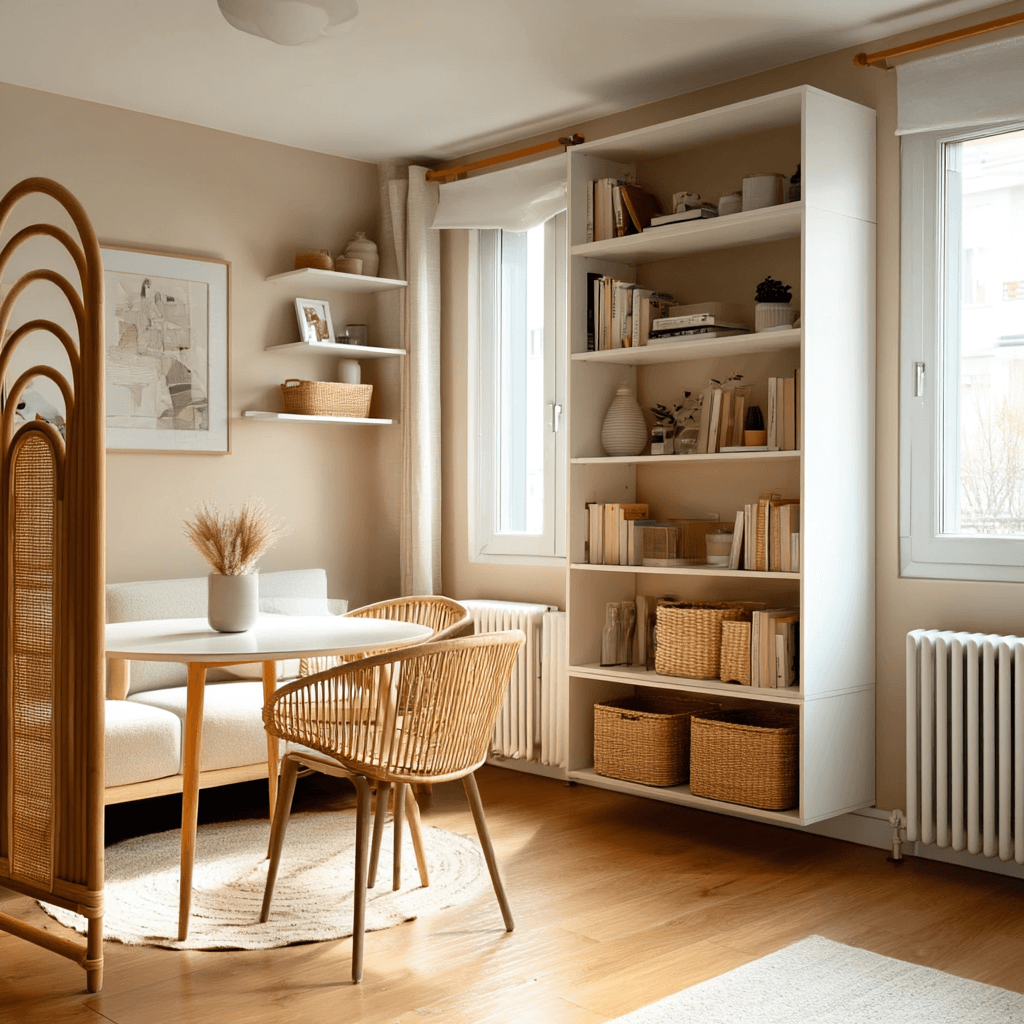
18. A Divider That Guides Natural Light
Semi-open panels — slats, lattice, frosted glass — separate space while passing daylight from the window side to the darker half of the room. In a one-window apartment, this is the difference between a divided room and a dark one.
- open panels
- soft glow
- clear lines
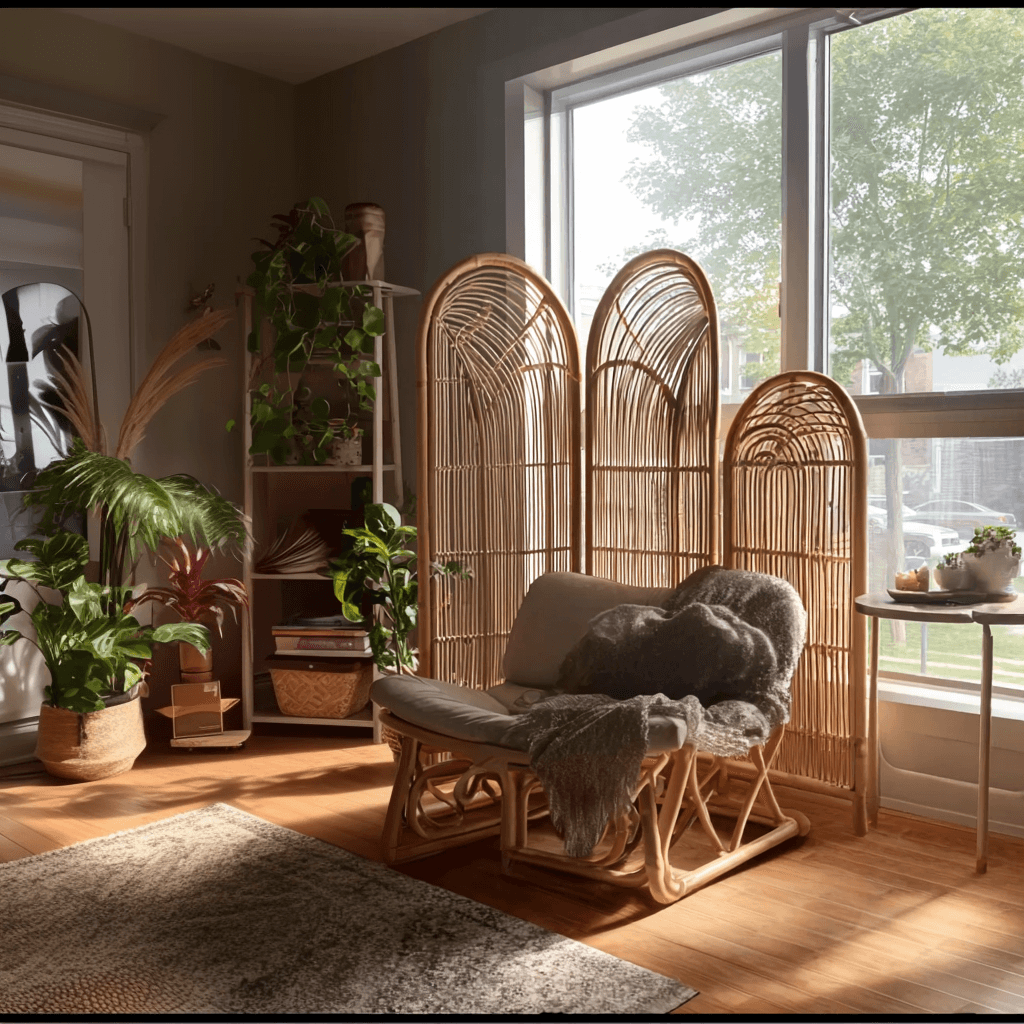
19. A Gentle Entryway
A divider just inside the door creates the entry your apartment never had — a bench, a hook strip, a tiny mat, and a visual pause before the home begins. Shoes and coats finally get a place that isn’t the sofa; our narrow hallway ideas show how to style the rest of that first meter.
- small bench
- hook strip
- tiny mat
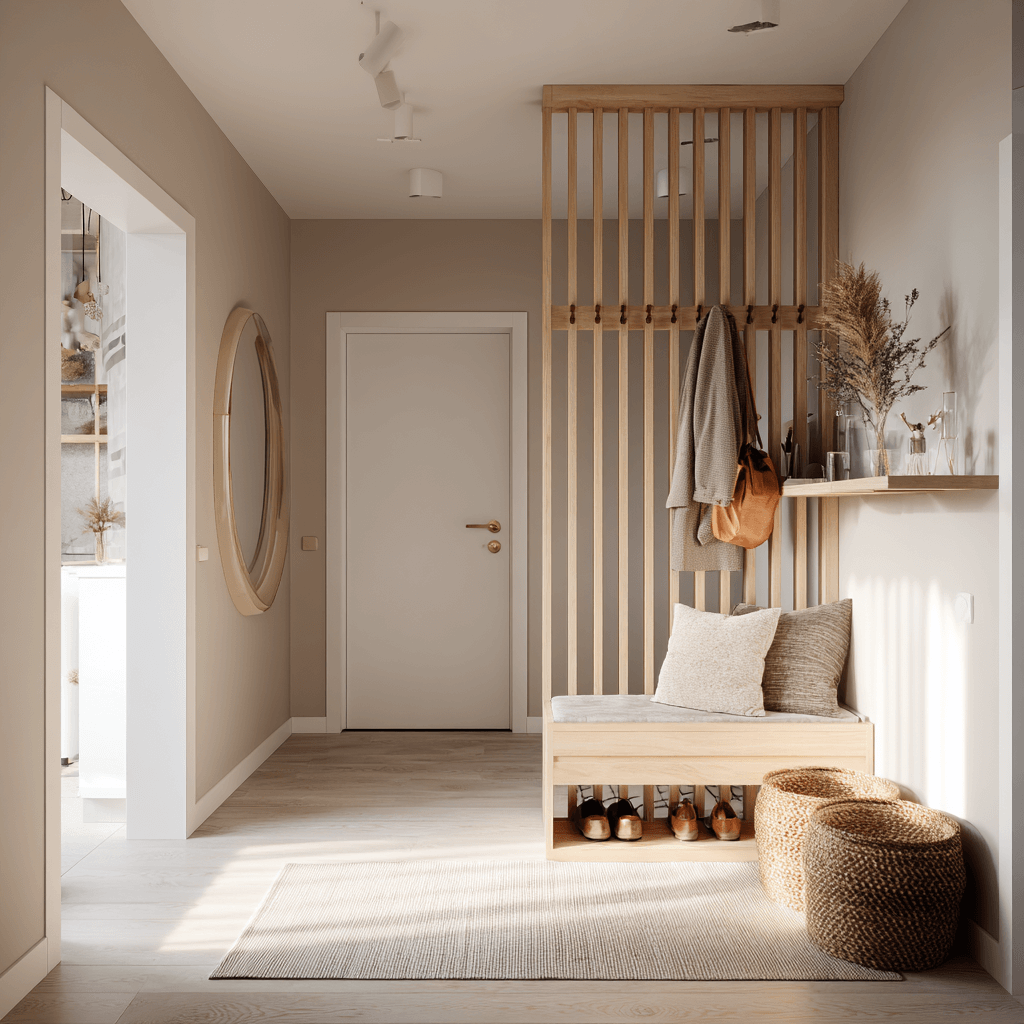
20. A Divider Behind the Sofa
Standing a divider directly behind the sofa frames the living zone and gives the seating a sheltered, anchored feeling. It also hides whatever lives behind it — the desk, the bed, the laundry corner.
- calm placement
- soft textures
- warm tones
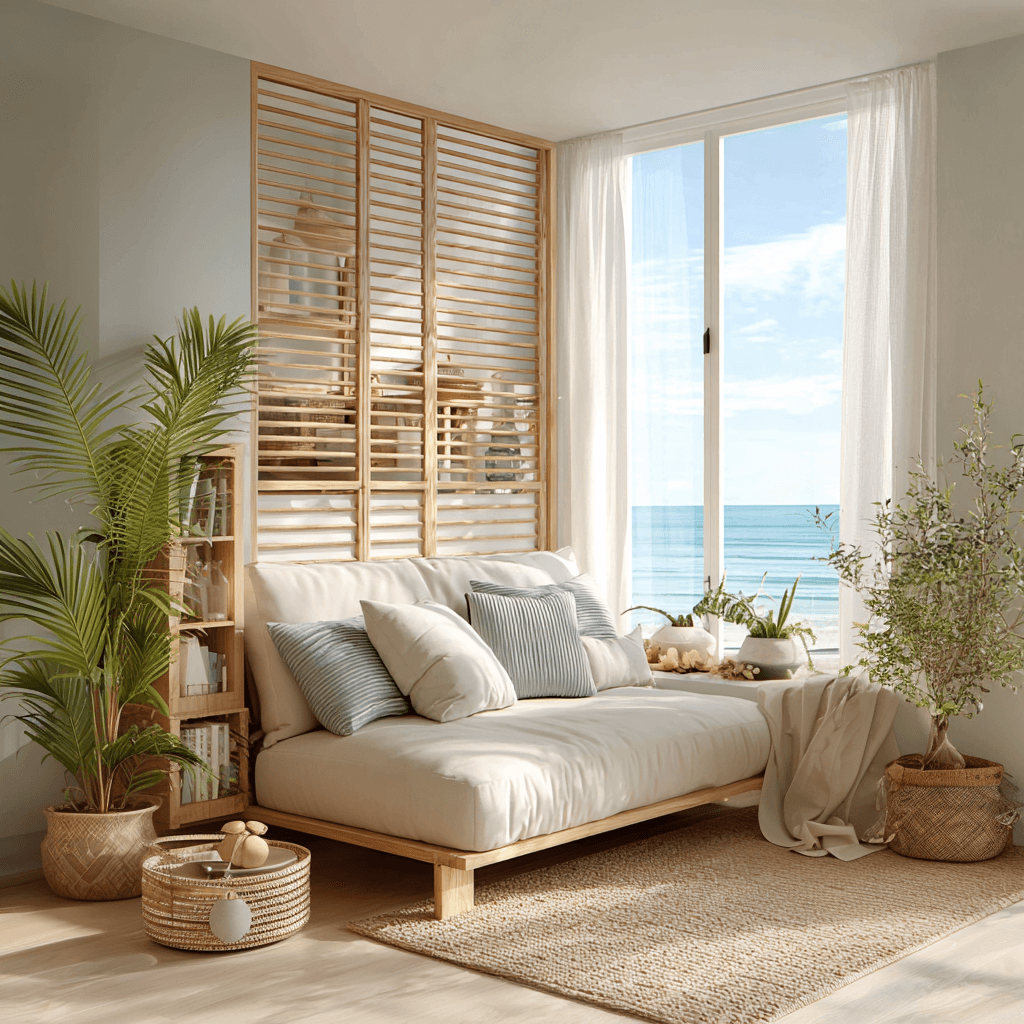
21. A Soft Closet Zone
A tall divider can become the wall of a closet that doesn’t exist: clothing rail behind it, bins below, a clean face toward the room. In apartments with one tiny wardrobe, this trick earns its space many times over — our small bedroom storage ideas cover what goes inside the zone.
- tall divider
- storage bins
- clean look

22. Separate the Kitchen Gently
A small screen between the cooking zone and the sofa keeps dishes and prep clutter out of the evening view without shutting the kitchen off. If your kitchen itself needs calming, our small kitchen ideas pick up where the divider ends.
- small screen
- open flow
- soft colors
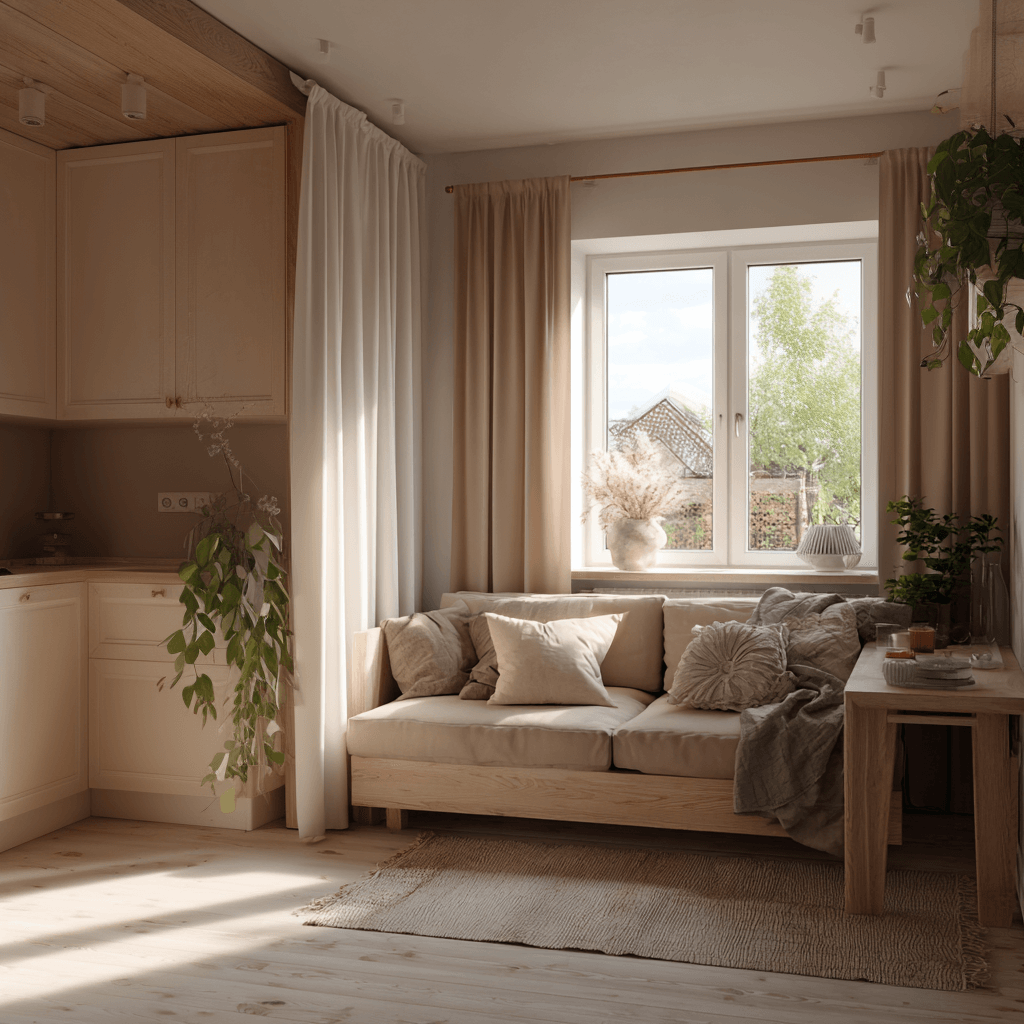
23. Divide a Shared Bedroom Calmly
When two people share one room, a curtain or screen down the middle gives each side its own light, its own wall, its own small world. Add individual lamps so neither person’s evening depends on the other’s.
- soft curtain
- small lamps
- personal corner

24. Keep the Divider Light and Moveable
Whatever style you choose, favor something one person can lift and reposition alone. A flexible home opens up for guests and closes down for quiet weeks — lightweight dividers make that a thirty-second job.
- easy lift
- simple frame
- practical feel
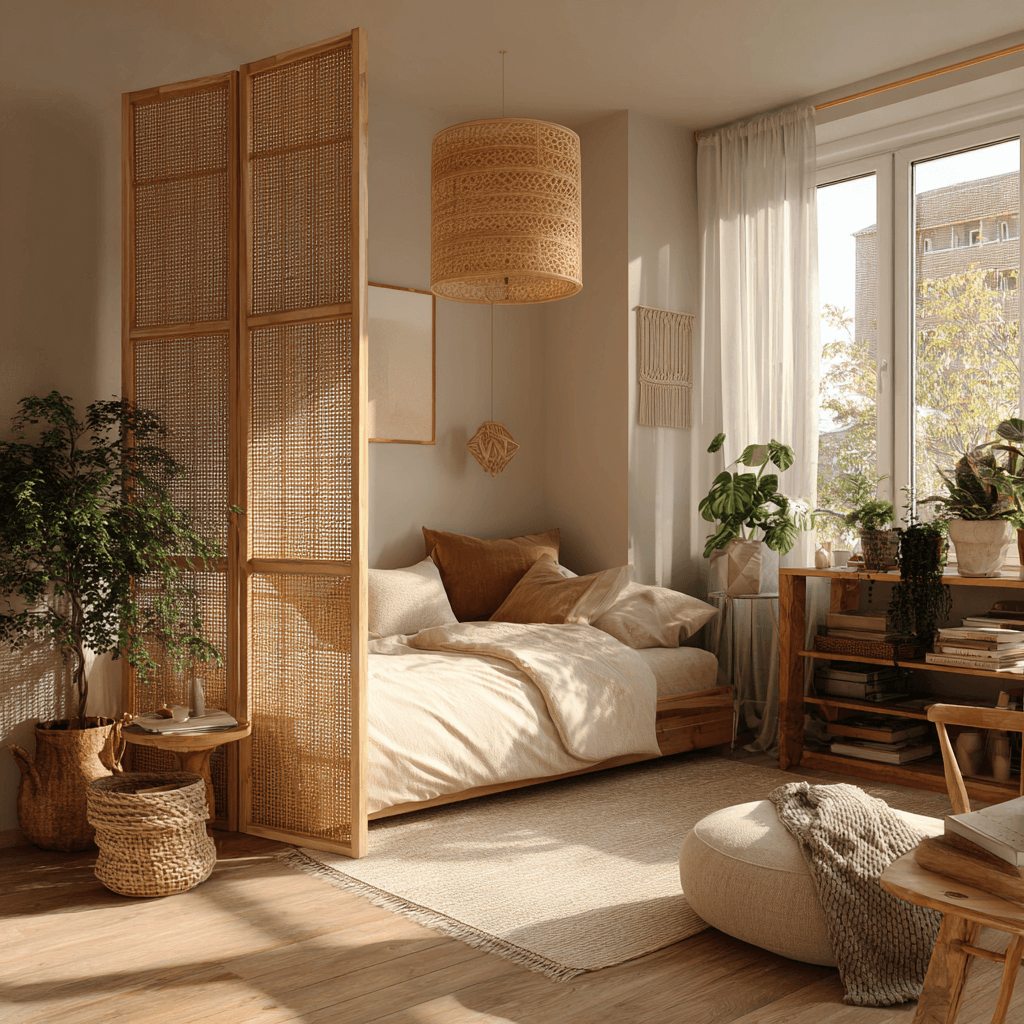
25. A Soft Texture Divider
Woven fabric, rattan, and wood slats add the warmth of texture without adding bulk — the divider becomes something you want to touch, not just look past. Texture is how small rooms feel rich; our home decor ideas for small spaces build on exactly that.
- gentle weave
- warm grain
- soft lines
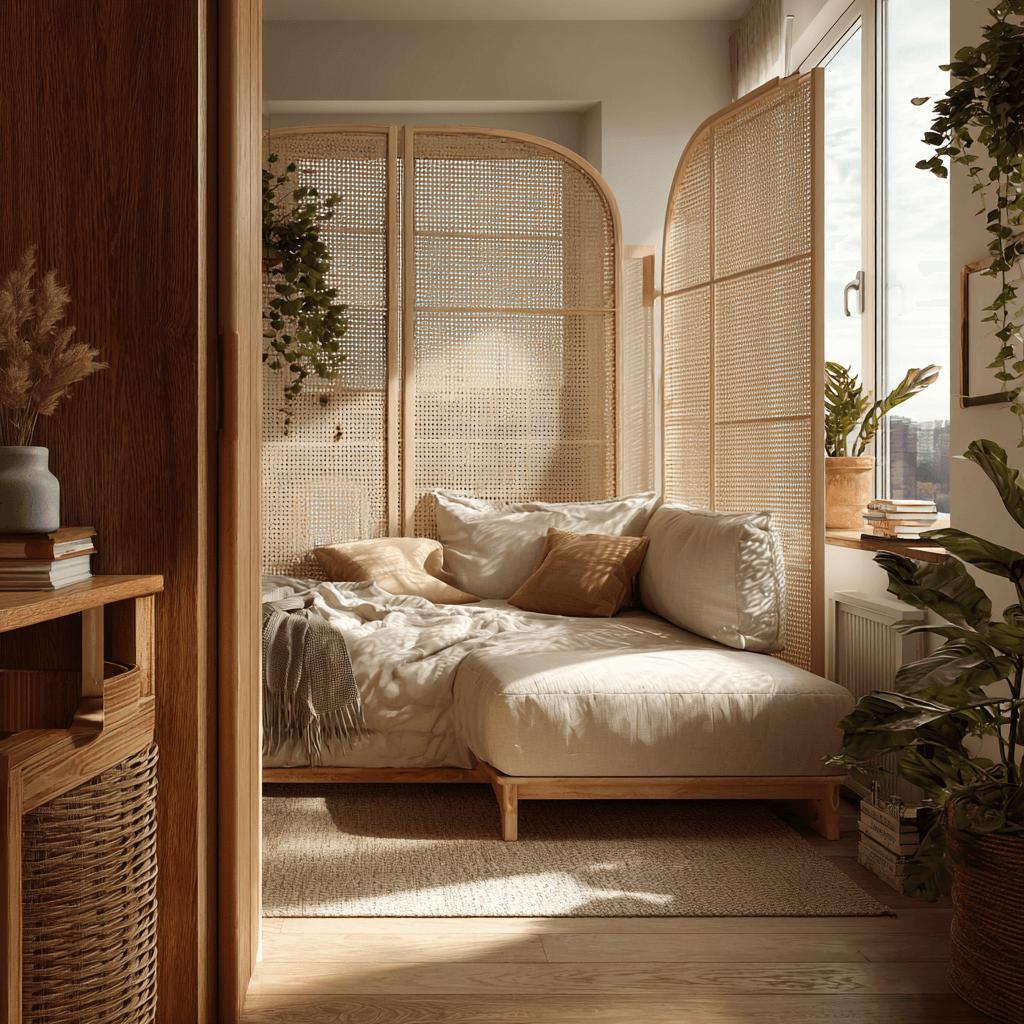
26. A Divider That Hides Clutter
Laundry basket, drying rack, storage bins, printer — every home has things that work hard and look terrible. One simple screen gives them a home behind it and gives you a calm room in front of it.
- hidden area
- clean front
- calm look
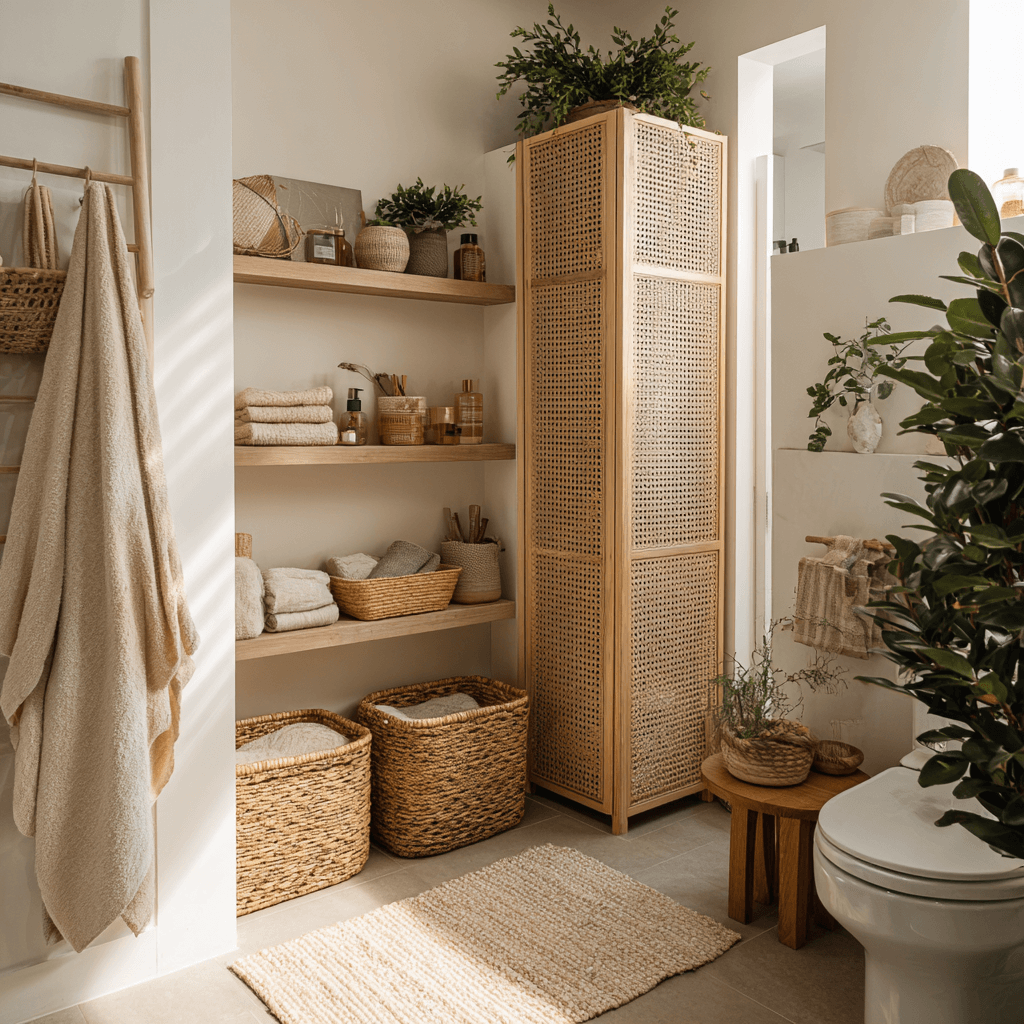
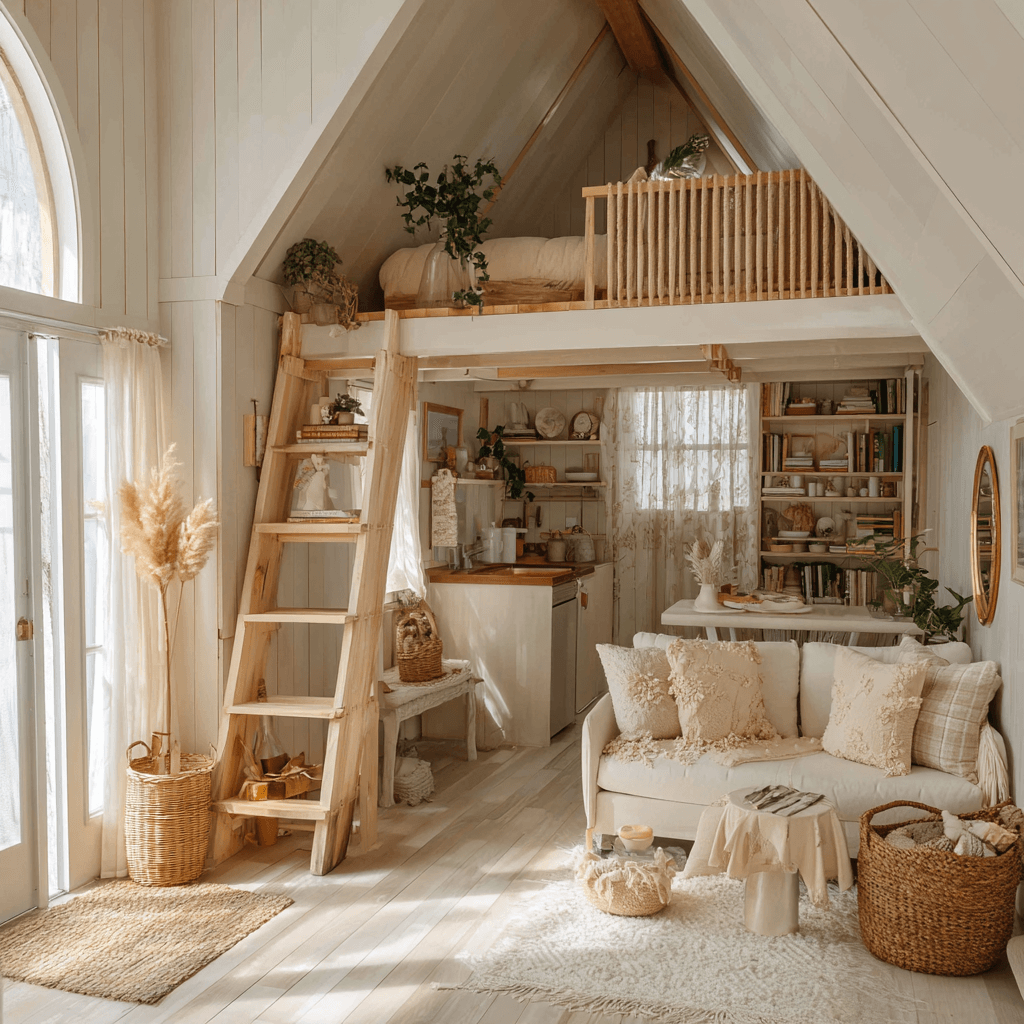
27. A Loft Divider for Height
With tall ceilings, a divider that reaches upward turns height into drama — vertical lines draw the eye up and make the footprint feel grander than it is. Keep it slatted or open so the volume of the room stays visible.
- tall lines
- elegant look
- airy tone
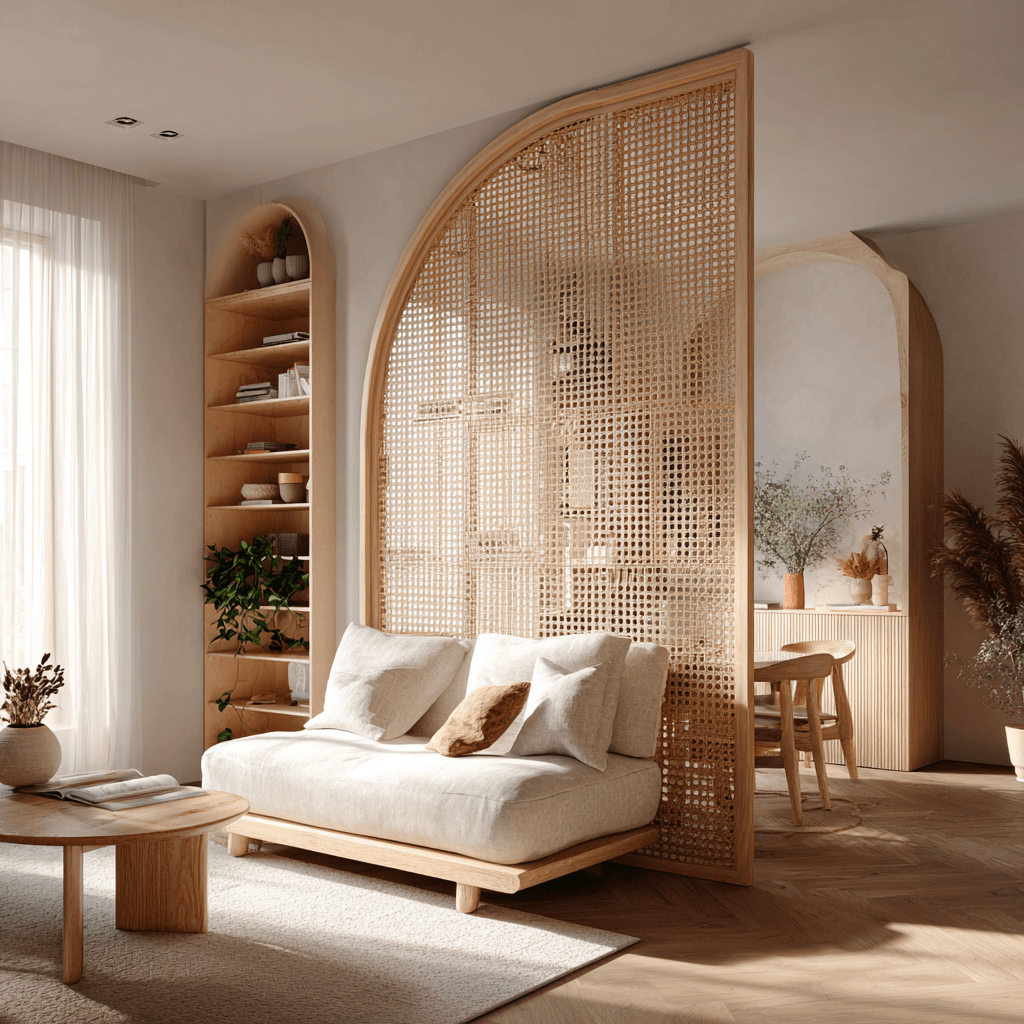
28. The Divider as a Decor Piece
Sometimes the divider is the statement: one beautiful pattern or warm material can set the tone for the entire room. If you go bold here, keep the surrounding wall decor quiet so the piece can breathe.
- bold shape
- warm finish
- soft balance
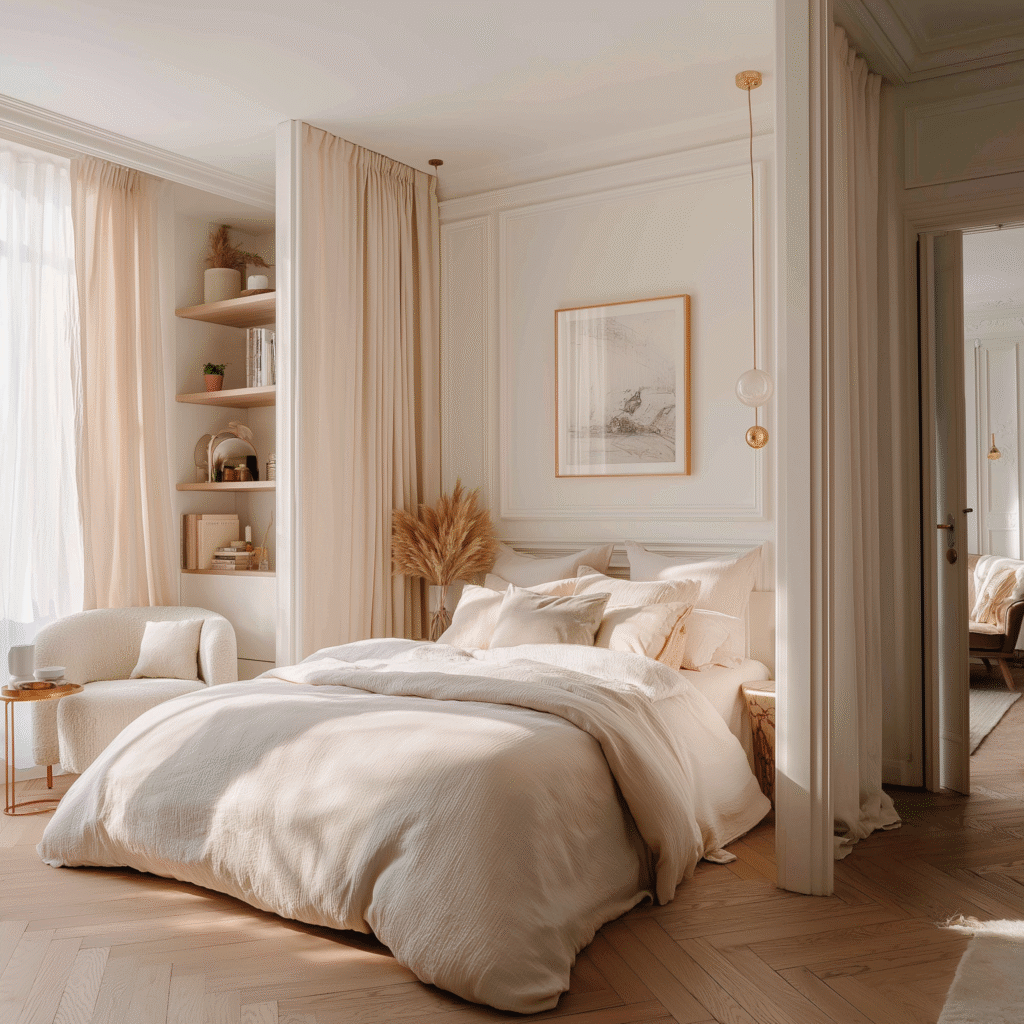
29. A Divider That Guides Traffic Flow
Placed along the natural walking line, a divider steers movement gently around zones instead of through them — no more path straight across the sleeping corner. The room feels calmer simply because people flow around it.
- simple positioning
- open walkway
- calm movement
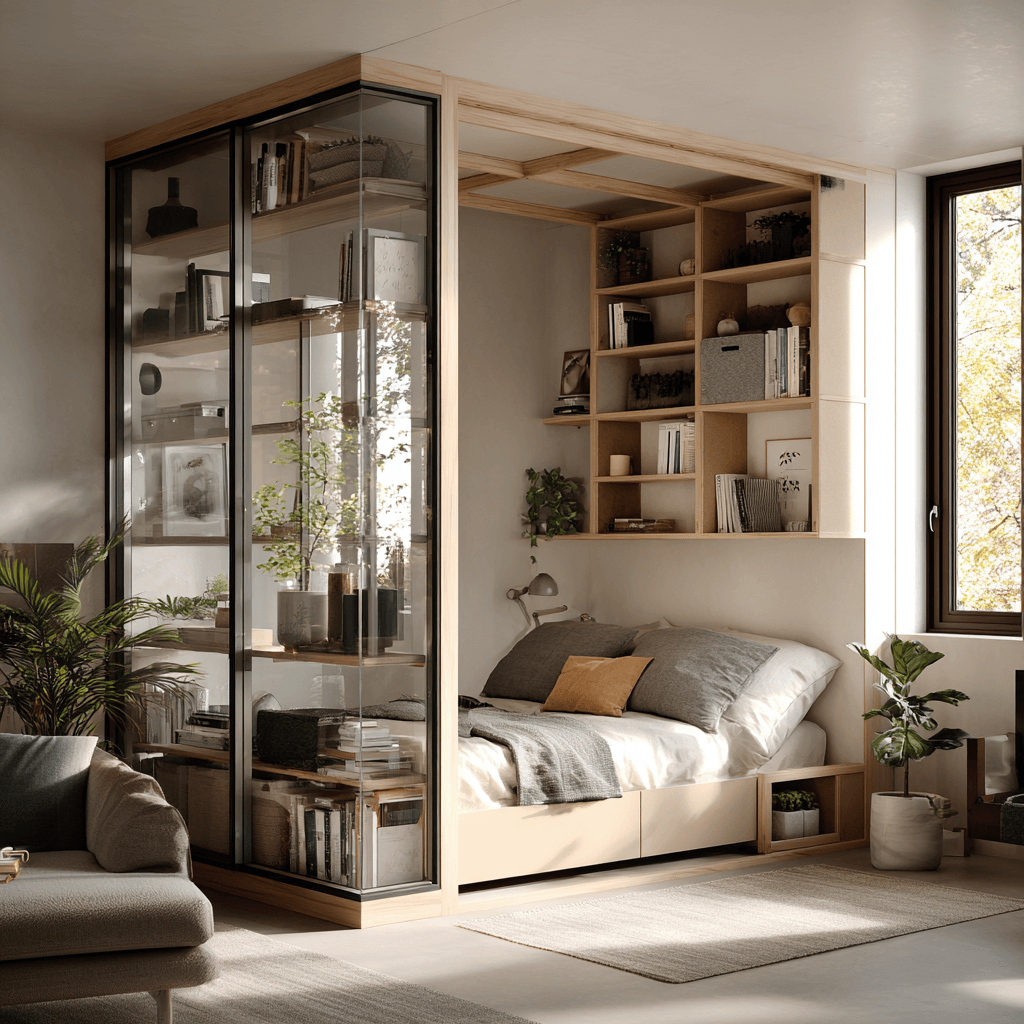
30. A Double-Purpose Divider
Shelf, cabinet, display case, desk-back — the best divider in a small apartment is the one doing a second job while it stands there. For more pieces that work twice, see our space-saving furniture ideas.
- two uses
- clean storage
- open structure
31. A Plant Divider for Living Softness
A row of tall plants — or a slim shelf with trailing greenery on every level — divides space in the gentlest way a room can be divided. It filters the view, softens sound a little, and the zone boundary is literally alive. A rubber plant or dracaena on each end of a low shelf is enough to start.
- tall floor plants
- trailing greenery
- living privacy
32. Rug Zoning — the Invisible Divider
One rug under the bed, another under the sofa, and the floor itself announces where each zone begins — no object stands between them at all. It’s the zero-cost option if you already own the rugs, and the one divider that can never block light or a walkway.
- costs nothing extra
- never blocks light
- defines zones instantly
33. A Clothing Rack as a Divider
A freestanding garment rack ($30–80) beside the bed does two jobs at once: it screens the sleeping corner and replaces the closet your studio never had. Keep it lightly filled and color-calm so it reads as a soft boundary, not open storage chaos.
- divider plus closet
- light and moveable
- keep it half-empty
34. A Loft Bed — Divide Upward Instead of Across
With ceilings around 8’6″ or more, a loft bed removes the sleeping zone from the floor entirely — the space below becomes a desk nook, wardrobe, or sitting corner. It’s the most dramatic space-gain on this list, and the “divider” is simply height.
- frees the whole floor
- needs tall ceilings
- desk or closet below
35. Color Zoning With Paint or Wall Tone
Painting the sleeping corner a slightly deeper, softer tone than the rest of the room divides the studio with nothing but color — the eye reads the darker zone as its own snug space. Renters can get the same effect with a large fabric wall hanging or removable wallpaper behind the bed.
- deeper tone for the bed zone
- removable options for renters
- zero floor space used
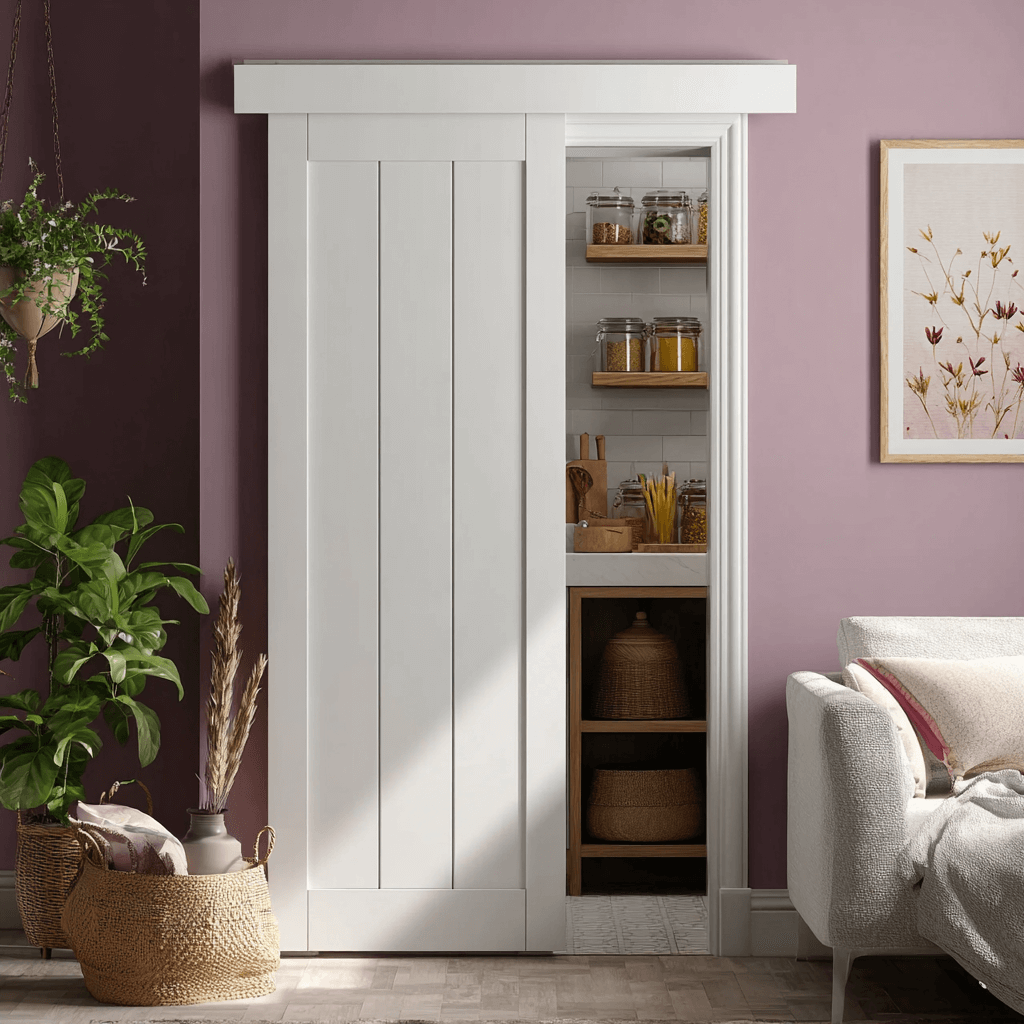
36. A Sliding Barn-Style Door on a Track
Where a real doorway or alcove exists, a sliding barn-style door turns it into a genuinely closable room while using zero swing space. This is the one idea here that needs mounting hardware (and a landlord’s blessing in a rental), but it delivers the most door-like privacy of all.
- true closable privacy
- no swing space needed
- ask the landlord first
Frequently Asked Questions
How do I choose the right room divider for a small space?
Start with the job it needs to do: privacy calls for a curtain or solid screen, zoning calls for a low or open divider, and storage shortages call for a shelving unit. Then pick the lightest option that does that job — the best room dividers for small apartments are the ones you can move in under a minute.
What is the best room divider for privacy?
A floor-to-shoulder curtain on a ceiling track closes most completely, followed by a solid folding screen. If you also want sound softening, fabric beats hard panels every time.
How do I divide a studio without making it dark?
Choose dividers that light can pass through: open shelving, slatted wood, lattice, frosted glass, or sheer fabric. Place the divider parallel to the window wall, never across the light’s path.
What is the cheapest way to divide a room?
A tension rod and curtain — usually under $70 total, installed in ten minutes with no tools. A secondhand bookshelf turned sideways is the runner-up and adds storage for free, and rug zoning costs nothing if you already own the rugs.
Are room dividers renter-friendly?
Almost all of them: freestanding screens, shelf dividers, plant rows, garment racks, and tension-mounted curtains and partitions need no drilling at all. Only mounted ceiling tracks and barn-style doors require landlord permission.
Can a room divider help with storage?
Yes — a shelving divider is often the single most useful piece of furniture in a small apartment, screening the room while holding books, baskets, and everyday things on both sides.
From curtains to shelves to partition walls that come down without a trace, these room dividers for small apartments prove you don’t need construction to have real rooms. Dividing the room is step one — shaping what’s inside each zone is the fun part. Continue with our 400 sq ft studio apartment layout ideas for full floor plans, or make the divided corners work harder with furniture for small spaces.