

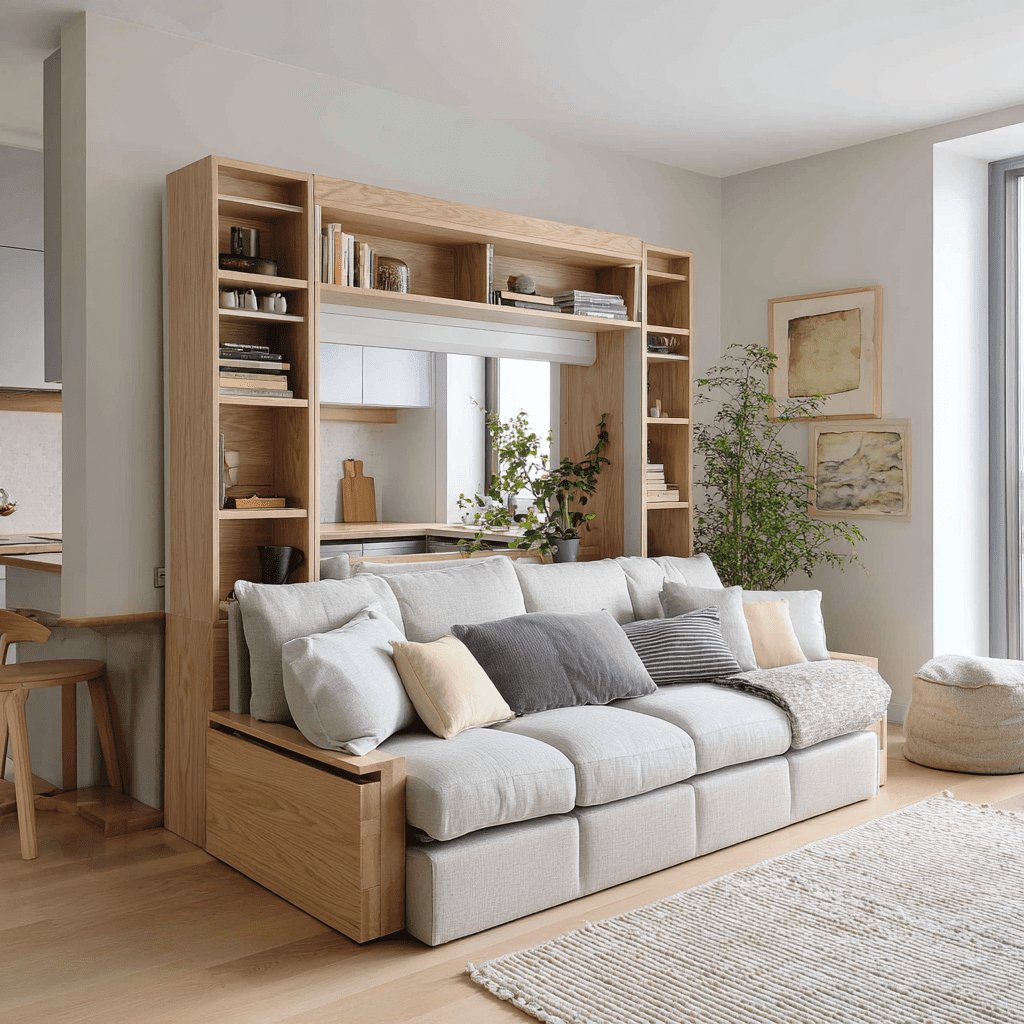
Introduction
Furniture can solve a space problem—or quietly create another one. A storage bed may replace a dresser, but side drawers will not help if there is not enough room to open them. A folding table can clear the floor, but it may become frustrating if you must empty and rebuild it several times a day.
The best space-saving furniture is not simply small or clever. It performs a job you genuinely need, fits in both its closed and open positions, remains comfortable enough for its intended use and does not demand unreasonable effort. It may save floor space, add storage, replace a second item or reduce the visual clutter that makes a small home feel crowded.
This guide covers 29 practical options for bedrooms, living rooms, dining areas, workspaces and kitchens. For every idea, you will see what it replaces, what to measure, how much daily effort it requires and the main compromise to consider. The goal is not to fill your home with transforming furniture. It is to help each piece earn the space it occupies.
Quick Answer: What Furniture Saves the Most Space?
Furniture usually saves the most space when it replaces another necessary piece. A lift-up bed may remove the need for a dresser, a gateleg table can serve as both console and dining table, and a sleeper chair can provide a guest bed without taking over the living room. Furniture that folds away is valuable only when the newly available floor has a useful purpose.
- Replace a second item you would otherwise need.
- Add storage without enlarging the furniture’s footprint.
- Fold or nest away when the function is not required.
- Use wall height or overlooked vertical space.
- Move easily between rooms and support changing activities.
Find the Right Furniture for Your Main Space Problem
| Your main problem | Good place to start | Watch out for |
| Not enough bedroom storage | Lift-up bed or bed with drawers | Lifting weight or drawer clearance |
| No guest room | Sleeper chair or cabinet bed | Open length and mattress comfort |
| No permanent dining area | Drop-leaf or gateleg table | Full footprint and chair storage |
| No home office | Folding desk or lift-top table | Worktop depth and ergonomics |
| Too much visible clutter | Closed storage or storage ottoman | Real internal capacity |
| Rental restrictions | Freestanding convertible furniture | Stability and anchoring advice |
| Limited strength or mobility | Low-effort furniture | Lifting, bending, reach and seat height |
Before You Buy Space-Saving Furniture
Measure it in both positions
Record the closed footprint, fully open footprint and operating clearance. Include drawer extension, cabinet-door swing, space for chairs and the walking room left after the piece is open. A Murphy bed or extending table that technically fits but blocks the main route through the room will soon become irritating.
Check the delivery route
Measure the narrowest doorway, hallway corners, staircase turns and elevator—not only the room. Compare those measurements with the packaged dimensions, and check whether a large item arrives in modules. Weight and two-person assembly matter particularly if you live alone or upstairs.
Think about daily effort
Very-low-effort furniture needs no transformation or only a simple movement. Low-effort pieces take seconds to open. Moderate-effort pieces require lifting, folding or clearing a surface. High-effort pieces require moving several objects, managing bedding or rebuilding a zone. The more frequently you use a function, the easier its mechanism should be.
Protect comfort
Buy the smallest piece that still performs its job comfortably—not simply the smallest piece available. A narrow sofa with poor seat depth, a desk that cannot hold your screen or a guest bed that leaves people sore is not a successful space saving.
Choose the right kind of storage
Closed storage hides visually busy belongings and can make a room feel calmer. Open storage keeps frequently used objects accessible but requires more editing. One capable closed cabinet may make a small home feel lighter than several carts, baskets and small shelving units.
Space-Saving Beds and Bedroom Furniture
1. Lift-Up Ottoman Storage Bed
A lift-up ottoman bed turns almost the entire area beneath your mattress into one large storage compartment. It is especially useful for bulky belongings such as spare bedding, suitcases and out-of-season clothes—the things that rarely fit neatly into shallow drawers. Because the base rises upward, you can often use it even when one side of the bed sits close to a wall.
| Best for | Bedrooms without enough closet storage |
| What it replaces | Under-bed boxes or part of a dresser |
| Space-saving type | Hidden storage |
| Measure before buying | Check the raised-frame clearance and the space you need to stand beside the bed |
| Daily effort | Low for occasional access |
| Main drawback | The platform and mattress may feel heavy to lift |
| Renter note | Usually freestanding |
| Safety note | Choose a gas-lift mechanism that stays securely raised |

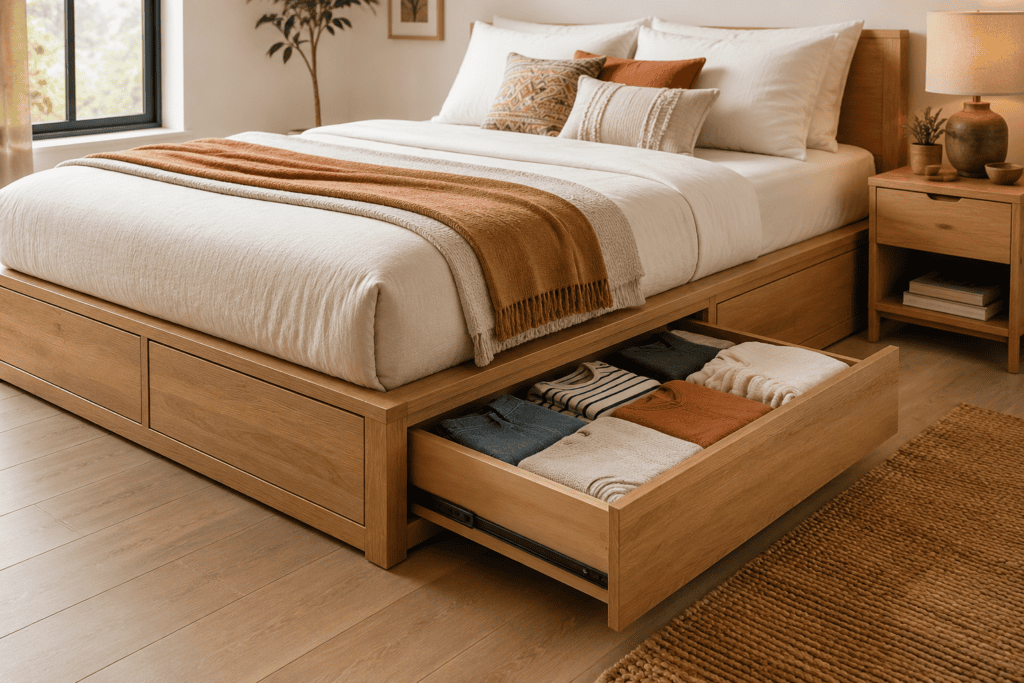
2. Platform Bed With Side Drawers
A platform bed with drawers gives you easier access to everyday clothes, linens or shoes than a lift-up base. You can open one drawer without raising the mattress or disturbing the bedding. The design works best when at least one long side of the bed faces open floor space; in a tight corner, several drawers may become unusable.
| Best for | People who use under-bed storage frequently |
| What it replaces | A small dresser |
| Space-saving type | Hidden storage |
| Measure before buying | Measure the drawer depth when fully extended and check nightstand positions |
| Daily effort | Very low |
| Main drawback | Walls, rugs and nearby furniture can block the drawers |
| Renter note | Usually freestanding |
| Safety note | Use drawer stops and avoid overloading |
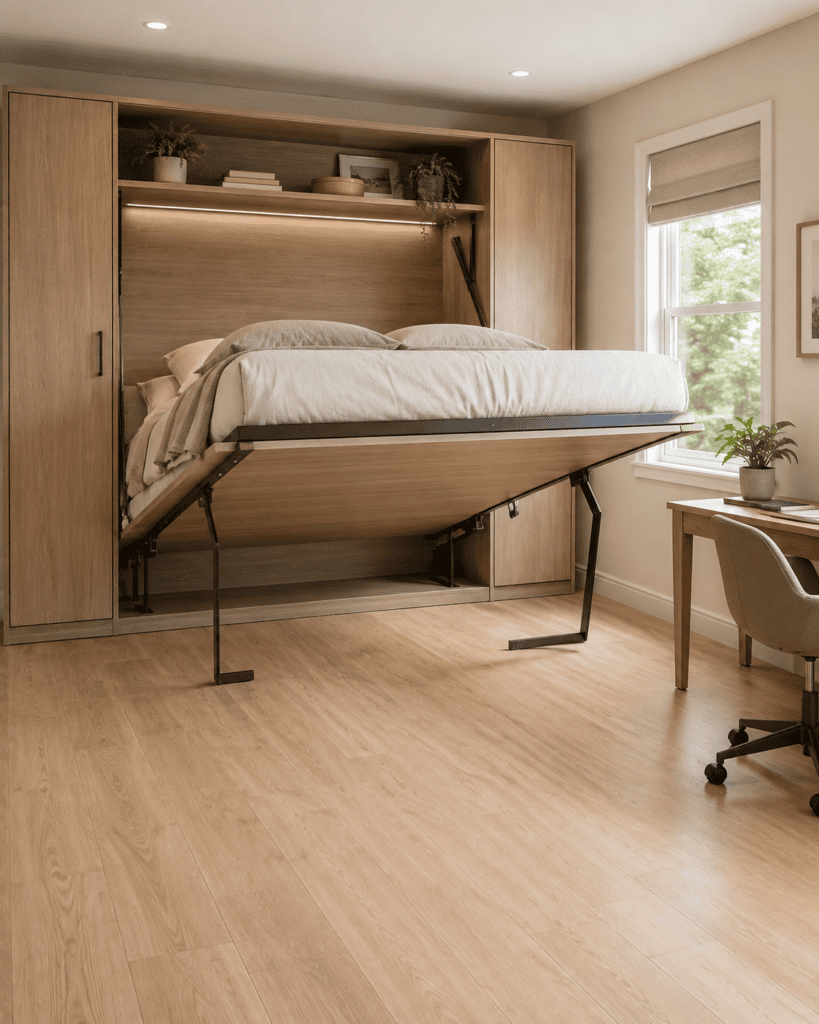
3. Murphy Bed
A Murphy bed folds vertically or horizontally into a wall cabinet, allowing the same floor area to serve another purpose during the day. It can be one of the most effective choices for a studio, office or multipurpose room, but it does not make the bed footprint disappear permanently: the floor in front must remain clear enough for the bed to open.
| Best for | Studios and rooms that need a genuine daytime function |
| What it replaces | A permanent bed footprint |
| Space-saving type | Flexible floor space |
| Measure before buying | Check open length, cabinet depth, ceiling height and front clearance |
| Daily effort | Moderate |
| Main drawback | Installation is demanding and the opening zone cannot hold permanent furniture |
| Renter note | Some freestanding systems exist, but many require secure attachment |
| Safety note | Professional installation is often the safest choice |
4. Freestanding Cabinet Bed
A cabinet bed stores a folded mattress inside a low cabinet rather than a full-height wall unit. When closed, the top can hold a lamp or a few decorative objects; when opened, the front extends across the floor to support the mattress. It is a practical guest solution for renters, although the cabinet remains deeper and heavier than an ordinary console.
| Best for | Occasional overnight visitors |
| What it replaces | A guest bed |
| Space-saving type | Flexible sleeping space |
| Measure before buying | Measure the full extended depth and allow room to walk around the open bed |
| Daily effort | Moderate |
| Main drawback | The folded mattress may not suit nightly sleeping |
| Renter note | More renter-friendly than most Murphy beds |
| Safety note | Confirm the extended base locks firmly |

5. Daybed With a Pull-Out Trundle
A daybed can act as a sofa during the day, a single bed at night and—when fitted with a trundle—a second bed for a guest. It works particularly well in a child’s room, home office or studio where a conventional sofa would duplicate the bed’s footprint. The arrangement is only truly space-saving if you also plan where pillows and guest bedding will live.
| Best for | Children’s rooms, offices and occasional guests |
| What it replaces | A sofa and an extra guest bed |
| Space-saving type | Multifunctional |
| Measure before buying | Check the trundle’s fully extended width and access from both sides |
| Daily effort | Moderate |
| Main drawback | The lower bed may be low and bedding needs separate storage |
| Renter note | Freestanding |
| Safety note | Choose a trundle with reliable wheel locks |

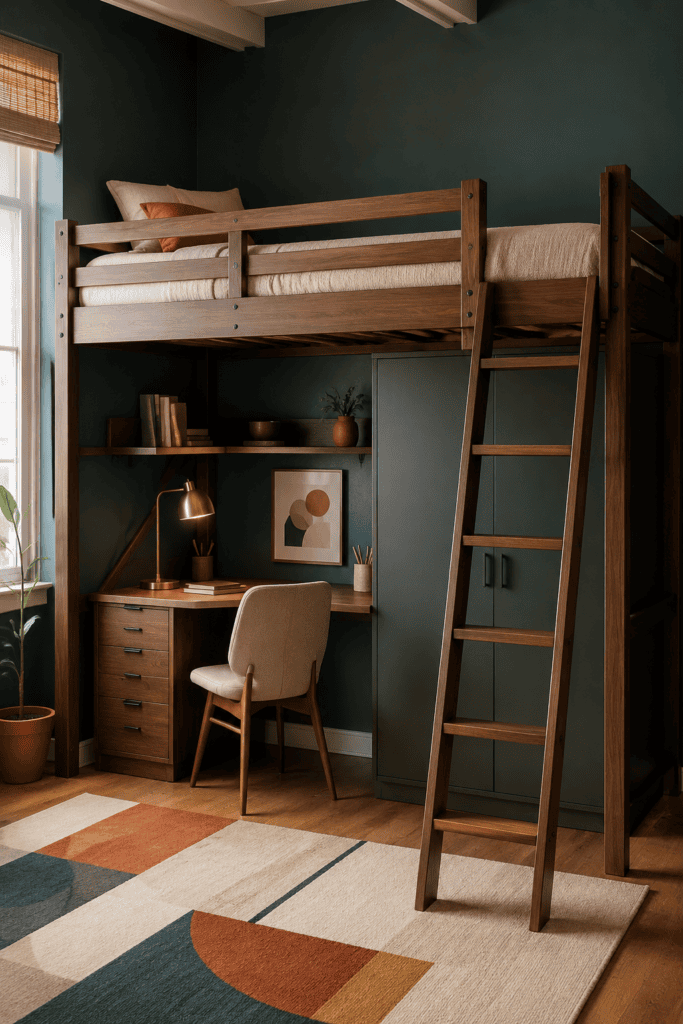
6. Loft Bed With a Desk or Wardrobe Underneath
A loft bed uses the room vertically, placing a desk, wardrobe or sitting area beneath the sleeping platform. It can free a remarkable amount of floor space, but ceiling height matters more than the room’s square footage. You need comfortable sitting headroom below and enough clearance above the mattress to get into bed without crouching excessively.
| Best for | Small rooms with generous ceiling height |
| What it replaces | Separate sleeping and work or storage zones |
| Space-saving type | Vertical space |
| Measure before buying | Measure floor-to-ceiling height, mattress thickness and headroom above and below |
| Daily effort | Low |
| Main drawback | Climbing is inconvenient for some people and heat collects near the ceiling |
| Renter note | Freestanding models may still need anchoring |
| Safety note | Check guardrails, ladder stability and weight capacity |
7. Sleeper Chair
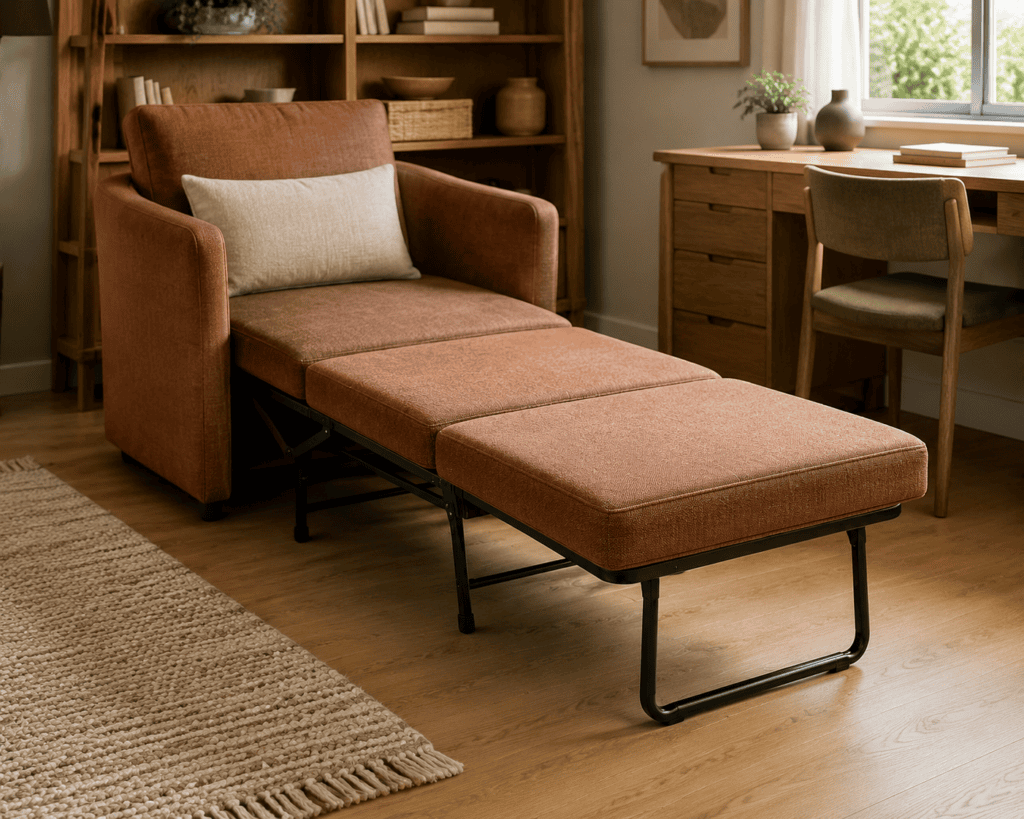
A sleeper chair converts one armchair into a narrow single bed, giving a guest somewhere to sleep without committing space to a full sofa bed. It is easier to position in a home office or small living room and usually takes less effort to open. Comfort varies widely, so check the length, mattress thickness and gaps between cushions rather than relying only on attractive photographs.
| Best for | One occasional guest |
| What it replaces | A guest bed |
| Space-saving type | Multifunctional |
| Measure before buying | Measure the chair’s full open length and the space needed at its foot |
| Daily effort | Low to moderate |
| Main drawback | Many models are narrow and use thin foam |
| Renter note | Freestanding and easy to move |
| Safety note | Ensure the legs lock securely when opened |
8. Floating Nightstand With a Drawer
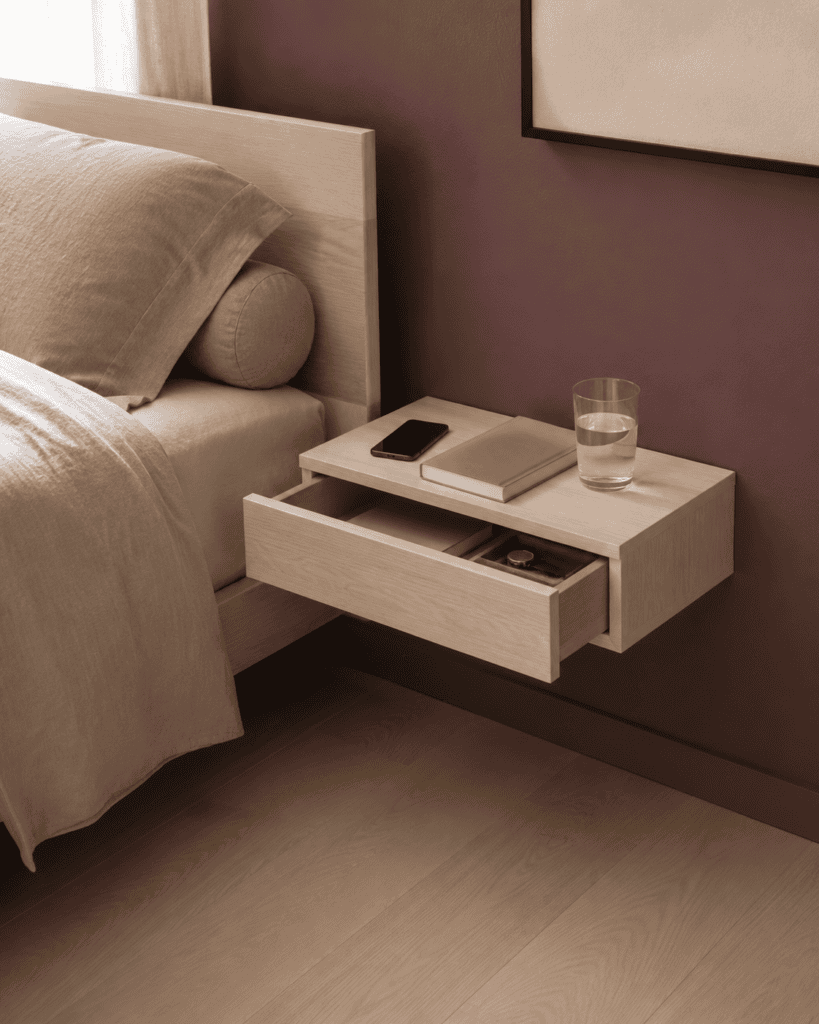
A floating nightstand gives you a landing place for a phone, book and glass of water without filling the floor beside the bed. Keeping the floor visible can make a narrow sleeping area feel lighter and also simplifies cleaning. A drawer hides small visual clutter, but the wall and fixing method must be able to support the expected load.
| Best for | Very narrow bedside spaces |
| What it replaces | A bulky bedside table |
| Space-saving type | Floor and visual space |
| Measure before buying | Match the width to the wall and install it at a comfortable height beside the mattress |
| Daily effort | Very low |
| Main drawback | It requires drilling and offers limited storage |
| Renter note | Use a slim freestanding shelf if drilling is not allowed |
| Safety note | Use fixings suitable for the wall type |
9. Storage Headboard
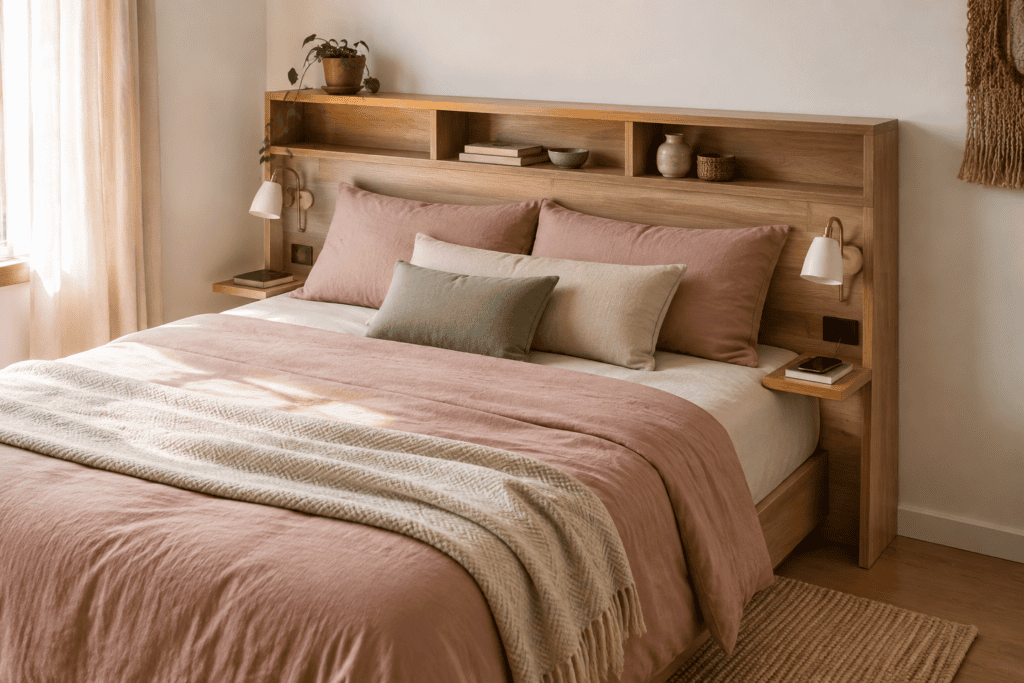
A storage headboard uses the space directly behind and sometimes above the bed for books, lighting and small personal belongings. A well-designed version can replace two nightstands, which is valuable when the bed nearly fills the room. Avoid unnecessarily deep models: every extra inch behind the pillows increases the bed’s total projection into the room.
| Best for | Bedrooms with no room for two nightstands |
| What it replaces | Bedside tables and small wall shelves |
| Space-saving type | Vertical and integrated storage |
| Measure before buying | Measure total bed depth, outlet access and shelf height from the mattress |
| Daily effort | Very low |
| Main drawback | Deep shelves enlarge the bed footprint and open shelves collect dust |
| Renter note | Usually freestanding, though tall units may need anchoring |
| Safety note | Keep heavy items away from open shelves above your head |
10. Tall, Shallow Wardrobe
A tall wardrobe concentrates storage on one wall without projecting as far into the room as a deep armoire. Closed doors calm visual clutter, while adjustable shelves let one substantial unit replace several small cabinets. Shallow wardrobes need thoughtful fittings—side-facing rails, hooks or shelves—because standard hangers may not fit front-to-back.
| Best for | Bedrooms and entryways with limited closet space |
| What it replaces | Several small dressers or cabinets |
| Space-saving type | Vertical and visual space |
| Measure before buying | Check depth, door swing, ceiling clearance and skirting boards |
| Daily effort | Very low |
| Main drawback | Upper shelves can be difficult to reach |
| Renter note | Freestanding but usually should be anchored |
| Safety note | Secure tall furniture against tipping |

Space-Saving Living-Room Furniture
11. Apartment-Size Sofa With Slim Arms
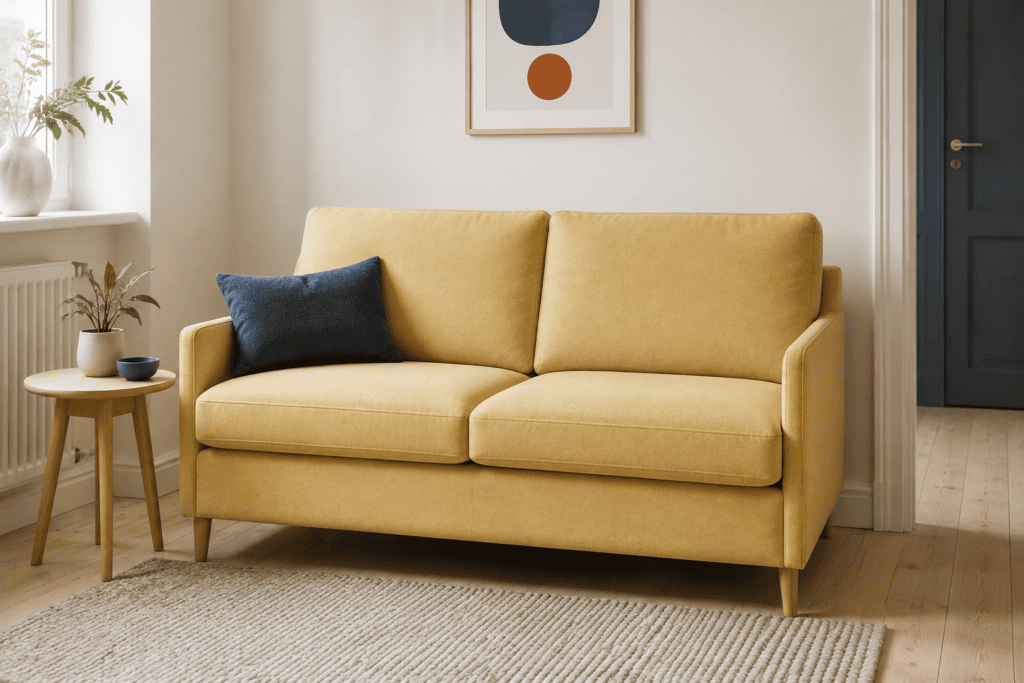
An apartment-size sofa saves space through proportion rather than a complicated mechanism. Slim arms preserve more usable seat width within a smaller overall frame, so two people can sit comfortably without the sofa dominating the room. Compare the internal seat width as carefully as the total width; some compact sofas sacrifice too much comfort to look small.
| Best for | Small living rooms used every day |
| What it replaces | An oversized sofa |
| Space-saving type | Compact footprint |
| Measure before buying | Measure total width and depth, seat depth and the delivery route |
| Daily effort | Very low |
| Main drawback | The term “apartment-size” has no standard dimensions |
| Renter note | Freestanding |
| Safety note | Confirm the sofa is stable when sitting near the edge |
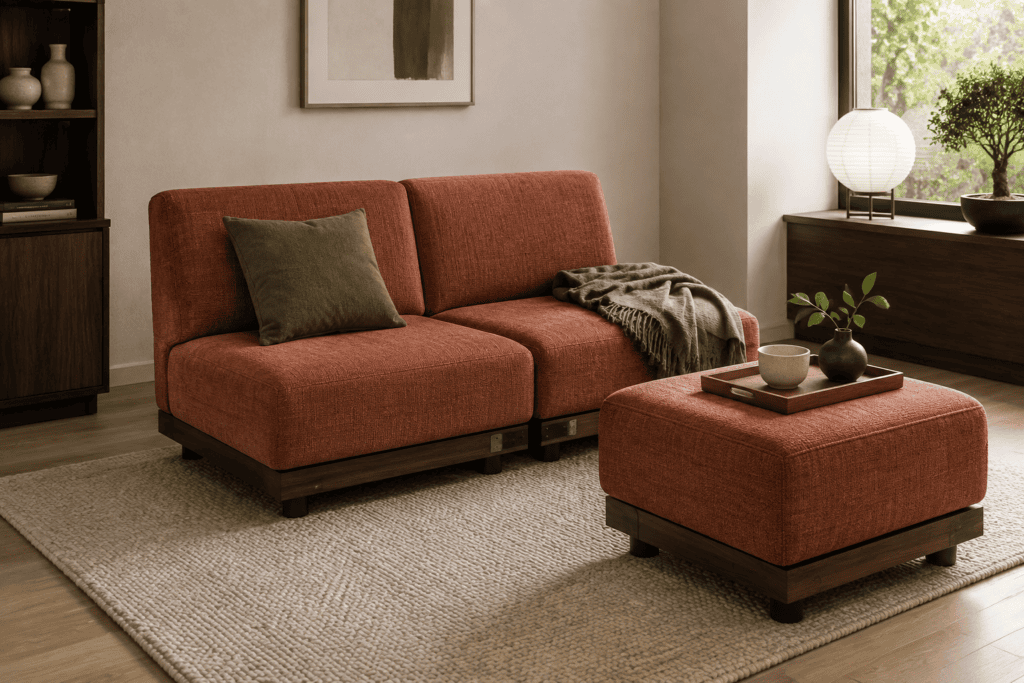
12. Compact Modular Sofa
A modular sofa can adapt when your layout changes or when you move, but modular does not automatically mean small. It saves space when armless sections are genuinely compact, an ottoman can act as a table or separate seat, and every module has a useful place. Oversized modules and unused pieces can create more clutter than a simple loveseat.
| Best for | Changing layouts and people who expect to move |
| What it replaces | Several fixed seating pieces |
| Space-saving type | Flexible use |
| Measure before buying | Measure every module separately and in each planned configuration |
| Daily effort | Low |
| Main drawback | Connections may shift and unused modules still need storage |
| Renter note | Freestanding and portable in sections |
| Safety note | Check connectors and anti-slip feet |
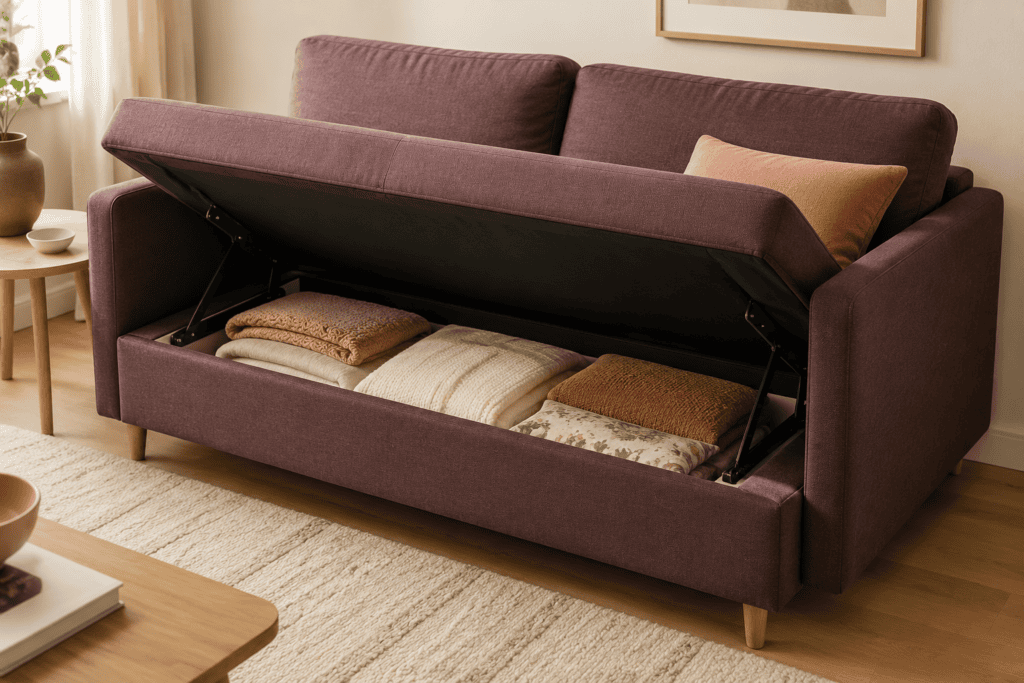
13. Sofa With Hidden Storage
A storage sofa keeps blankets, toys or guest bedding inside a piece the room already needs. This can remove the need for a blanket chest or extra cabinet without changing the seating footprint. Before buying, check how the compartment opens; storage is far less convenient if you must remove every cushion or pull the sofa away from a wall.
| Best for | Living rooms without nearby closed storage |
| What it replaces | A blanket box or small cabinet |
| Space-saving type | Hidden storage |
| Measure before buying | Check lid clearance and whether the sofa must move to open |
| Daily effort | Low |
| Main drawback | Access may be awkward and capacity is often smaller than photographs suggest |
| Renter note | Freestanding |
| Safety note | Choose a lid that remains open safely |
14. Storage Ottoman Instead of a Coffee Table
A storage ottoman can work as a footrest, occasional seat, coffee table and hidden storage box. Add a firm tray when you need a stable surface for drinks. It is softer around young children than a hard-edged table and can be moved easily, but it should not become a container for unsorted clutter that you never use.
| Best for | Flexible living rooms and family homes |
| What it replaces | Coffee table, extra seat and storage box |
| Space-saving type | Multifunctional |
| Measure before buying | Choose a height that suits the sofa and leave space to move around it |
| Daily effort | Very low |
| Main drawback | The upholstered top is unstable without a tray |
| Renter note | Freestanding |
| Safety note | Check the seating weight limit and lid hinges |

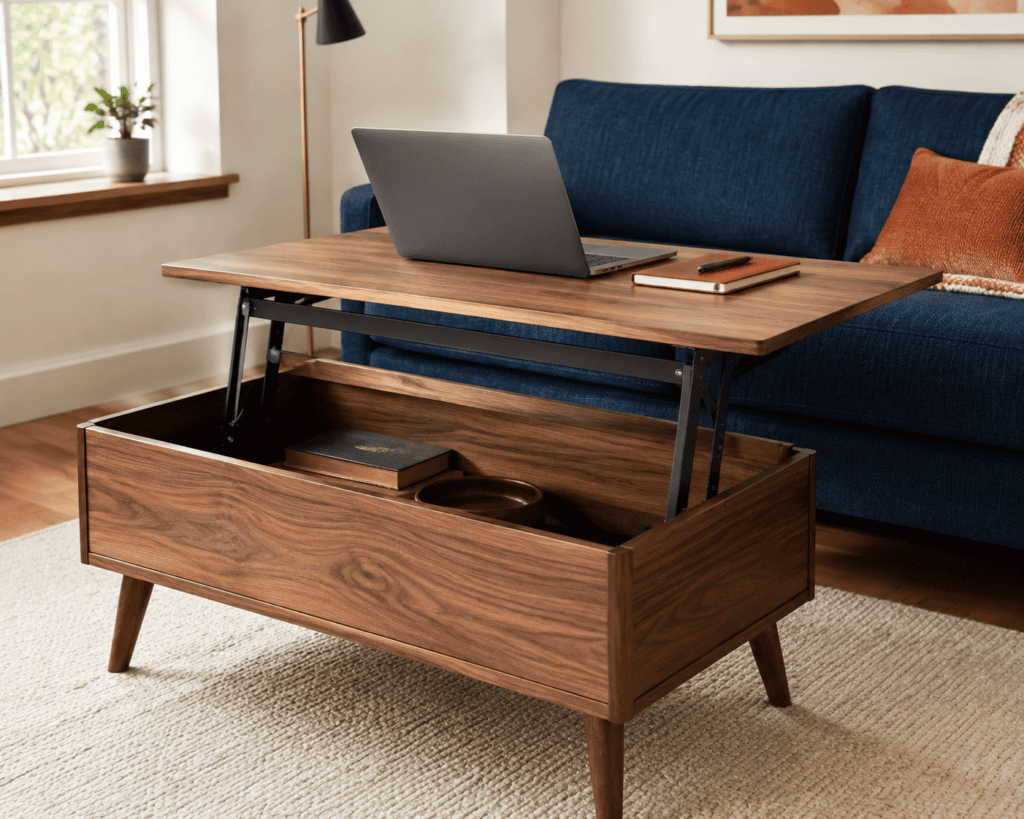
15. Lift-Top Coffee Table That Becomes a Desk
A lift-top coffee table raises and moves the tabletop toward the sofa, creating a convenient surface for a laptop, meal or paperwork. It can handle occasional work without adding a permanent desk. For full workdays, however, the sofa posture, screen height and limited legroom may become uncomfortable, so treat it as a flexible surface rather than an automatic ergonomic office.
| Best for | Occasional laptop work or dining from the sofa |
| What it replaces | Coffee table and occasional desk |
| Space-saving type | Multifunctional |
| Measure before buying | Check raised height, forward extension and knee clearance |
| Daily effort | Low |
| Main drawback | It may be uncomfortable for long work sessions |
| Renter note | Freestanding |
| Safety note | Use a controlled lift mechanism that will not slam shut |
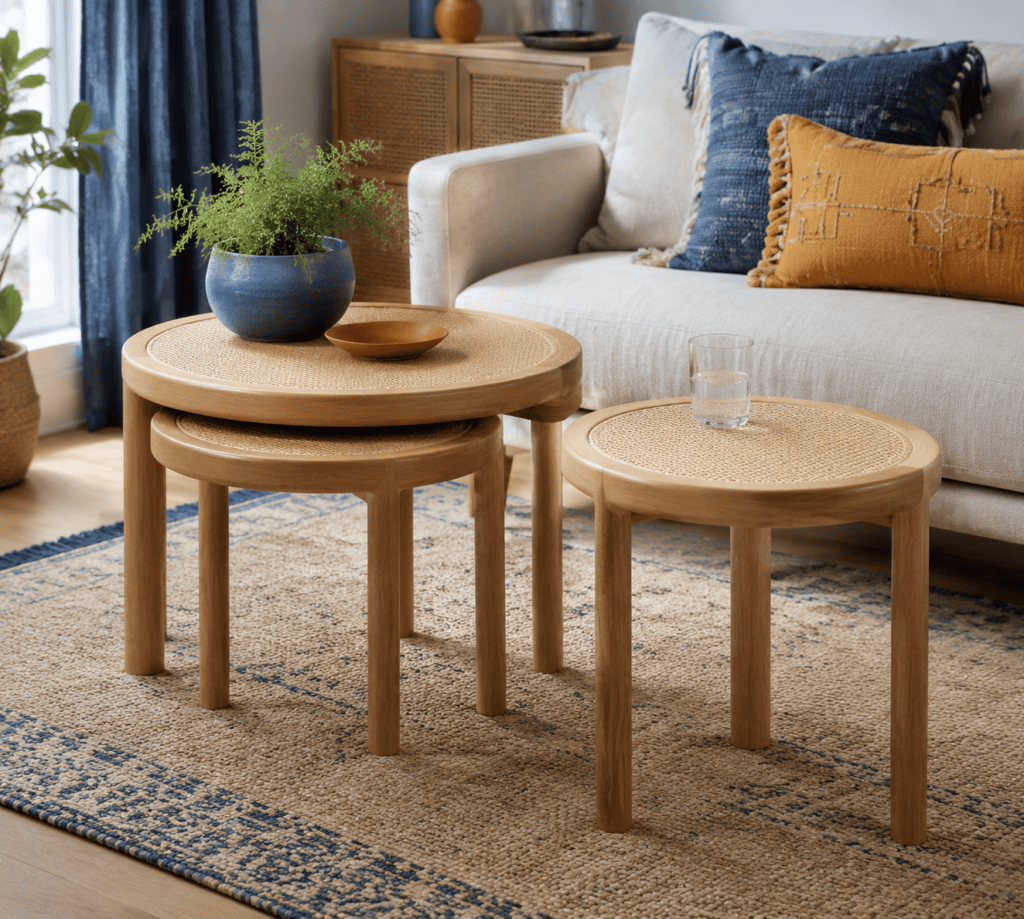
16. Nesting Coffee or Side Tables
Nesting tables keep two or three surfaces within the footprint of the largest table, then separate when guests need somewhere to place a drink. They are useful because the transformation takes seconds and nothing must be assembled. Choose a set that slides together smoothly without wobbling; decorative shapes sometimes nest poorly and consume more room than expected.
| Best for | Occasional entertaining |
| What it replaces | Several permanent side tables |
| Space-saving type | Flexible floor space |
| Measure before buying | Check the combined footprint and the height beside your sofa or chairs |
| Daily effort | Very low |
| Main drawback | Lightweight sets may wobble or tip |
| Renter note | Freestanding and easy to move |
| Safety note | Avoid sharp projecting legs in narrow routes |
17. C-Shaped Side Table
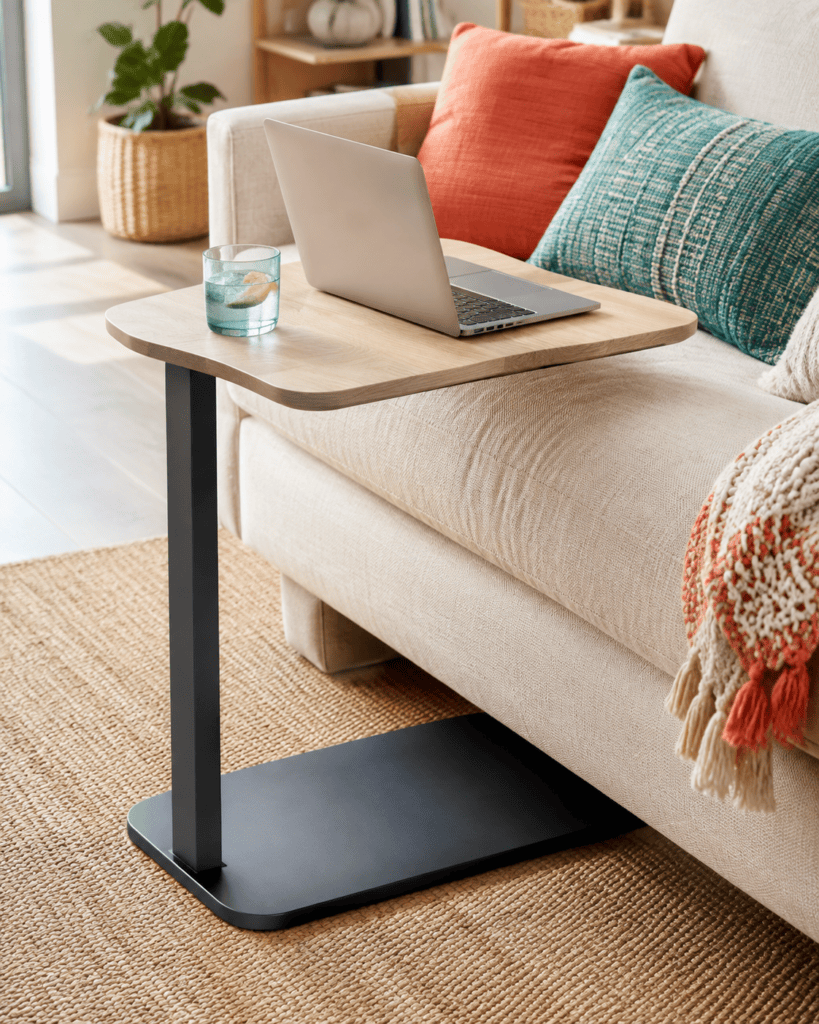
A C-shaped table slides its base beneath a sofa while the top reaches over the seat. This gives you a close surface for a drink or laptop without the width of a conventional side table. It works only if the base can pass beneath the sofa and the top clears the cushion or arm, so measure both heights before ordering.
| Best for | Narrow living rooms and laptop use |
| What it replaces | A larger side or coffee table |
| Space-saving type | Compact footprint |
| Measure before buying | Measure sofa-floor clearance, cushion height and arm height |
| Daily effort | Very low |
| Main drawback | The narrow cantilevered design can tip more easily |
| Renter note | Freestanding |
| Safety note | Choose a broad, weighted base if children or pets are present |
18. Stackable or Nesting Stools
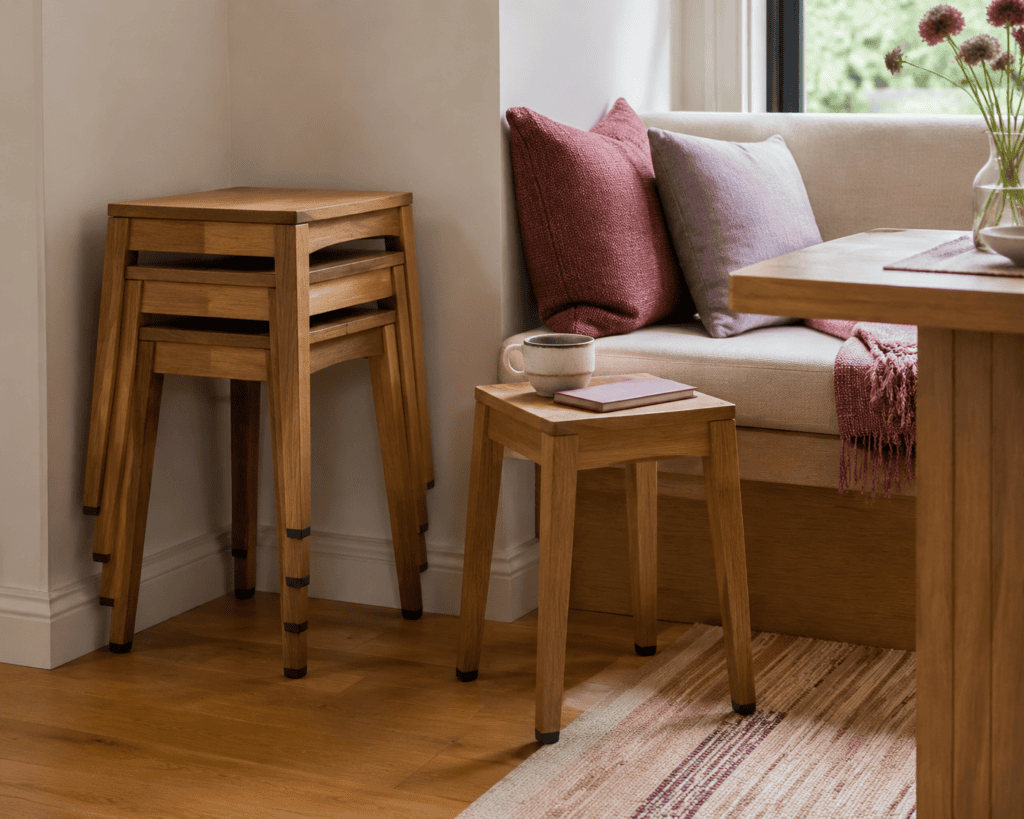
Stackable stools allow you to keep extra seating without surrounding a small table with empty chairs every day. A sturdy flat-topped stool can also become a side table or plant stand. They are best for occasional visitors, since compact stools usually lack the back support and seat padding required for long meals.
| Best for | Homes that host occasionally |
| What it replaces | Permanent guest chairs and side tables |
| Space-saving type | Flexible and multifunctional |
| Measure before buying | Measure the stacked height and choose a storage position |
| Daily effort | Very low |
| Main drawback | Less comfortable than a proper chair |
| Renter note | Freestanding |
| Safety note | Confirm the stack remains stable and respect weight limits |
19. Wall-Mounted Media Console
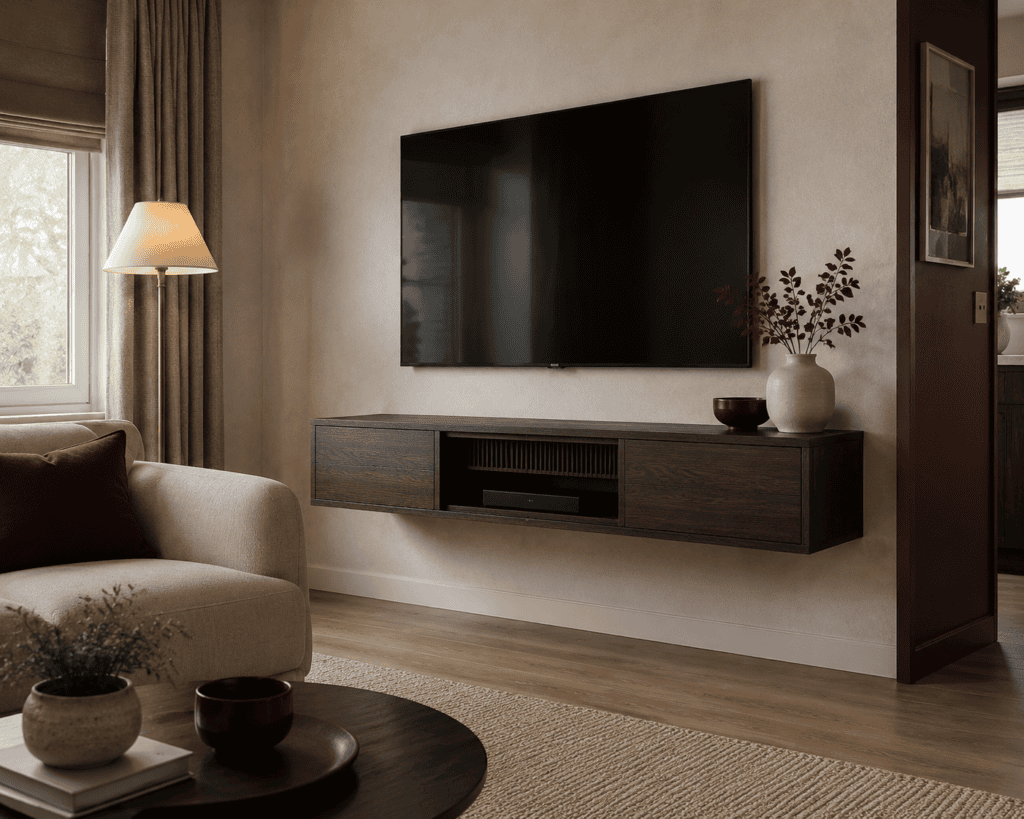
A wall-mounted media console keeps equipment and cables organised while leaving the floor visible. A shallow unit can make a small living room feel less crowded than a deep entertainment centre and makes cleaning easier. Installation must account for wall construction, cable routes and ventilation around electronics.
| Best for | Small rooms with a wall-mounted television |
| What it replaces | A deep entertainment unit |
| Space-saving type | Floor and visual space |
| Measure before buying | Check wall strength, console depth, sockets and cable entry points |
| Daily effort | Very low |
| Main drawback | It is difficult to reposition after installation |
| Renter note | A shallow console on legs is the easier rental alternative |
| Safety note | Use correct wall anchors and observe equipment ventilation requirements |
20. Open Bookcase Used as Storage and a Room Divider
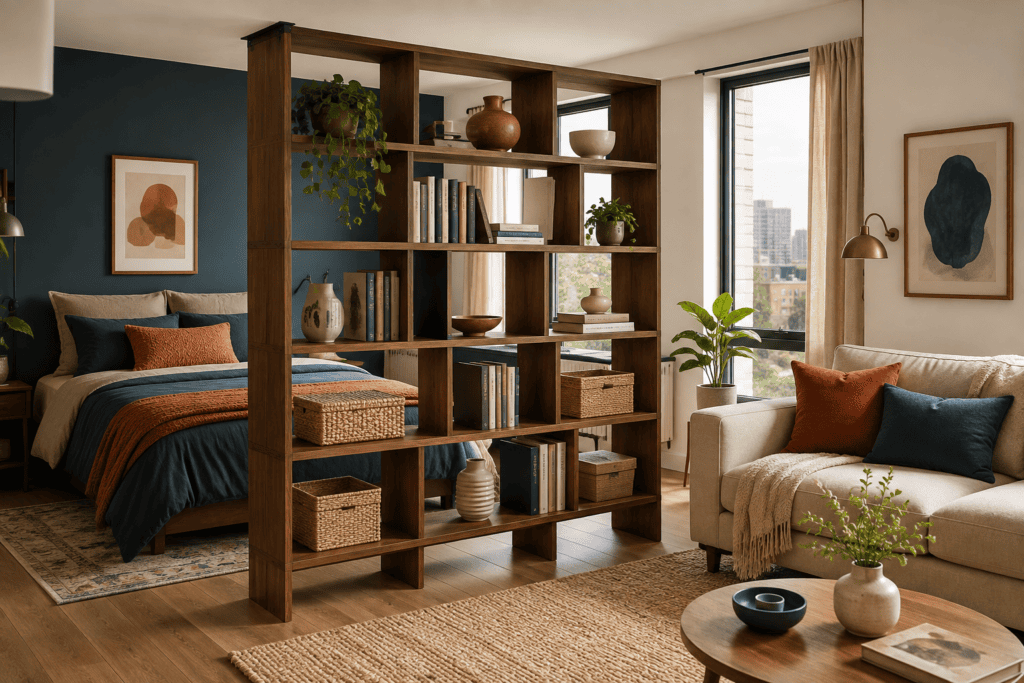
An open-backed bookcase can store belongings while gently separating a bed, desk or dining zone. Because light and sightlines pass through the shelves, it usually feels less enclosing than a solid cabinet. The arrangement looks calm only when some openings remain empty and visually busy items are placed in matching boxes or baskets.
| Best for | Studios and open-plan homes |
| What it replaces | A bookcase and separate divider |
| Space-saving type | Multifunctional and vertical |
| Measure before buying | Measure height, depth and the passage remaining on both sides |
| Daily effort | Very low |
| Main drawback | Open shelves can increase visual clutter |
| Renter note | Freestanding, although tall units should be secured |
| Safety note | Anchor against tipping and keep heavy objects low |
Space-Saving Dining and Work Furniture
21. Drop-Leaf Dining Table
A drop-leaf table keeps one or both leaves lowered for everyday dining, then expands when you need more surface area. It is practical for one or two people because part of the table can remain usable without opening the whole piece. Check the leg arrangement carefully: some compact mechanisms place supports where knees or dining chairs need to go.
| Best for | Everyday dining for one or two people |
| What it replaces | A full-size dining table |
| Space-saving type | Flexible floor space |
| Measure before buying | Measure every leaf position and allow room to pull out chairs |
| Daily effort | Low |
| Main drawback | Leg placement can reduce seating comfort |
| Renter note | Freestanding |
| Safety note | Make sure raised leaves lock securely |
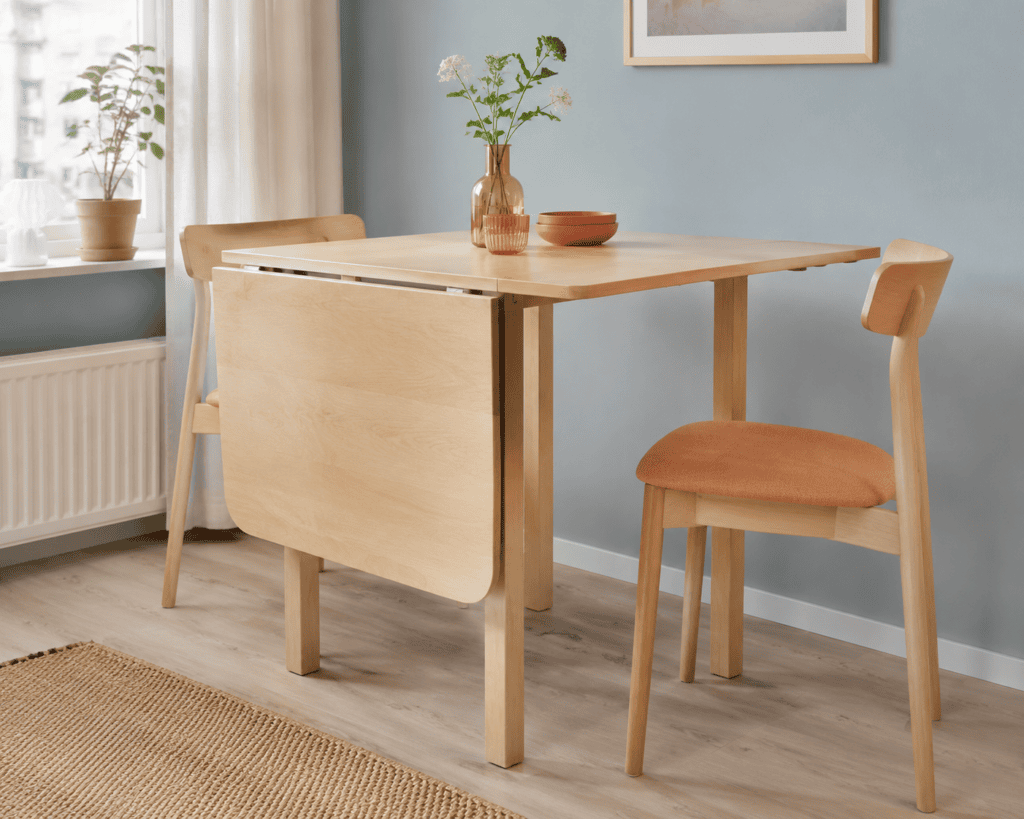
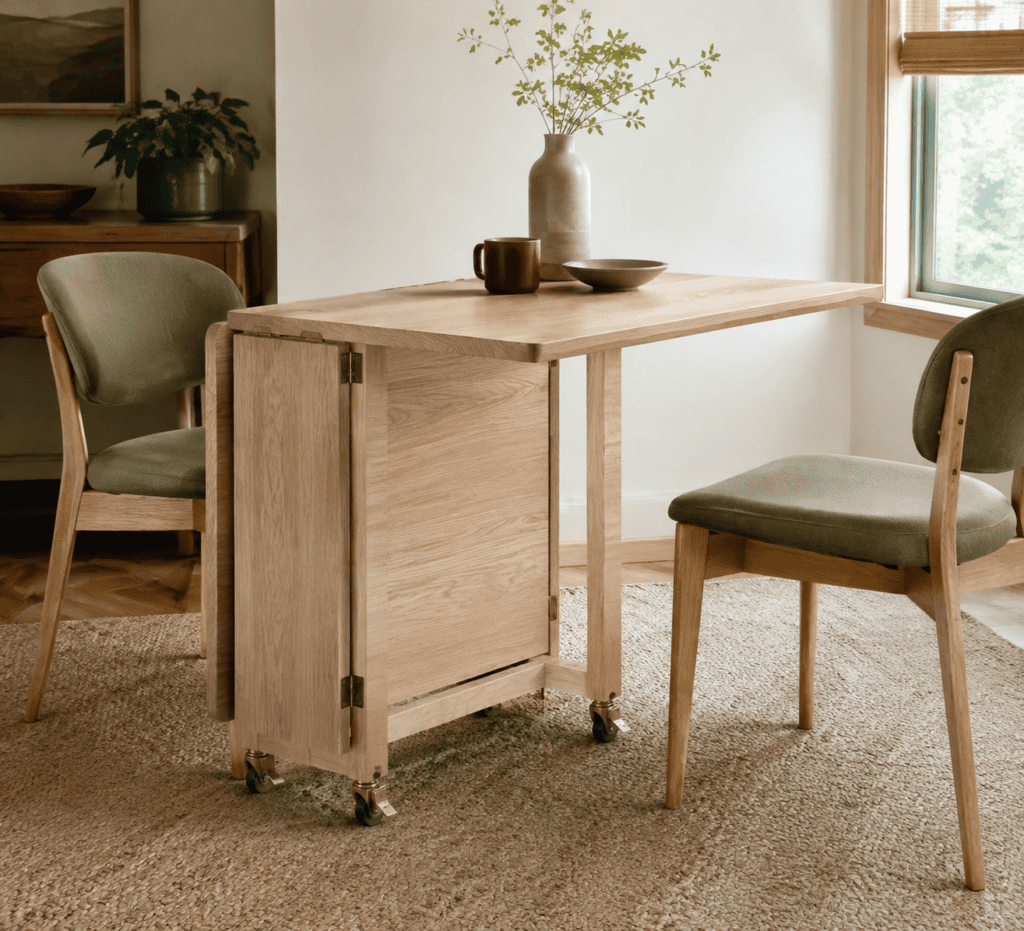
22. Gateleg Table That Folds Into a Console
A gateleg table folds into a very narrow console and opens into a larger dining or work surface supported by swinging legs. It generally becomes more compact than a basic drop-leaf table, making it useful when you need a proper table only a few times each week. The trade-off is a heavier frame and more moving parts.
| Best for | Homes that need a full table only occasionally |
| What it replaces | Console and dining table |
| Space-saving type | Multifunctional |
| Measure before buying | Check the narrow closed depth, full open width and chair positions |
| Daily effort | Low to moderate |
| Main drawback | Some models are heavy to move and awkward around the legs |
| Renter note | Freestanding and renter-friendly |
| Safety note | Lock casters, if fitted, before use |
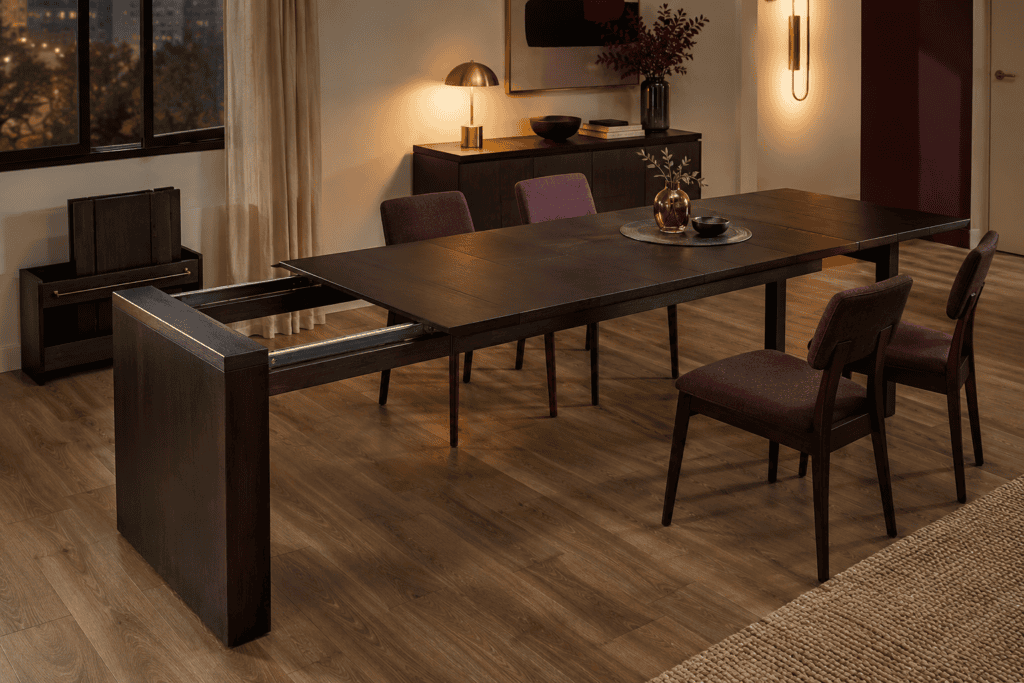
23. Console Table That Expands for Dining
An extending console can sit against a wall or behind a sofa, then telescope into a dining table when guests arrive. It offers a larger hosting surface than most drop-leaf designs without occupying that footprint every day. The extension leaves must live somewhere, and converting the table is easier with two people, so it suits occasional rather than spontaneous daily use.
| Best for | People who host several guests occasionally |
| What it replaces | Entry console and full dining table |
| Space-saving type | Multifunctional |
| Measure before buying | Measure the maximum length and the room needed to add leaves |
| Daily effort | Moderate |
| Main drawback | Loose extension leaves need storage |
| Renter note | Freestanding |
| Safety note | Confirm all extension locks engage before placing weight on the table |
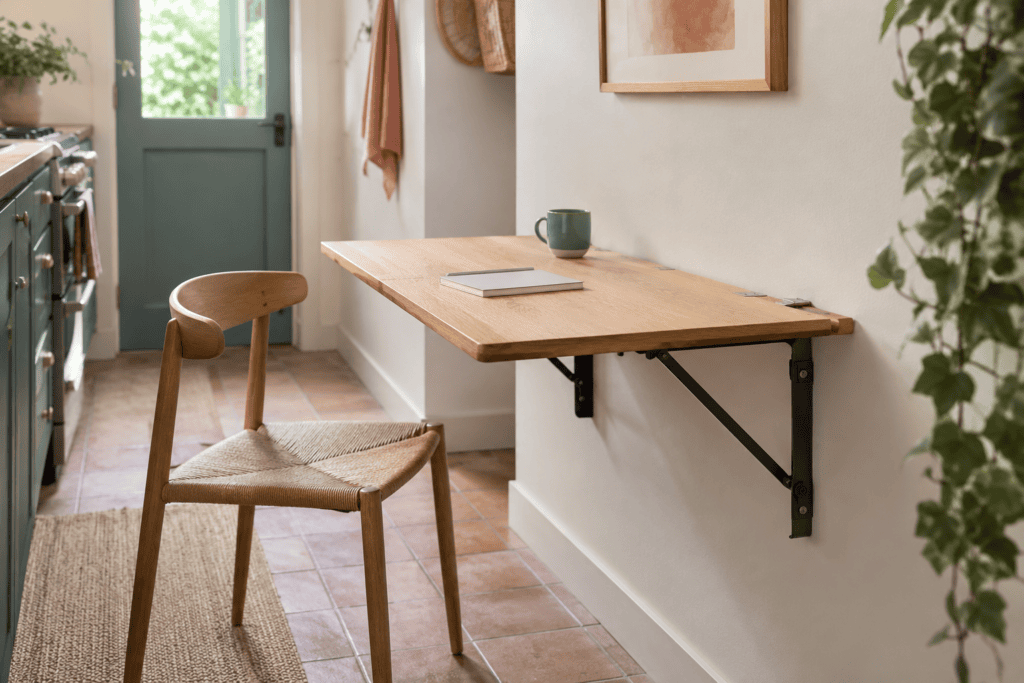
24. Wall-Mounted Folding Table
A folding table creates a dining or work surface where a permanent table would obstruct the room. After use, it folds nearly flat against the wall. The surface must normally be cleared every time, and installation height is fixed, so plan what you will use it for and which chairs will fit before drilling.
| Best for | Narrow kitchens, studios and occasional work |
| What it replaces | A permanent dining table or desk |
| Space-saving type | Flexible floor space |
| Measure before buying | Check open depth, mounting height, chair clearance and wall structure |
| Daily effort | Low |
| Main drawback | It must be cleared before folding |
| Renter note | Choose a freestanding gateleg table when drilling is prohibited |
| Safety note | Use rated fixings and do not exceed the load limit |
25. Folding Chairs Stored on Wall Hooks
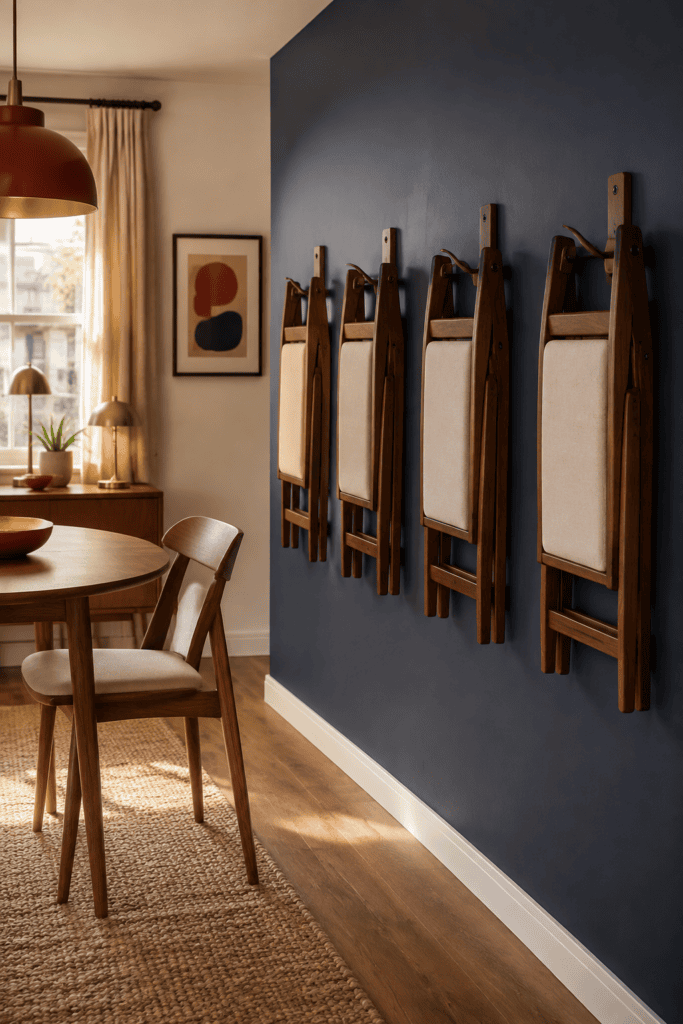
Folding chairs solve the familiar problem of where guests will sit without asking you to live around empty chairs every day. Hanging them on strong wall hooks uses vertical space and keeps the floor clear; they can even look intentional when the chairs share a finish. This works best for occasional seating, not as a substitute for comfortable daily dining chairs.
| Best for | Small homes that host occasionally |
| What it replaces | Permanent guest chairs |
| Space-saving type | Vertical and flexible |
| Measure before buying | Measure folded thickness, stacked or hanging space and hook height |
| Daily effort | Low |
| Main drawback | Many folding chairs are uncomfortable for long meals |
| Renter note | Wall hooks require drilling; a slim closet is an alternative |
| Safety note | Use hooks and fixings rated above the chair’s weight |
26. Dining Bench With Hidden Storage
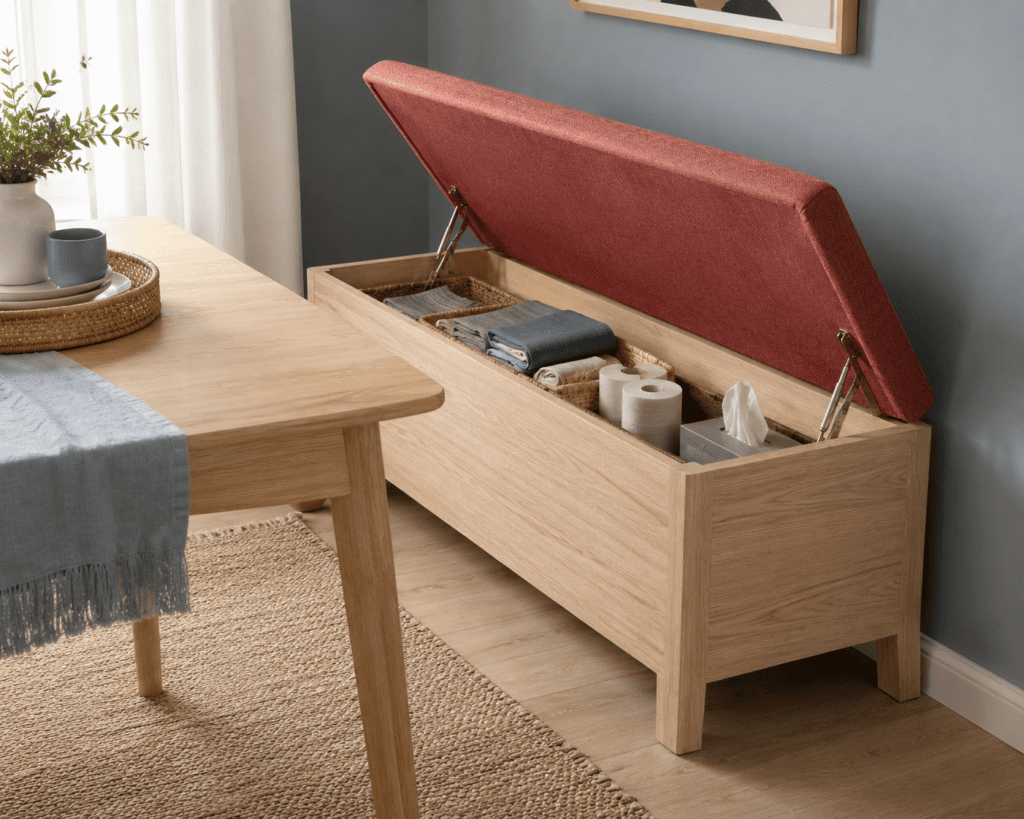
A storage bench seats two or sometimes three people along a wall while hiding table linens, toys or household supplies inside. Sliding the bench beneath the table can recover floor space between meals. It uses length efficiently, although anyone seated against the wall may need others to move before getting up.
| Best for | Dining areas positioned against a wall |
| What it replaces | Several chairs and a small storage cabinet |
| Space-saving type | Efficient seating and hidden storage |
| Measure before buying | Check seat height, table clearance and lid-opening room |
| Daily effort | Very low |
| Main drawback | Access can be inconvenient while the table is in place |
| Renter note | Freestanding |
| Safety note | Choose soft-close hinges and confirm the seating weight limit |
27. Wall-Mounted Folding Desk
A folding desk lets a living room or bedroom leave work mode after the laptop is put away. Some models include shallow shelves for chargers and stationery, but the worktop must still be deep enough for your equipment. If you work for hours each day, check legroom, monitor distance and chair position rather than choosing the smallest desk available.
| Best for | Laptop-based or occasional work |
| What it replaces | A permanent desk |
| Space-saving type | Flexible floor space |
| Measure before buying | Measure worktop depth, open clearance, mounting height and legroom |
| Daily effort | Low to moderate |
| Main drawback | The surface usually must be cleared before closing |
| Renter note | A compact secretary desk is the freestanding alternative |
| Safety note | Use wall fixings suitable for both the wall and stated load |

Space-Saving Kitchen and Flexible Furniture
28. Narrow Rolling Kitchen Island With a Drop Leaf
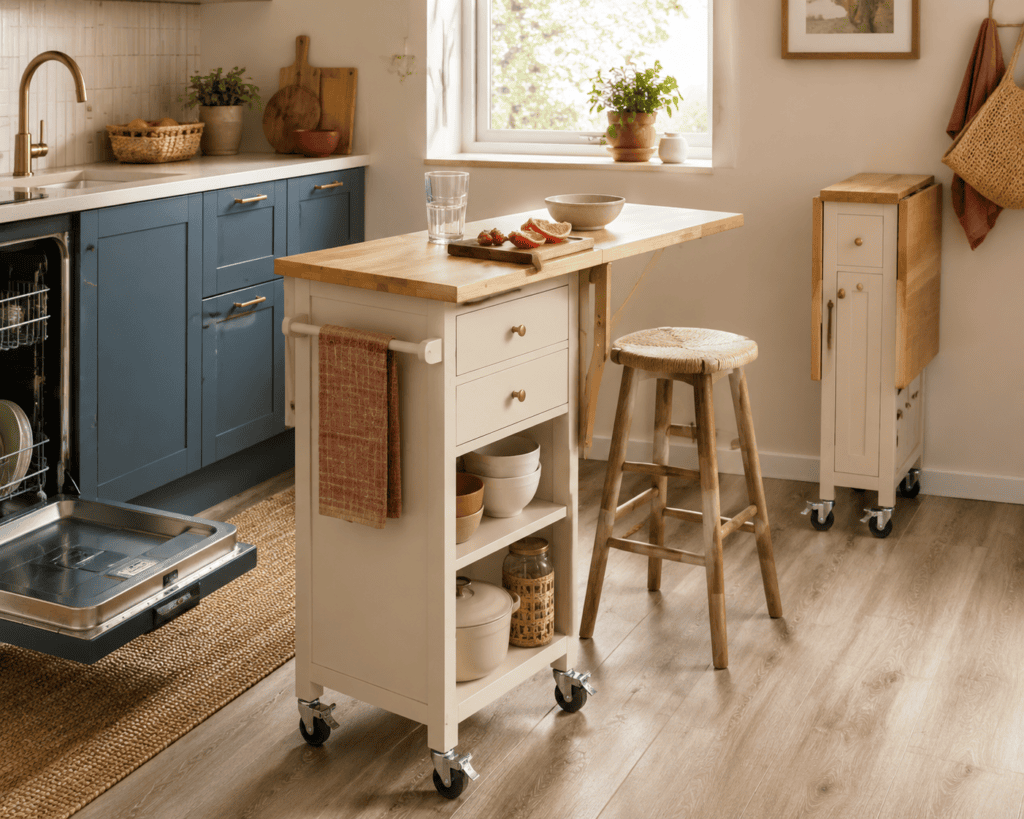
A narrow rolling island can add preparation space, drawers or shelves and a small breakfast surface to a kitchen without committing to permanent cabinetry. A drop leaf expands the top only when you need it, while wheels allow the island to move out of the way. It still needs a sensible parking place that does not block appliances or circulation.
| Best for | Small kitchens short on worktop space |
| What it replaces | Preparation table, storage unit and occasional breakfast bar |
| Space-saving type | Mobile and multifunctional |
| Measure before buying | Measure with the leaf open and leave appliance-door clearance |
| Daily effort | Low |
| Main drawback | It needs an unobstructed place to park |
| Renter note | Freestanding and renter-friendly |
| Safety note | Choose locking wheels and avoid moving it with hot items on top |
29. Mobile Utility Cart
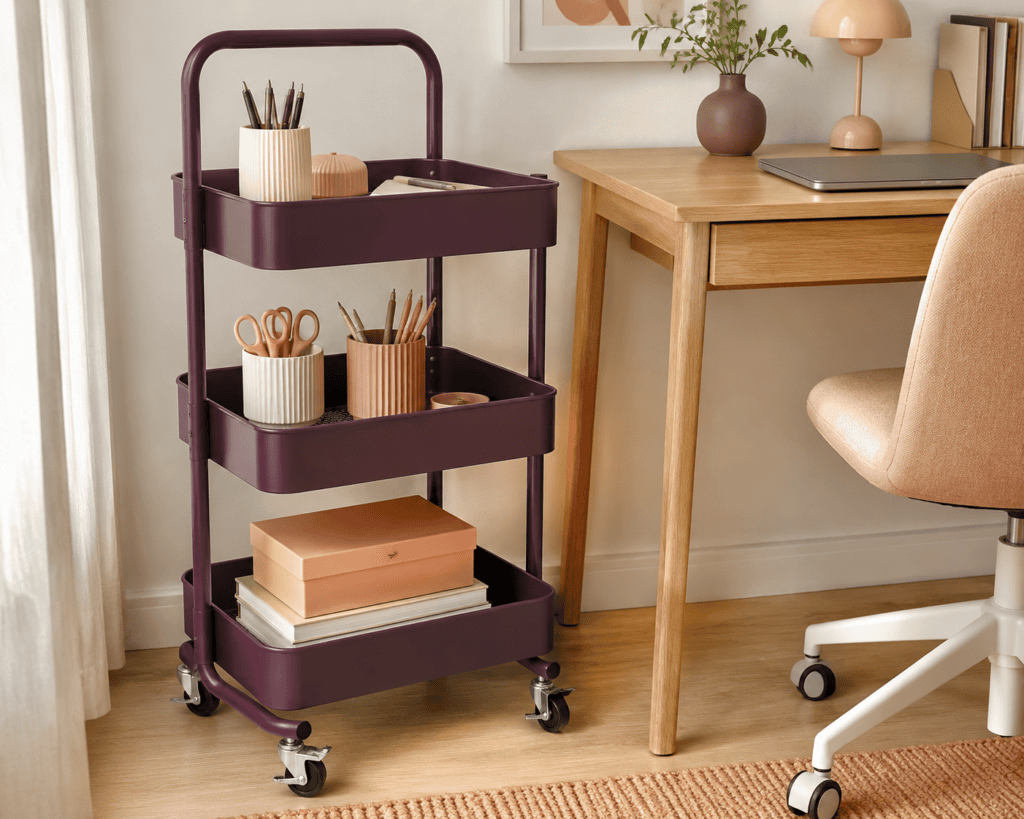
A compact cart can move between the kitchen, bathroom, workspace and living room as your needs change. It might begin as pantry storage, then become a coffee station, craft trolley, office organiser or child’s activity cart. Its flexibility is valuable for renters, but open shelves look cluttered quickly, so give every tier a clear purpose and avoid overloading it.
| Best for | Renters and homes with changing storage needs |
| What it replaces | Several small fixed organisers |
| Space-saving type | Mobile and multifunctional |
| Measure before buying | Check width at handles and wheels, shelf height and parking location |
| Daily effort | Very low |
| Main drawback | An overloaded cart creates visual clutter |
| Renter note | Highly renter-friendly |
| Safety note | Use locking wheels and keep heavy items on the lowest tier |
Lift-Up Storage Bed or Drawer Storage Bed?
Choose a lift-up base when the bed sits close to walls, you want one large compartment and you mostly store bulky or seasonal items. Choose drawers when you have open space beside the bed and want quick access to clothes or linens. The better option is determined by clearance and frequency of use—not by which mechanism looks cleverer.
Gateleg Table or Drop-Leaf Table?
A drop-leaf table is normally easier for everyday meals because part of the surface can remain open. A gateleg table usually folds into a narrower console and can create a larger table when fully extended. Choose the drop-leaf for frequent use and the gateleg when maximum closed compactness matters more.
When Space-Saving Furniture Is Not the Best Choice
Ordinary furniture may be the wiser choice when the convertible function will rarely be used, the mechanism reduces comfort or the transformation interrupts daily life. It may also be better when loose cushions, leaves or chairs have nowhere to go, or when the price is much higher without solving a meaningful problem.
- You must move several other objects every time it opens.
- The space released in the closed position has no practical daytime use.
- The mechanism makes the main function less comfortable.
- A simpler, correctly scaled piece would solve the same problem.
- The installation is unsuitable for your rental or wall type.
- The lifting, bending or low seating is difficult for someone in the household.
A piece does not save space merely because it folds. It must make the room easier to use in both its open and closed positions.
How to Keep Multifunctional Furniture Calm and Cohesive
Choose fewer, more capable pieces
Where it makes sense, let one substantial item replace several small ones. Too many “space-saving” organisers can consume floor area and create visual noise.
Mix open and closed storage
Place attractive or frequently used objects on open shelves. Hide cables, paperwork, toys and mismatched supplies behind doors, inside drawers or in consistent baskets.
Repeat materials and colours
Choose two or three main finishes and repeat them across the room. Multifunctional furniture feels more intentional when it belongs to the same visual story.
Preserve empty space
Not every wall, corner and surface needs storage. A little visible floor, a clear tabletop and an undecorated section of wall give the eye somewhere to rest.
Keep everyday functions easy
Anything used daily should be accessible without moving a stack of belongings or operating a complicated mechanism. Reserve awkward storage for infrequently used items.
Space-Saving Furniture Measurement Checklist
- Room length and width
- Ceiling height
- Door and window positions
- Radiators, vents and electrical outlets
- Closed furniture dimensions
- Fully open dimensions
- Operating clearance
- Drawer and cabinet-door clearance
- Chair pull-out space
- Remaining walkway space
- Narrowest delivery doorway
- Hallway, stair and elevator dimensions
- Packaged dimensions and product weight
- Assembly and wall-mounting requirements
Frequently Asked Questions
What type of furniture saves the most space?
Furniture that replaces another necessary item usually creates the greatest benefit. A storage bed can replace part of a dresser, a dining table can double as a desk, and a sleeper chair can replace an occasional guest bed.
Is multifunctional furniture worth buying?
Yes, when both functions are useful, comfortable and easy to access. It is less worthwhile when conversion requires moving several objects or when the secondary function is rarely needed.
Is smaller furniture always better for a small home?
No. Correct scale matters more than choosing the smallest option. Preserve enough seat depth, table surface, legroom and storage capacity for the furniture to do its job well.
How do I know whether convertible furniture will fit?
Measure its closed footprint, fully open footprint and the clearance needed to operate it. Then check door swings, drawers, chairs and the walking space remaining around it.
What space-saving furniture is best for renters?
Freestanding cabinet beds, gateleg tables, secretary desks, nesting tables, storage ottomans, modular seating and mobile carts can provide flexibility without major alterations. Tall furniture may still need anti-tip anchoring.
Is a Murphy bed or sofa bed better for everyday sleeping?
A well-installed Murphy bed often accepts a more conventional mattress and preserves a bed-like sleeping surface. Sofa-bed comfort varies, and daily setup may become tiring. Always check the exact mattress specification and test the mechanism if possible.
How can furniture make a small home feel less cluttered?
Use fewer pieces that perform complete functions, prioritise closed storage for visually busy belongings and preserve some visible floor and wall space. More storage furniture is not always the answer.
What should I buy first for a small apartment?
Start with the activity causing the greatest daily frustration—sleeping, working, dining, seating or storage. Choose one piece that solves that problem without making another activity harder.
Choose Furniture That Earns Its Space
The best space-saving furniture is not necessarily the most ingenious or compact. It is the furniture that performs a necessary job comfortably, fits when fully opened and makes everyday life easier. Begin with your biggest space problem, measure the complete operating area and choose one piece that solves it without interfering with another part of your home.
From here, you can explore room dividers for small apartments, compare 400-square-foot studio layouts or use a small-space measurement checklist before shopping. As the SoulfulHomes Room Layout Creator develops, you will also be able to test whether furniture fits in both its closed and open positions before you buy.
