

A 400-square-foot studio can feel comfortable, polished, and surprisingly flexible when the layout is planned before the decorating begins.
The key is to make each decision support the whole room. Start with the way you live, protect your walking paths and natural light, and choose furniture and storage that earn the space they occupy.
Why Decorating a How To Decorate A 400 Sq Ft Studio Apartment Requires Priorities
In a studio, the bed, seating area, dining or work zone, and storage all share one visual field. An oversized sofa or poorly placed shelf can affect the entire apartment, not just one corner.
Before shopping, decide what matters most in your daily routine. Someone who works from home may need a real desk; someone who entertains may value seating more; another renter may prefer a larger bed and a smaller living zone.
Once those priorities are clear, the decorating choices become easier because every purchase has a job to do.
What to Decide First
- Which activity needs the most comfortable zone: sleeping, working, relaxing, or entertaining.
- Which walking paths must stay completely clear.
- How much closed storage you realistically need.
- Which changes your lease allows if you rent.
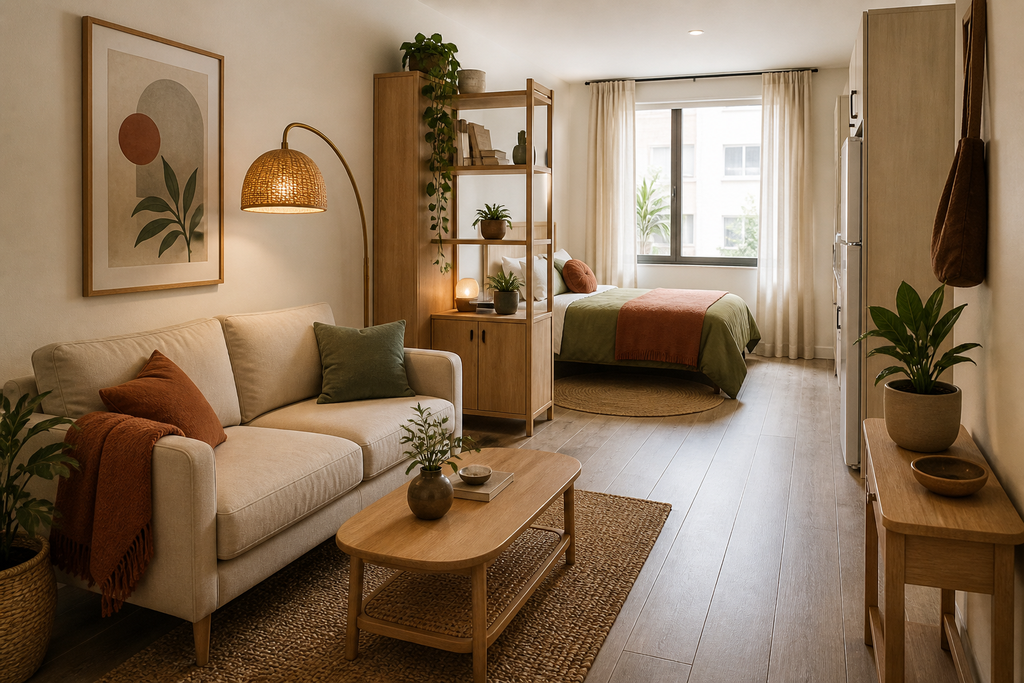
Turn the Reader’s Main Constraint Into a Practical Design Decision
Instead of trying to make one room look like several separate rooms, create zones that are easy to understand at a glance.
A rug can define the living area, a narrow table can create a work or dining zone, and a low open shelf can give the bed more privacy without blocking light.
Keep the number of zones limited. Three or four clearly defined areas usually feel calmer than many tiny sections competing for attention.
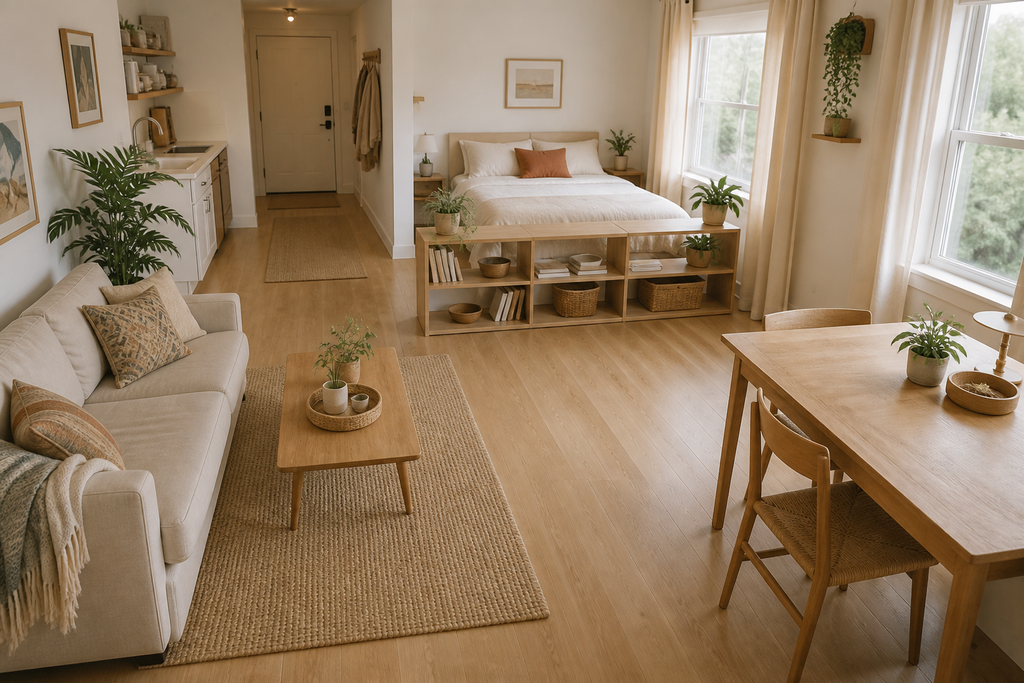
Measure for Apartment-Scale Furniture Before You Buy
Measure the usable space in each zone, not only the apartment’s total square footage. Note doors, windows, radiators, outlets, closet openings, and anything else that affects where furniture can sit.
Then check the dimensions of the furniture itself, including depth. A sofa can be short enough for a wall but still project too far into the room.
Also measure the route into the apartment. A piece that fits the floor plan still has to pass through the building entrance, hallway, stairwell, elevator, and your front door.
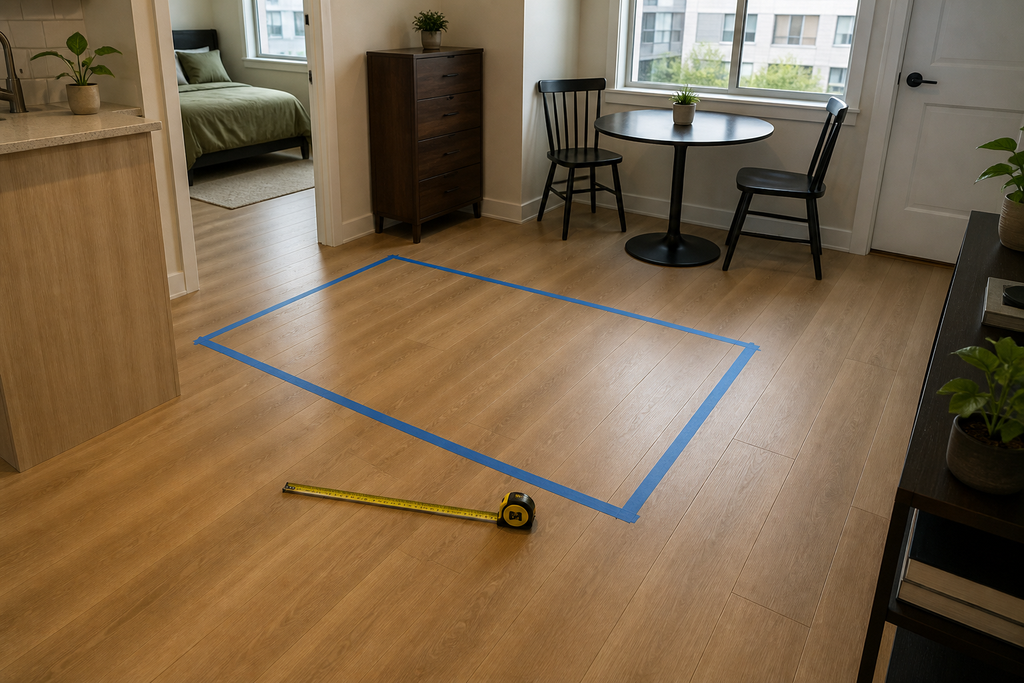
Test the Footprint
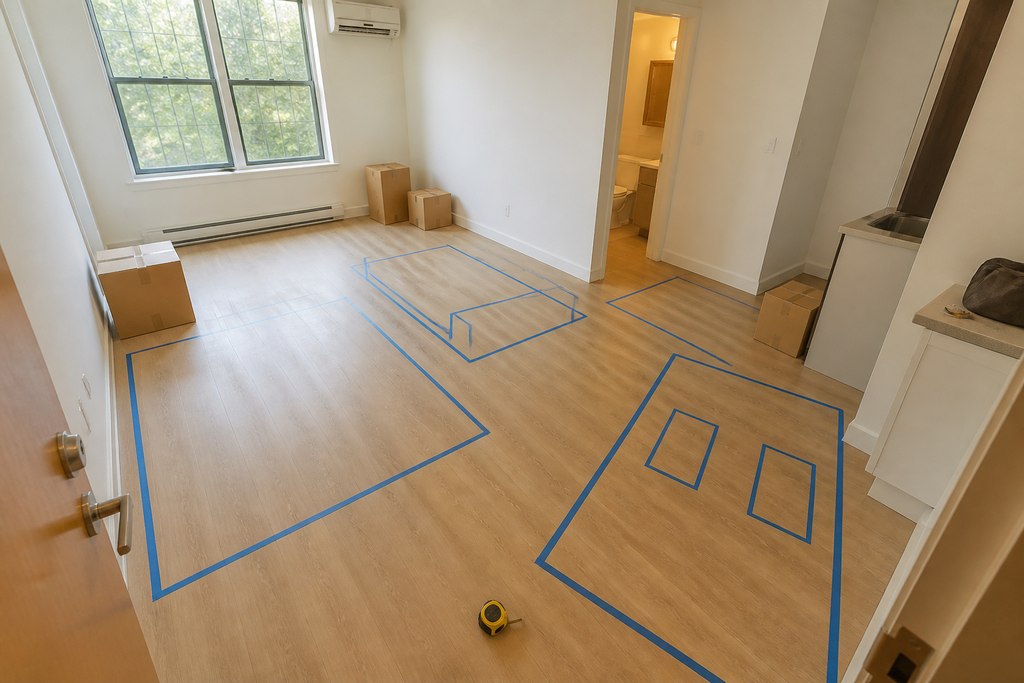
Use painter’s tape to mark the exact footprint of a bed, sofa, desk, or table on the floor. Pull out a chair, open the closet, and walk your normal route through the apartment before you buy.
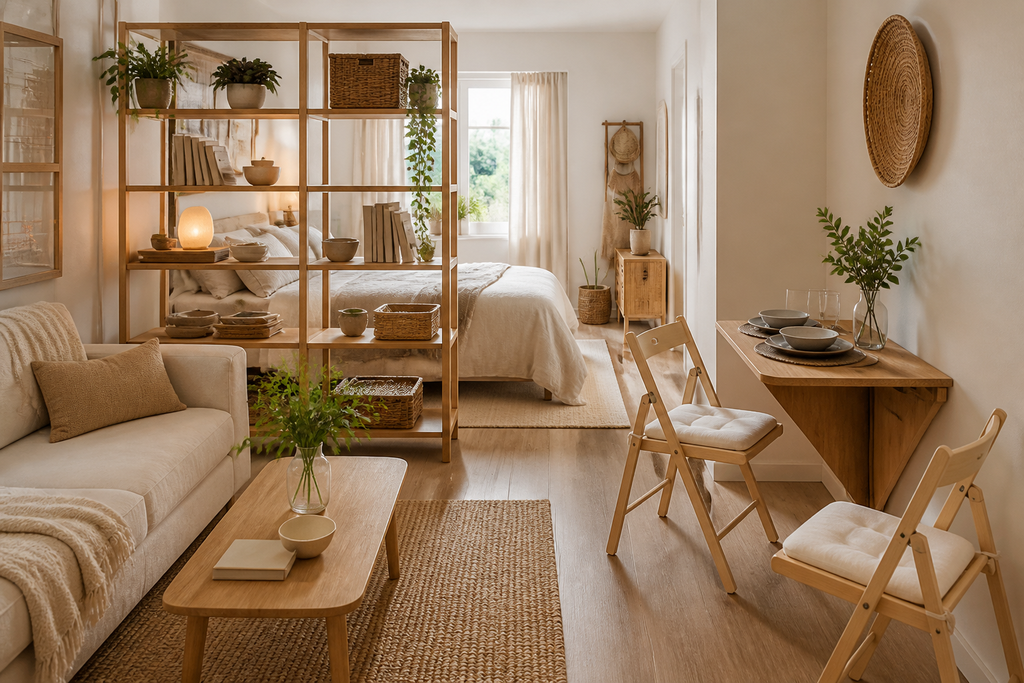
Choose Changes That Preserve Flexibility in a Small Home
Small homes benefit from furniture that can move, fold, expand, or take on another role. This is especially useful for renters and for anyone whose work or household may change.
A freestanding shelf can divide the sleeping area today and move against a wall later. An extendable table can serve as a desk during the week and open for dinner when guests visit.
Favor solutions you can rearrange before committing to anything permanent. Flexibility makes it easier to correct a layout that looks good on paper but feels awkward in daily life.
Test the Arrangement Before Committing to New Purchases
Live with a rough version of the layout before ordering the biggest pieces. Painter’s tape, cardboard boxes, or furniture you already own can help you judge scale without spending money.
Pay attention to the small frustrations that appear after a day or two: a chair that blocks a cabinet, a bed corner you keep walking around, or a table that makes the route to the bathroom feel tight.
Those observations are more useful than a perfect-looking floor plan because they reflect how the apartment actually functions.
Use Vertical and Closed Storage Where It Solves a Real Problem
When floor space is limited, look upward. Tall, narrow storage can hold more while using less floor area than a wide dresser or low cabinet.
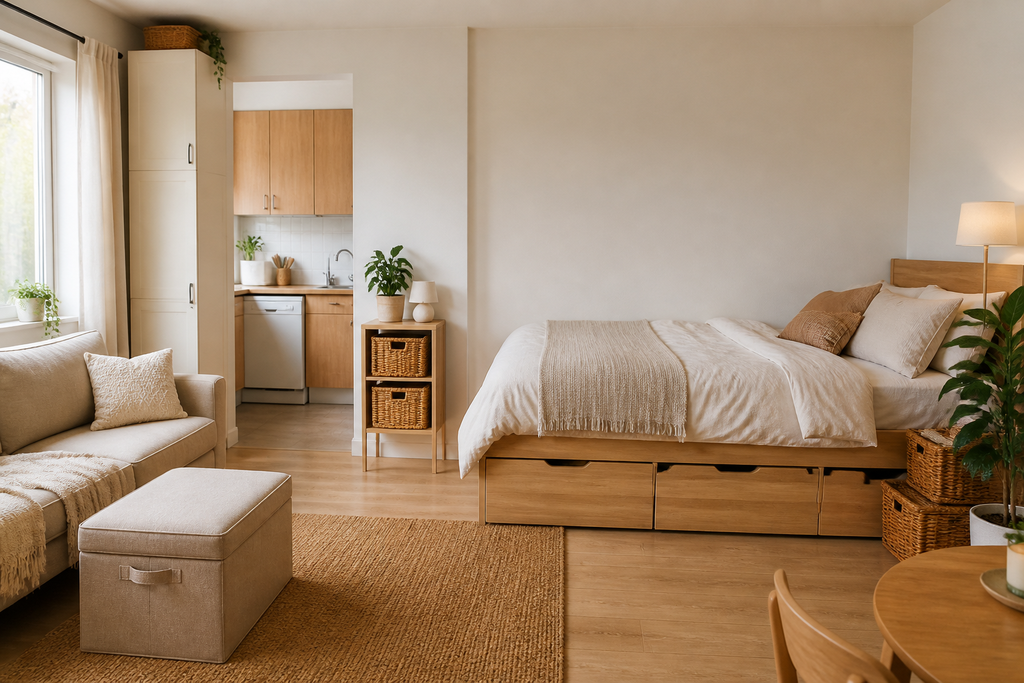
Closed storage is particularly useful in a studio because nearly everything is visible from nearly everywhere. Cabinets, drawers, baskets, and under-bed bins can quiet the room visually while keeping everyday items close.
Do not cover every wall simply because vertical space is available. Leaving some open wall area gives the room visual breathing room and keeps useful storage from turning into visual clutter.
Good Places to Look for Extra Storage
- Under the bed for linens, seasonal clothing, or bulky items.
- Above or beside a desk for supplies used regularly.
- Near the entry for shoes, bags, keys, and coats.
- Inside furniture such as storage benches, ottomans, or beds with drawers.
Balance Visual Style With Everyday Function
A studio works best when the functional plan comes first and the decorative layer supports it. A beautiful piece is not a good choice if it narrows a walkway, blocks daylight, or creates storage problems.
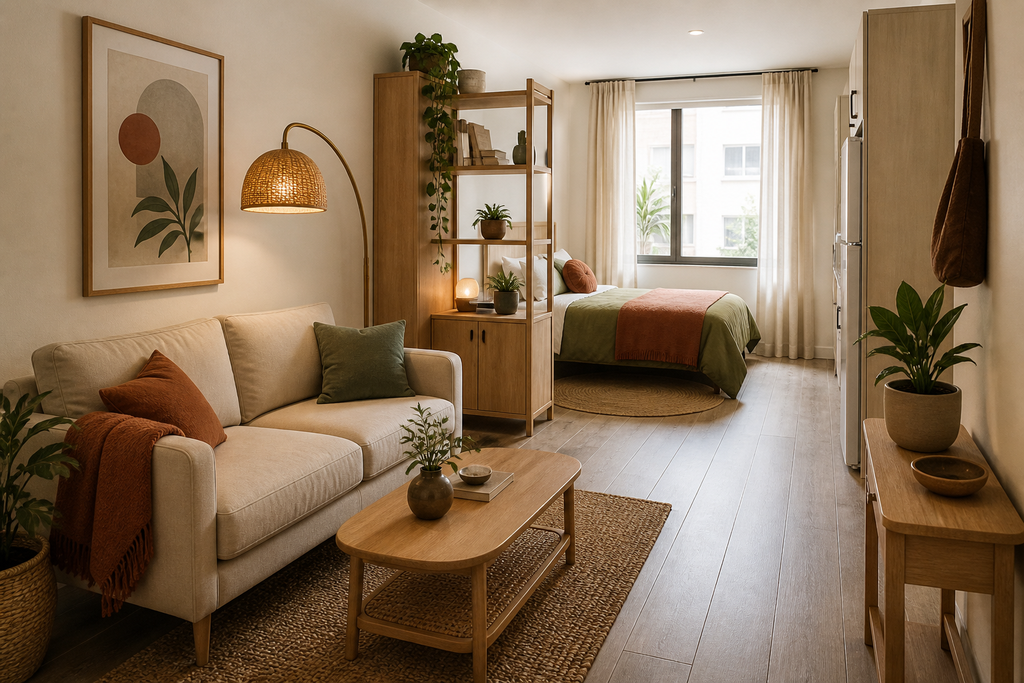
Keep the palette restrained so the different zones still feel like one home. Repeating a few colors, woods, and textiles across the apartment creates continuity without requiring everything to match.
Use fewer, more intentional decorative pieces rather than filling every surface. One strong lamp, artwork, rug, or textile can add personality without making the room feel busy.
Common 400 Sq Ft Studio Decorating Mistakes
Most small-space decorating problems come from scale, circulation, or buying too much too soon. These are the mistakes worth catching before they become expensive.
Buying Furniture Before Measuring
A piece can look compact online and still overwhelm a studio. Measure the room and tape out the footprint before purchasing large furniture.
Pushing Everything Against the Walls
Wall-hugging furniture is not automatically more spacious. A rug, narrow console, or carefully positioned sofa can define a zone while keeping the main route through the apartment open.
Using the Wrong Kind of Storage
Storage should match what actually creates clutter. If mail, chargers, shoes, or clothes are the recurring problem, solve that specific problem instead of adding generic shelving.
Decorating Before the Layout Works
Rugs, art, and accessories are easier to choose after the bed, seating, storage, and lighting are settled. Buying decor first often leads to pieces that no longer suit the final arrangement.
Frequently Asked Questions About 400 Sq Ft Studio Apartment
These are some of the most useful questions to answer once the basic layout is in place.
How Do You Make a 400 Sq Ft Studio Apartment Feel Bigger?
Protect long sightlines, especially between the entrance and the main window. Keeping tall or bulky furniture away from that visual path can make the room feel more open.
Use a consistent palette on the largest surfaces and choose furniture that shows some floor underneath. Mirrors can also help distribute light when placed where they reflect a window or another bright part of the room.
How Should You Divide a 400 Sq Ft Studio Apartment Into Functional Zones?
Use visual boundaries before physical ones. Rugs, lighting, furniture placement, and changes in orientation can separate activities without adding barriers.
When more privacy is needed, choose dividers that preserve light, such as an open shelf or a curtain that can be pulled back during the day.
Place the most frequently used daytime areas where they benefit from the best light, then fit the sleeping zone into a quieter part of the layout when the floor plan allows.
What Furniture Works Best in a 400 Sq Ft Studio Apartment?
Look for furniture that is appropriately scaled, easy to move, and useful in more than one situation. A compact loveseat, storage bed, nesting tables, or an extendable dining table can provide function without permanently consuming too much floor space.
Depth matters as much as width. Slim arms, shallow cabinets, and tables that tuck close to a wall can preserve valuable circulation space.
Do not force every piece to be multifunctional. The goal is a comfortable home, so keep a single-purpose item when it genuinely improves daily life and fits the layout.
How Can You Add Storage Without Overcrowding a 400 Sq Ft Studio Apartment?
Start with the spaces that are already underused: beneath the bed, above a desk, beside the entry, and higher on the wall.
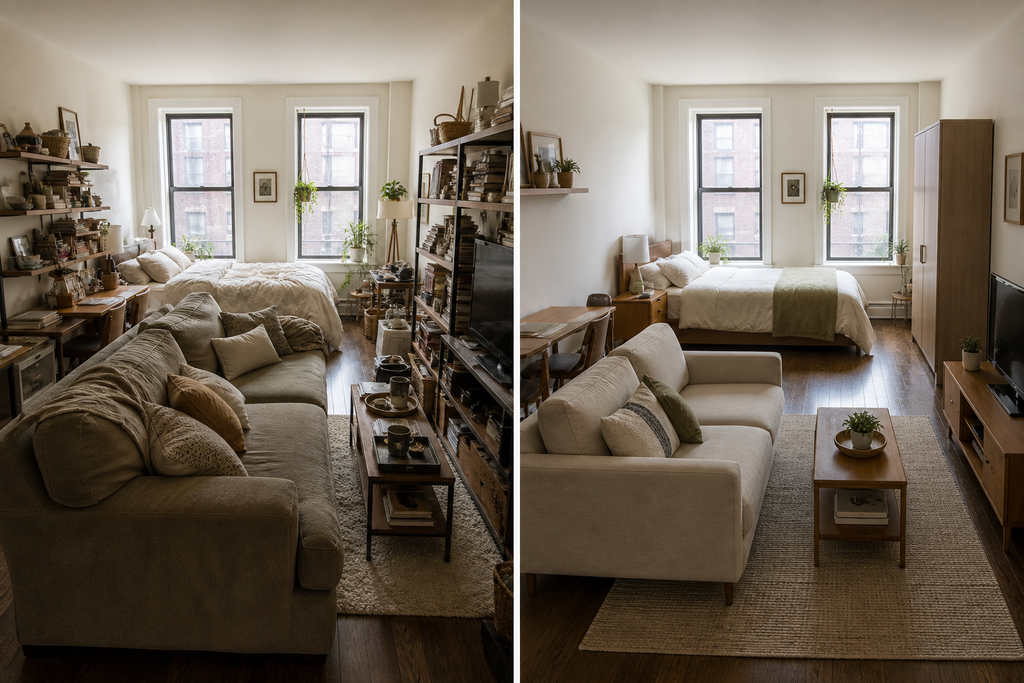
Combine open and closed storage. Keep a few attractive or frequently used items visible, and hide the visually noisy everyday items behind doors, inside drawers, or in consistent baskets.
If the apartment still feels crowded after adding storage, the answer may be editing possessions rather than adding another cabinet. More storage is only helpful when it makes the room easier to use.
What Should You Buy First for a 400 Sq Ft Studio Apartment?
Start with the pieces that support daily life: a comfortable bed, essential lighting, and the storage you truly need. Then add seating and a work or dining surface according to your priorities.
Live with those essentials before buying the decorative layer. A few weeks in the apartment will show you where you actually need a lamp, rug, side table, or extra storage.
This slower approach protects both the budget and the floor plan from impulse purchases that looked useful before you understood the space.
A Final Checklist for Putting Everything Together
A good studio comes together in layers. Use this order as a simple way to keep the project manageable.
- Measure the apartment, openings, fixed features, and furniture routes.
- Choose the three or four zones that matter most to your routine.
- Test the largest furniture footprints on the floor.
- Buy the essential pieces before decorative extras.
- Add storage where a specific clutter problem appears.
- Protect natural light and the main walking paths.
- Repeat a restrained palette across the zones.
- Live with the layout, then make small adjustments before buying more.
Conclusion
Decorating a 400-square-foot studio is less about squeezing in everything you would own in a larger apartment and more about choosing what deserves space.
Measure first, build the layout around your real routine, and let furniture, storage, and decor support that plan. When the room is easy to move through and the visual choices feel connected, a small studio can feel intentional rather than compromised.
